

Leave your details and our team will get in touch.
Request a call back
Penetrating Damp in Croydon
Locate the leak, stop the water, restore your walls.
Penetrating damp develops when water enters from outside or escapes from a damaged service pipe, then passes through walls, floors, roofs or ceilings. Unlike rising damp, which moves upwards from the ground, it can affect any level from basement to top floor, although it occurs most often below ground.
For properties in Croydon CR0, Crystal Damp Proofing & Basements Ltd traces where the water enters, stops it at the source and restores affected walls.
The main causes
Water can only enter where it has a route through. We commonly find these causes:
- Damaged roofs and gutters: roof coverings that leak, tiles that have cracked or slipped, and obstructed or broken gutters and downpipes allowing water to run down the facade.
- Defects in the facade and walls: cracks or porous areas in brickwork, failed render, deteriorated mortar joints or absent waterproofing.
- Leaking services: damaged drains or water and waste pipes leaking within a wall or ceiling.
Surveying penetrating damp
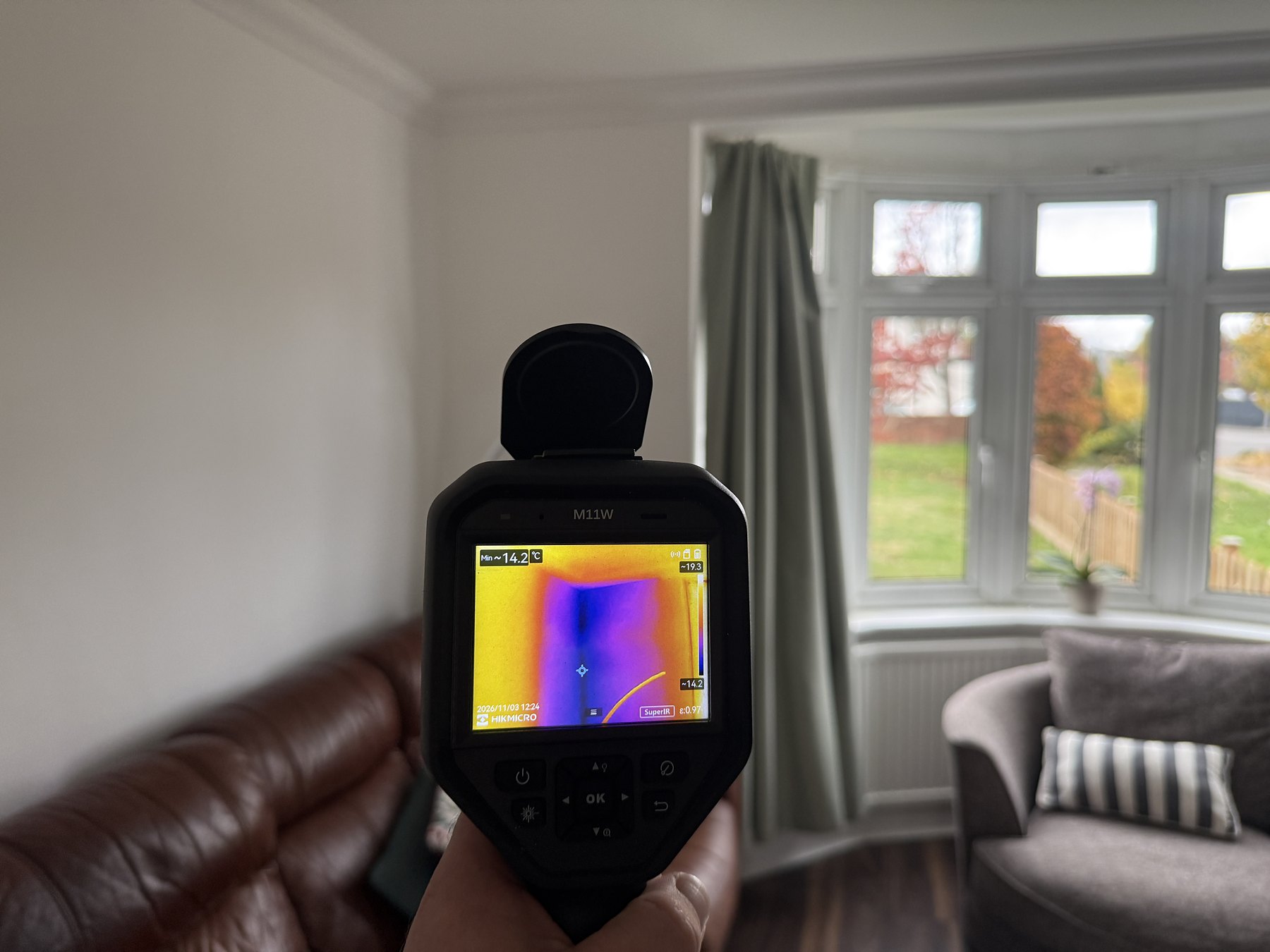
Our detailed surveys identify where penetrating damp originates and how much of your property it affects. Our experienced team uses specialist equipment, including thermal imaging cameras, to pinpoint moisture that is invisible to the eye, before it causes structural damage or health risks from mould and fungi.
Is every wet patch caused by penetrating damp?
No, although penetrating damp is a likely cause. The location and behaviour of a patch provide useful clues:
- Penetrating damp: wet areas develop or spread noticeably after heavy rain, particularly near windows, beneath ceilings or in corners.
- Condensation: moisture and mould collect at cold spots (thermal bridges), in corners or behind furniture. High indoor humidity and poor ventilation cause this, rather than rain.
- Plumbing leaks: a continually wet patch that expands regardless of the weather, close to water or waste pipes, usually indicates a pipe leak.
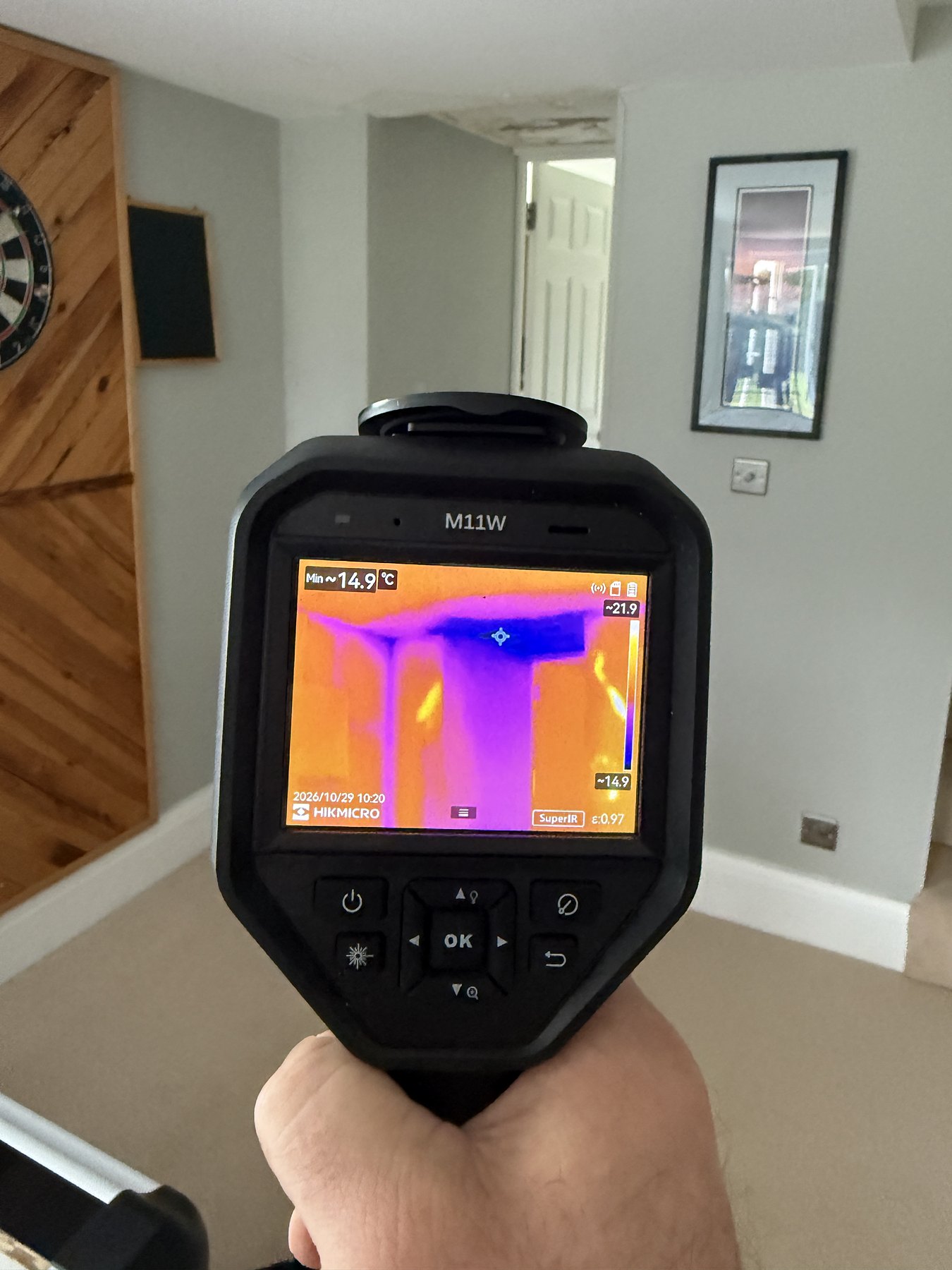
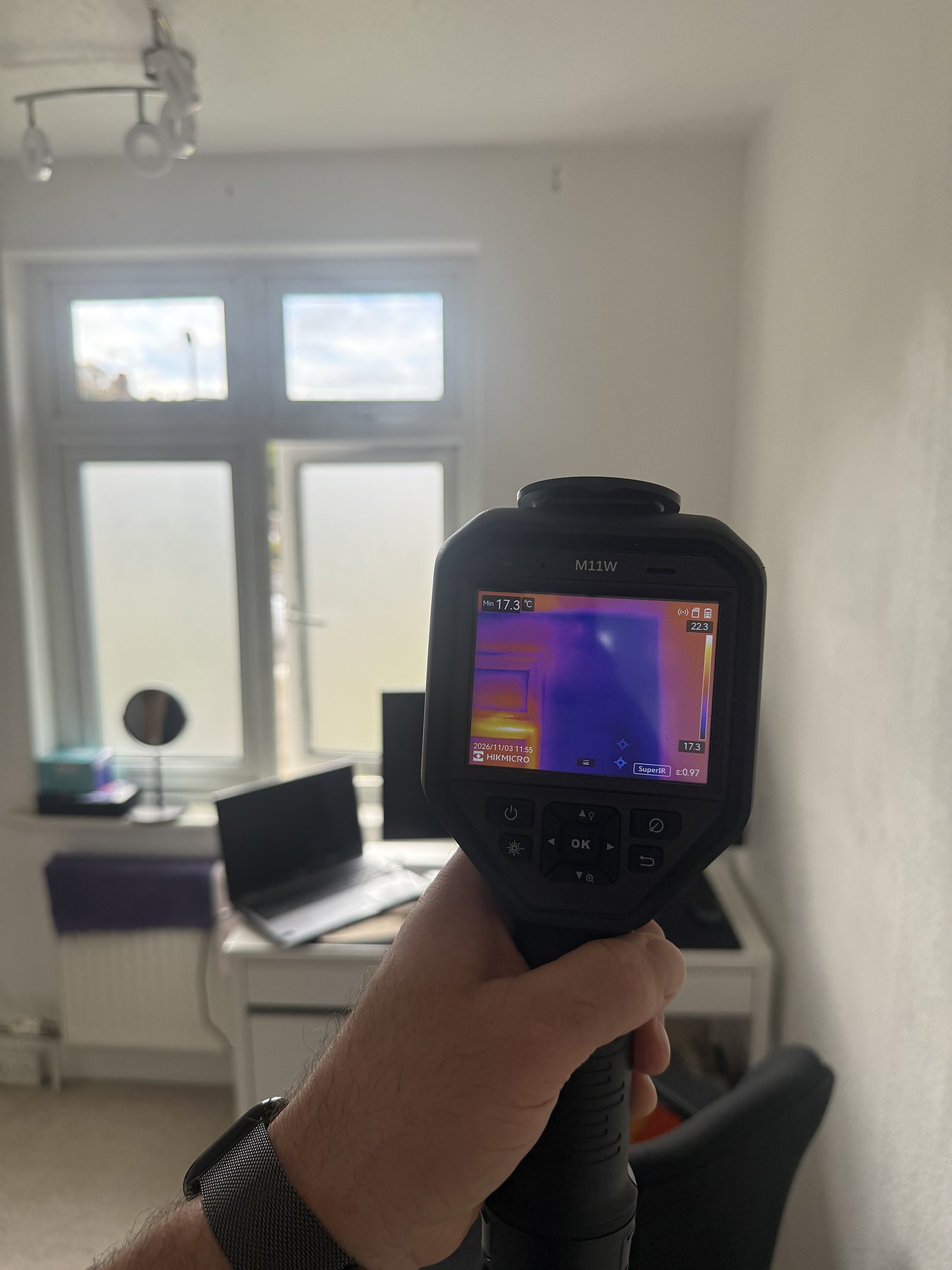
Surveying with thermal imaging
Recognising penetrating damp
Once penetrating damp has developed, its effects are often visible. Signs include:
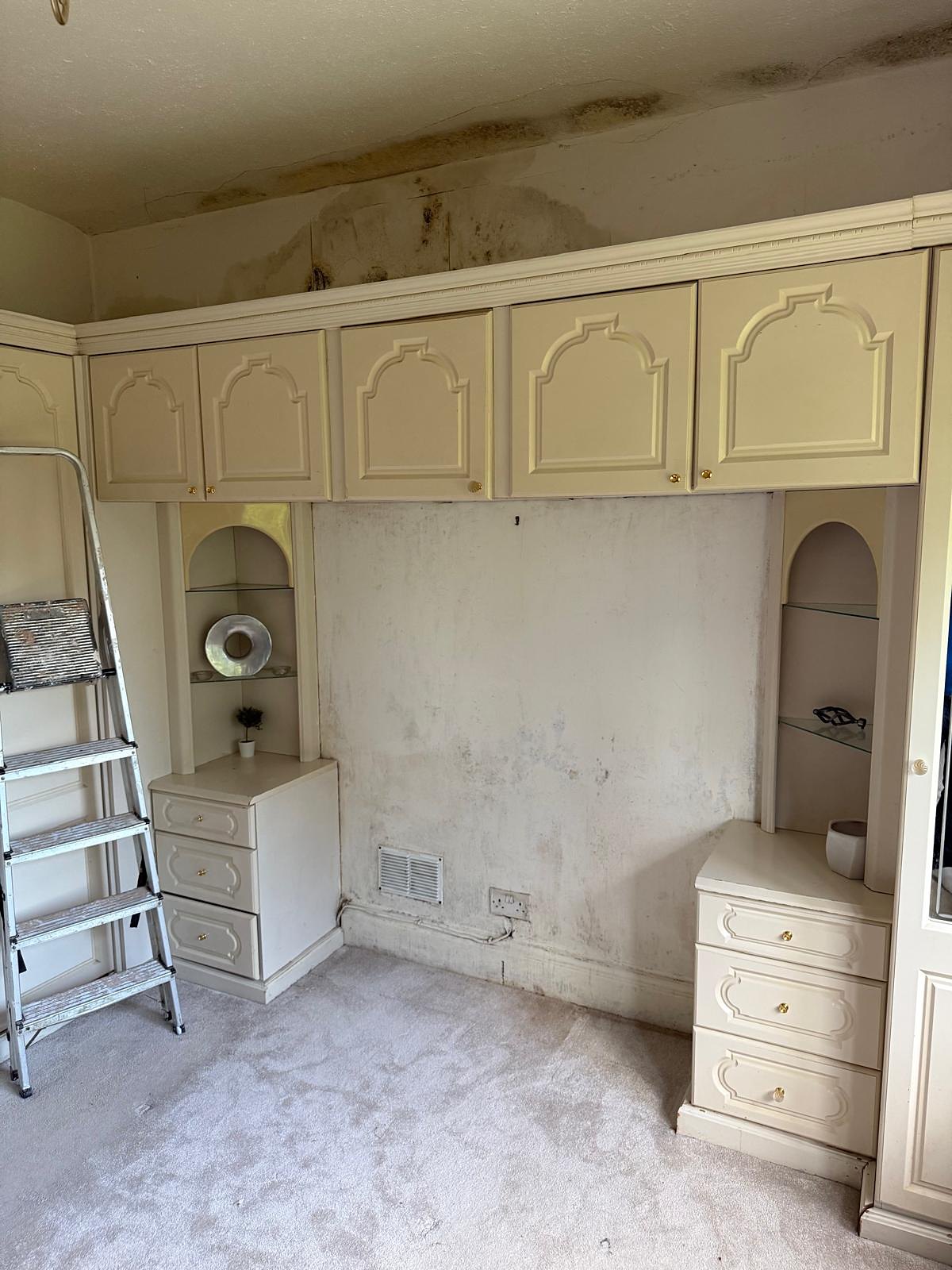
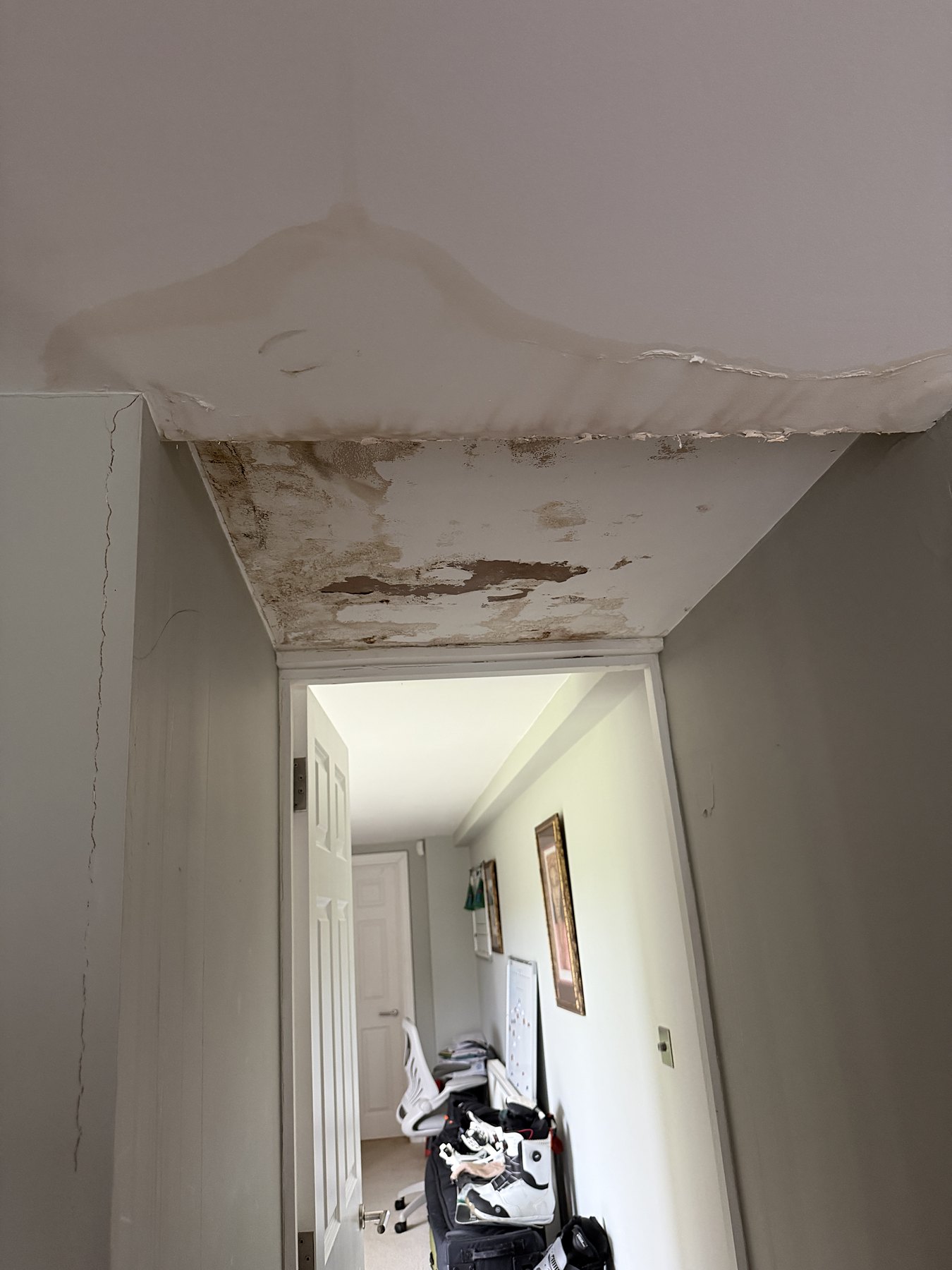
- Wet patches and stains: areas of moisture or discolouration on ceilings or walls that develop or spread after heavy rain.
- Damaged finishes: wallpaper peeling away, paint flaking or plaster losing its bond.
- Mould and fungus: growth across wall surfaces or in room corners.
- A musty smell: an odour of damp that remains after the room has been aired.
Where and when might it appear?
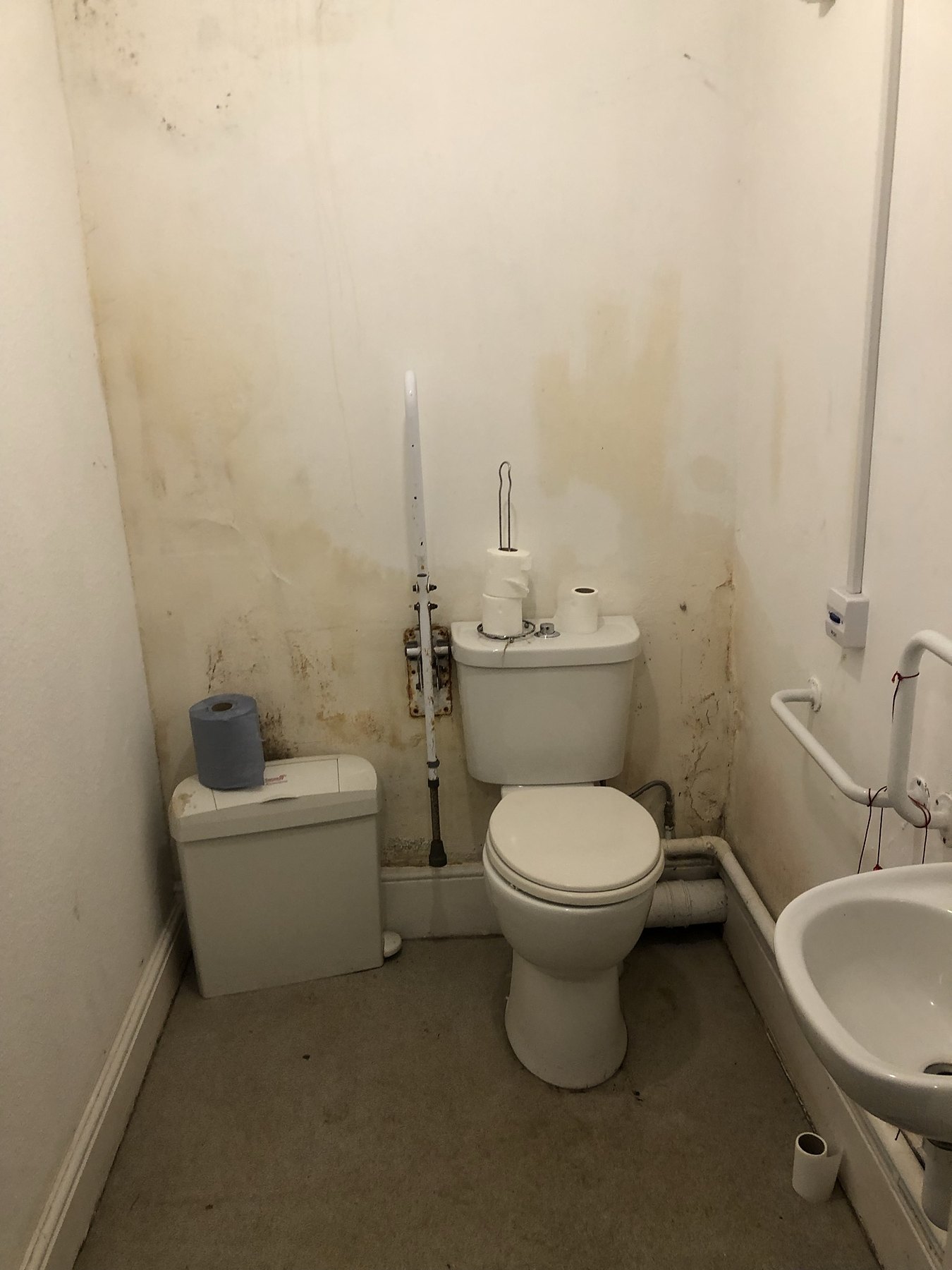
Structural cracks and areas exposed to leaks or escaping water are common places for penetrating damp. Water may also travel into walls through a failed damp-proof course (DPC). A failing DPC affects many older London homes and can cause hygroscopic salts to build up as well as contribute to rising damp.
Below ground
Basements affected by penetrating damp
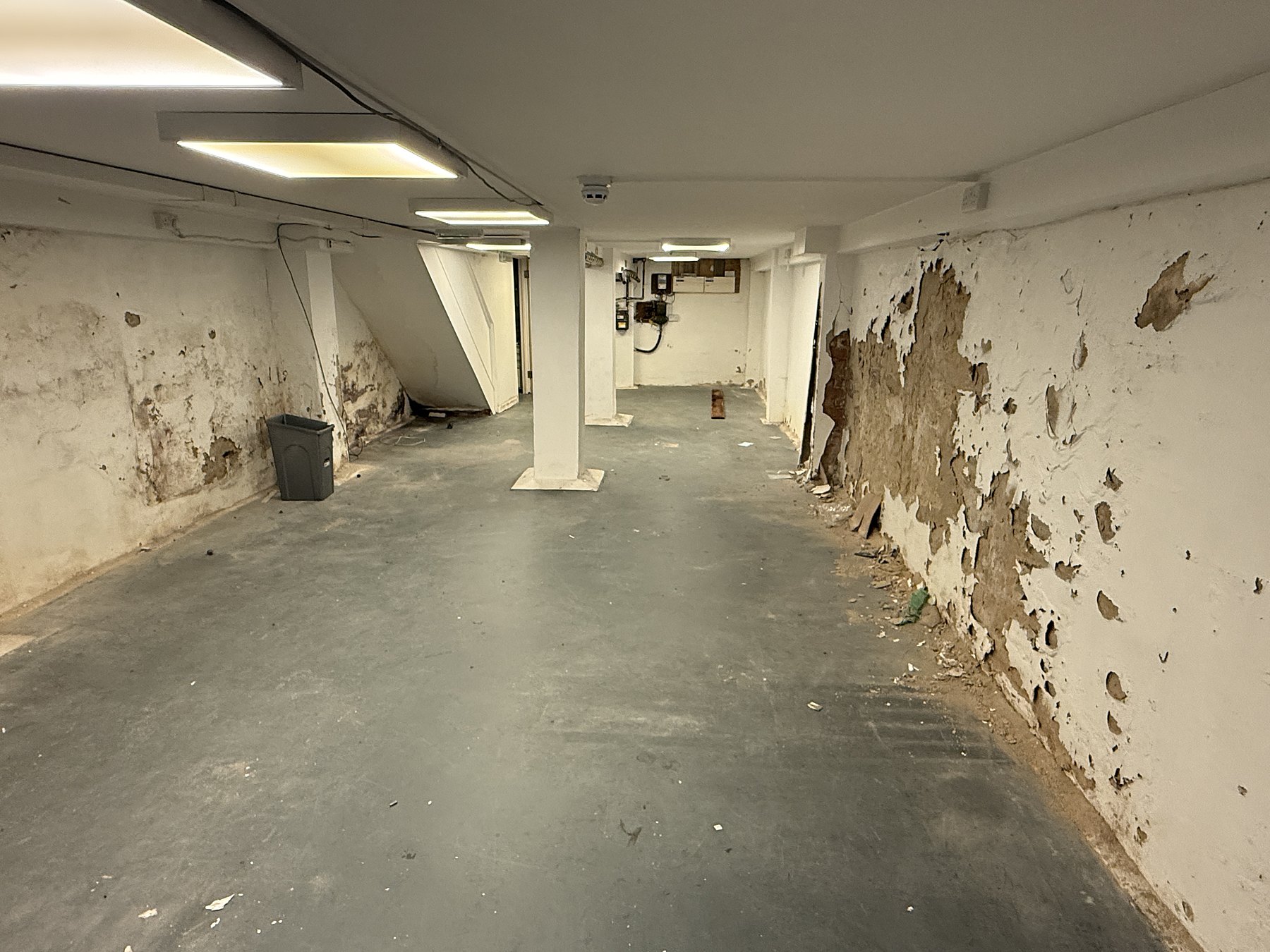
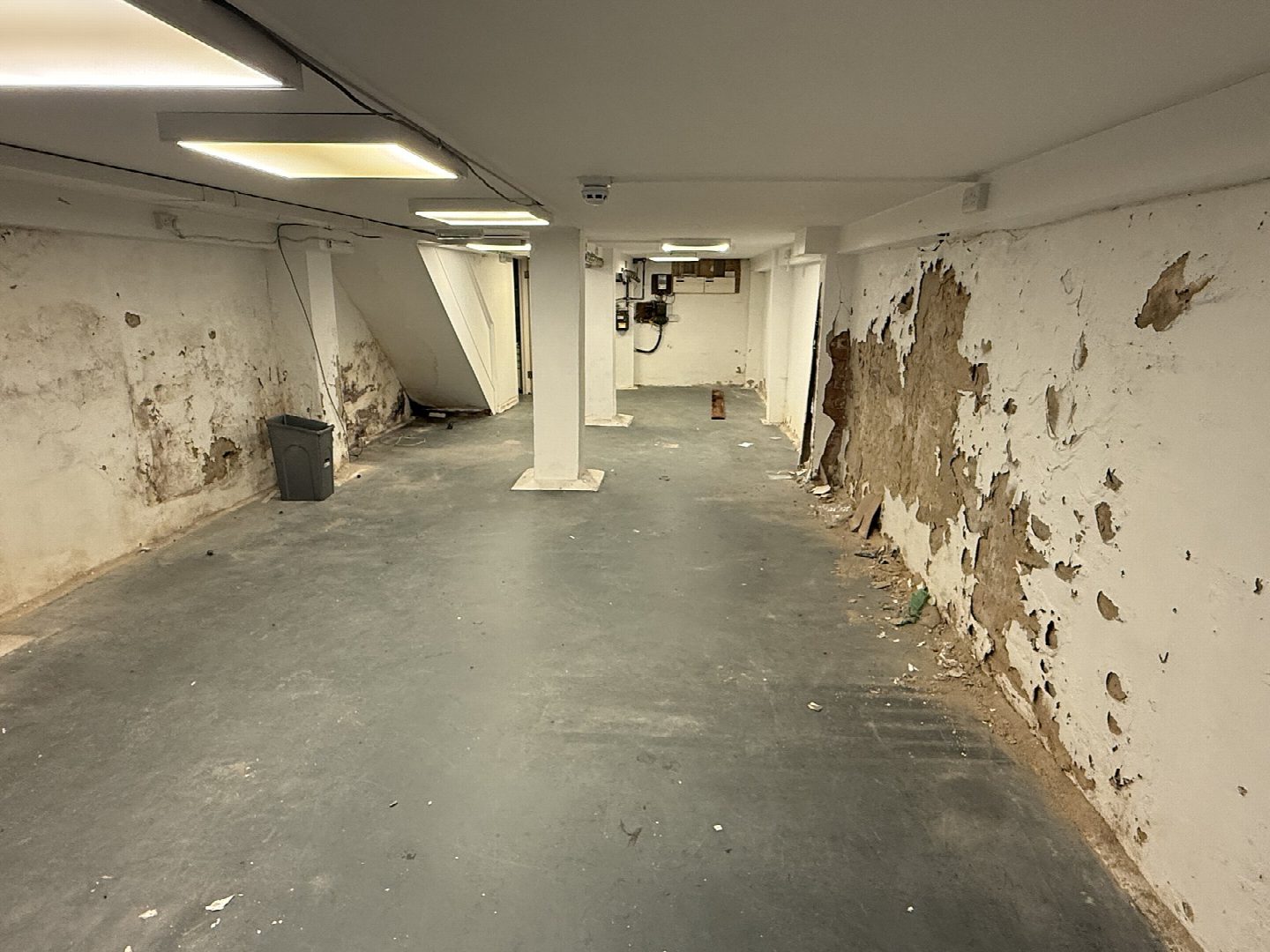
Basements, cellars and vaults account for most of the penetrating damp we treat. Wet soil remains against basement walls, exerting pressure from outside throughout the year. The problem is most common below ground, where it can also do the greatest damage.
Why are basements vulnerable?
- Flooding: heavy rain, poor drainage or a high water table press water against the basement floor and walls. Without waterproofing, water soon finds an entry point.
- Structural cracks: most buildings over 50 years old, especially Victorian houses, were constructed without basement waterproofing. Cracks that develop with time allow water directly inside.
- Movement and vibration: ground movement, settlement and traffic vibration from a busy road can create cracks or enlarge existing ones.
- Joints and weak points: water may enter at construction joints, around pipes passing through walls or where a wall joins the floor.
BS 8102:2022
Choosing waterproofing: Type A or Type C
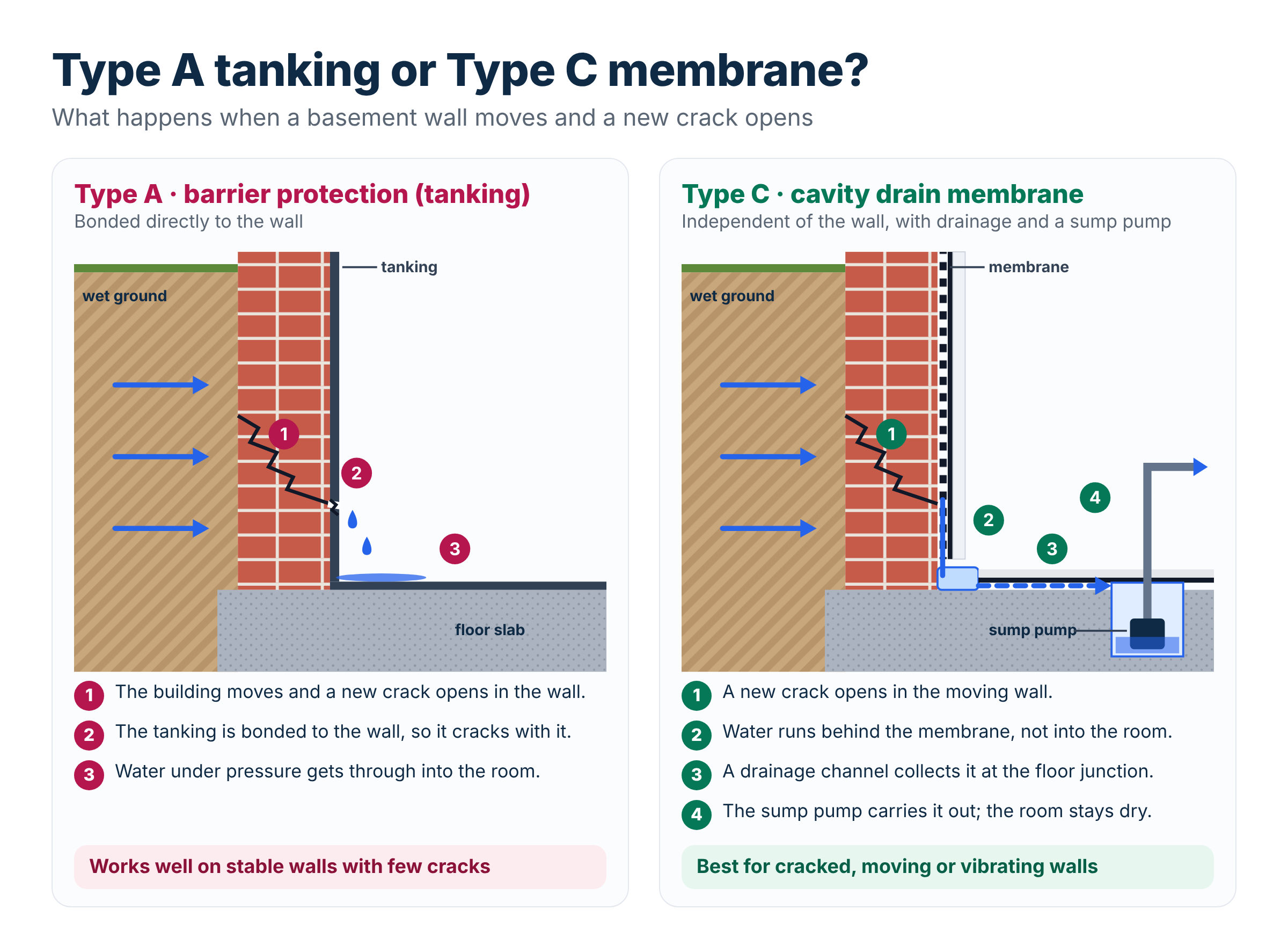
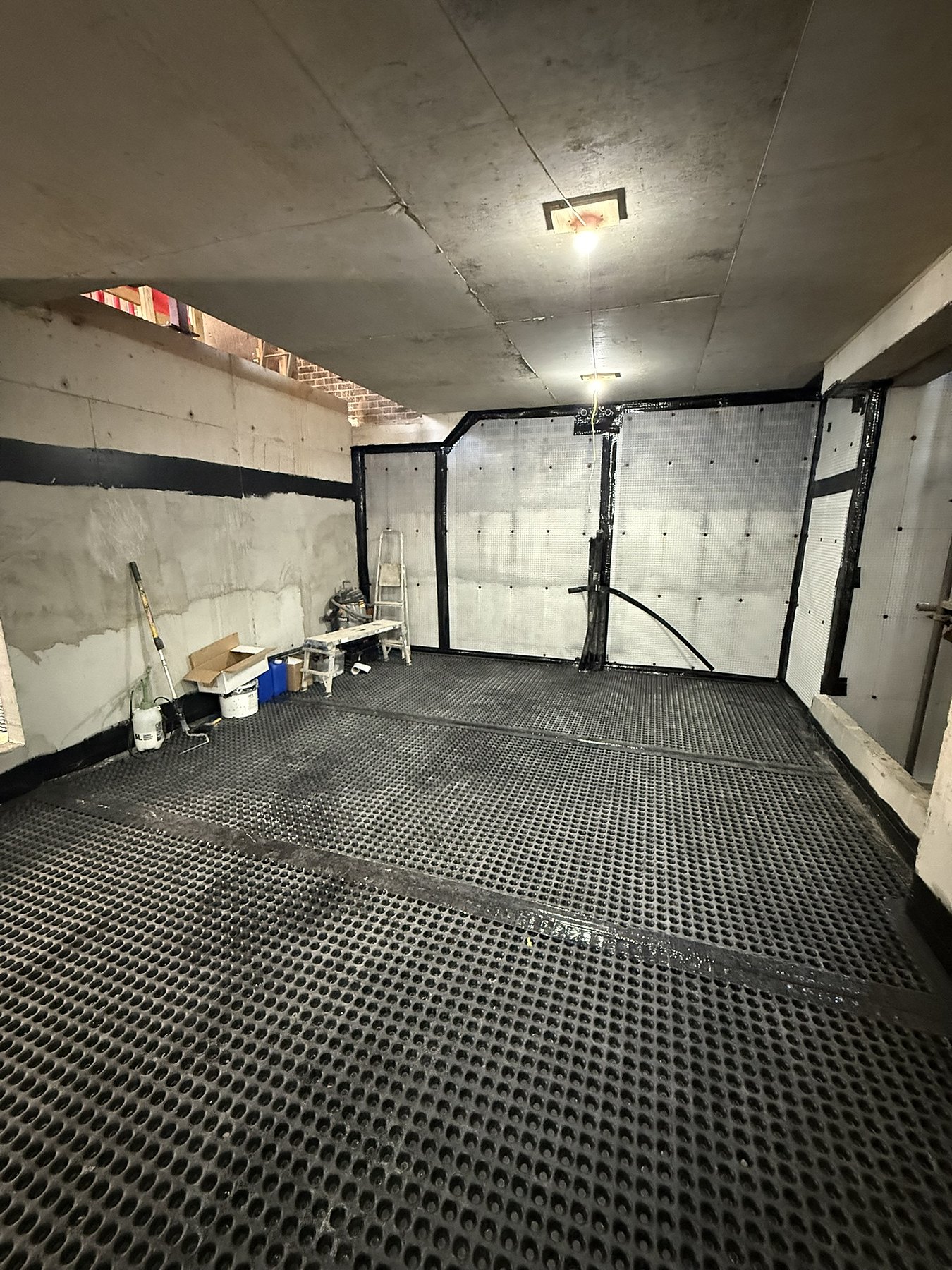
BS 8102:2022 sets out three basement waterproofing types. Type A provides barrier protection, also known as tanking; Type B is structurally integral protection using reinforced waterproof concrete, only for new buildings; and Type C uses a cavity drain membrane, drainage and a sump pump. Many basements can use either Type A or Type C. Where the building moves or a nearby road causes vibration, however, only Type C should be used.
Type A: protection with a barrier
Tanking forms a bonded layer directly on the wall.
- Where it works: stable, sound walls with few cracks that can support an uninterrupted barrier against water.
- The risk: continued wall movement may crack the tanking as well, allowing water to pass through.
Type C: a cavity drainage membrane
Drainage sits behind the membrane, which does not rely on bonding to the wall.
- Where it works: basements with numerous structural cracks or affected by movement or traffic vibration from a nearby road.
- Why it stays dry: water passing through a new crack flows behind the membrane into drainage channels before being pumped away.
New buildings and concrete
Underpinning, concrete walls and dry-pack joints
Concrete basement walls are also capable of cracking. To form or deepen a basement by underpinning, new concrete is poured in sections. Stiff mortar called dry-pack fills the gap between each section and the existing wall above. As the concrete shrinks and the building settles, these vulnerable joints can crack and admit water.
Type B waterproof concrete is limited to new buildings with reinforced concrete structures, but its joints may still crack. In most new buildings using Type B, we therefore install a Type C cavity drain membrane system over the waterproof concrete. BS 8102 recommends this combined protection for habitable basements: should a crack develop, water is collected and pumped away rather than flooding the basement. Explore our basement conversion and underpinning work.
Waterproofing below ground
Basement waterproofing services
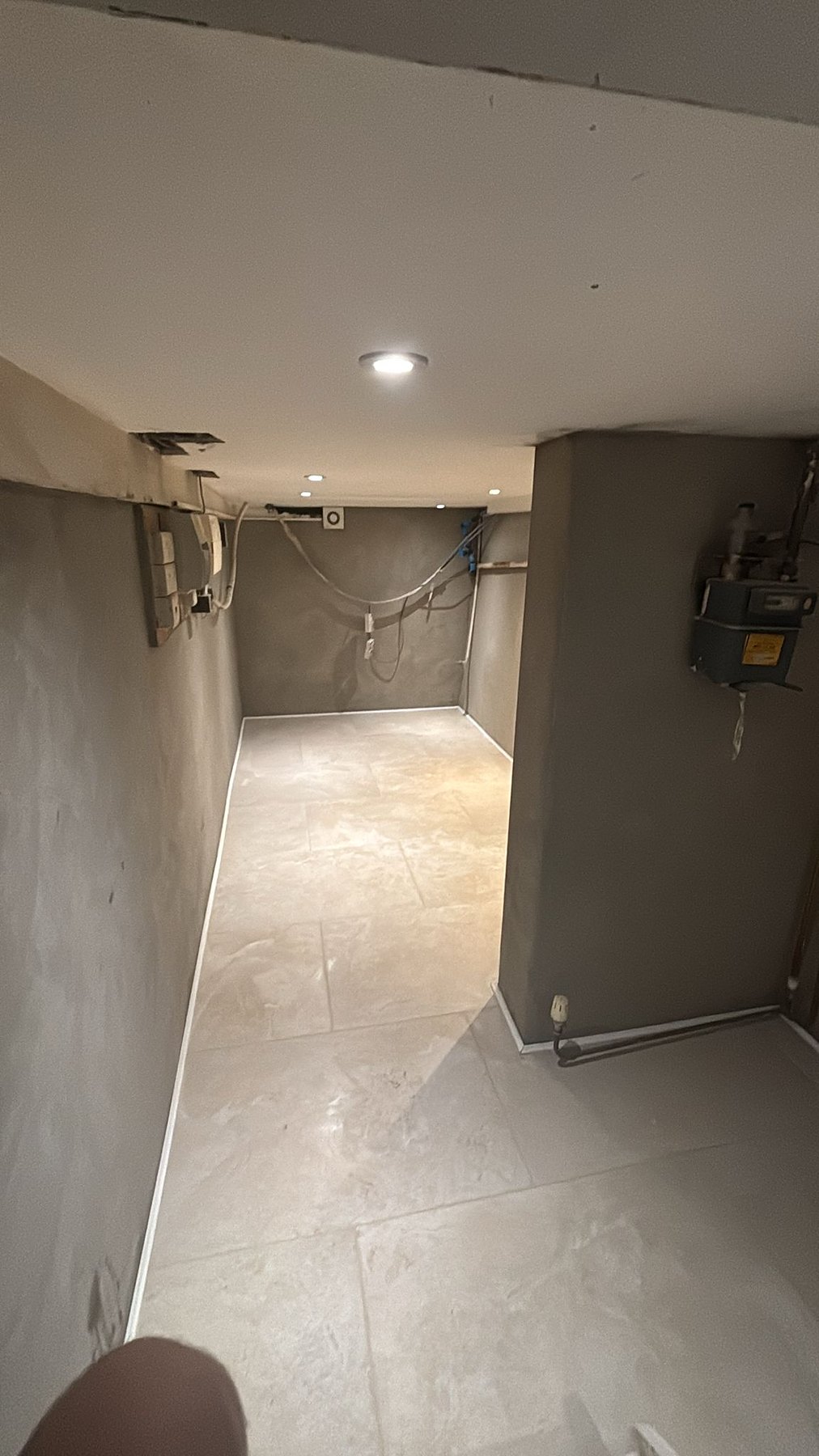
As penetrating damp so often affects basements, our services cover the full range of below-ground waterproofing. We back every waterproofing installation with our 10-year guarantee and a QANW Insurance Backed Guarantee.
Basement Waterproofing
Waterproofing with Type A or Type C to BS 8102:2022.
Basement Conversion & Waterproofing
New basements, conversions and underpinning.
Retaining Wall & Foundation Waterproofing
Exterior drainage, membranes and coatings.
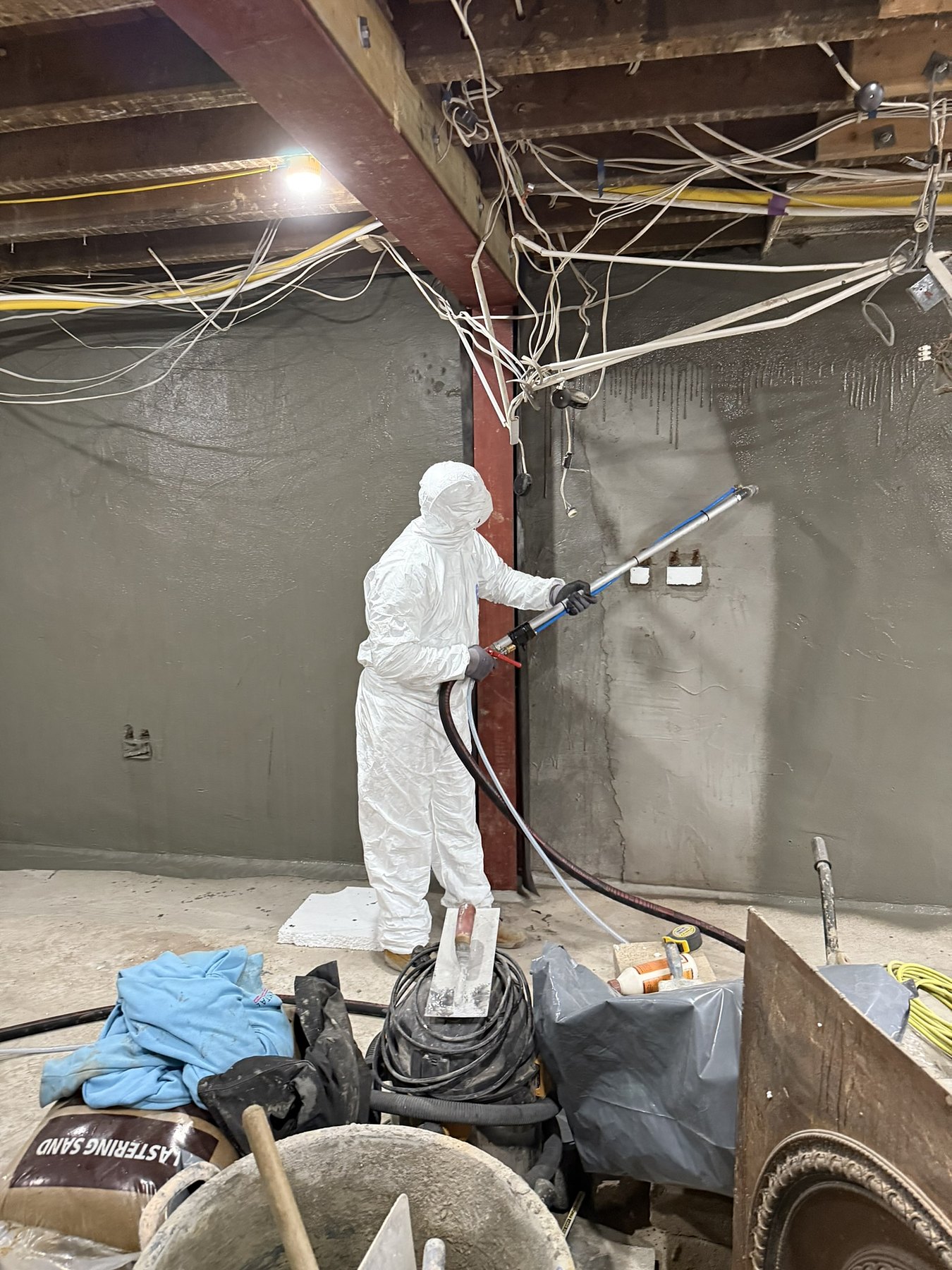
Spray-Applied Basement Waterproofing
Tanking slurry applied by machine without weak spots.
Vault Waterproofing
Pavement vaults made dry and usable.
Cellar Waterproofing
Plywood wall finishes for dry cellars.
Sump Pump Systems & Services
Servicing, twin pumps and battery back-up.
Basement Floor & XPS Insulation
Floors kept warm and dry beneath the membrane.
Structural Cracks Repair
Helical bars used to stitch cracks.
Can cracks outside lead to penetrating damp?
Yes. Cracks on an external wall are among the most common causes of penetrating damp. Even a narrow opening in brick, render or a mortar joint draws rainwater into the wall through capillary action.
Why an external crack matters
- The sponge effect: traditional render and older brick readily absorb water. A crack gives it a direct path beyond the outer protection and into the wall's deeper layers.
- Freeze-thaw damage: water entering in autumn may freeze and expand in winter, breaking up the wall internally and making the crack wider.
- Driving rain: wind presses rain against the facade and forces water into cracks, even very fine ones.
What happens inside? As moisture passes through a rain-soaked wall, wet patches, flaking paint, blown plaster and black mould harmful to health can develop indoors.
Inspecting indoors and repairing cracks with helical bars
Painting over the inside will not prevent damp returning. We check the wall indoors as well as repairing the crack properly on the outside:
- Inspection from the inside (essential): we measure moisture, establish how far water has travelled, use thermal imaging to reveal hidden damp and examine plaster, timber and any mould.
- Assessing the crack: we look at its width, whether it continues to move and whether it runs vertically, horizontally or in steps along mortar joints. A widening or stepped crack may indicate settlement and requires structural assessment.
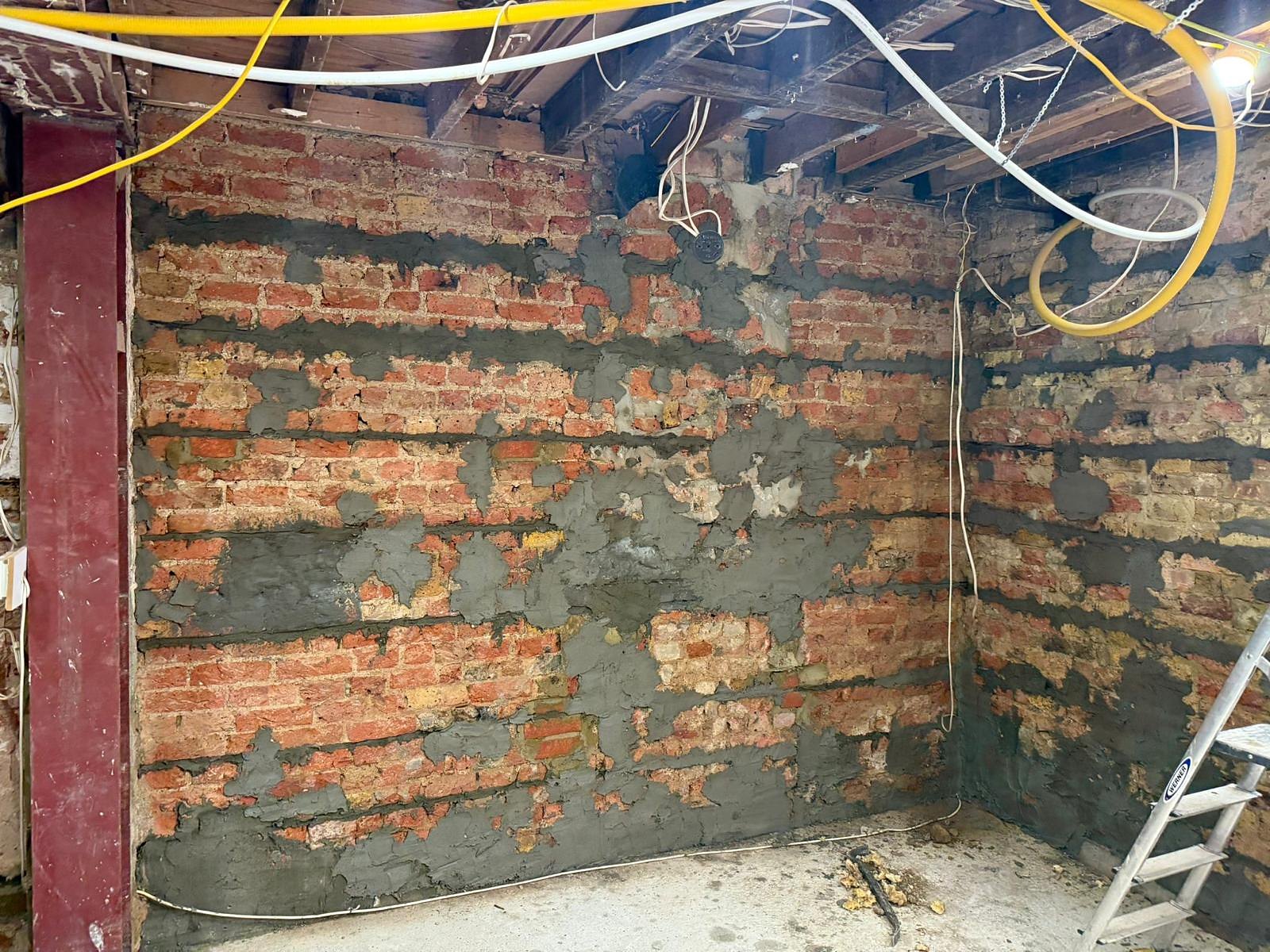
- Crack stitching with helical bars (Helibar): the best long-term repair. We cut slots across the crack in mortar joints, then bond stainless steel helical bars into them with a special grout. This ties the masonry together so the crack does not reopen. Learn more about structural crack repair.
- Filling and repointing: we clear out the crack, fill it using weather-resistant repair mortar and renew worn surrounding joints.
- Water-repellent treatment: a breathable treatment then helps exclude rain from the repaired facade while allowing the wall to breathe.
Above ground
Damp on upper walls and its effects
Basements are not the only places affected by penetrating damp. Higher up, weather and defects on the building's exterior cause most cases; moisture left unresolved can encourage mould and fungi.
What causes penetrating damp high on walls?
Weather exposure and defects in the exterior usually explain damp high on walls or on upper floors:
- Damaged roofs and gutters: leaking roof coverings, faulty valleys and cracked or blocked gutters allow water beneath the roof covering or down the walls.
- Strong winds and driving rain: upper parts of a building face the wind directly, which drives water through fine render cracks, deteriorated joints and facade gaps.
- Leaks around windows: damaged seals, ageing sealant or poor installation at upper-floor windows let moisture penetrate the wall.
Black mould and fungi that damage timber
When penetrating damp is not identified promptly, black mould or other household fungi may develop:
- Dry rot (Serpula lacrymans): fleshy, sizeable fruiting bodies and strands that carry the water needed for it to spread.
- Cellar fungus (Coniophora puteana): a wet rot affecting floor and ceiling timbers, with slender strands of dark brown or black.
- Mine fungus (Antrodia sinuosa): a cream or white growth that reduces timber to powder.
- Black mould (Stachybotrys chartarum): dark green growth on wallpaper or plasterboard after prolonged wetting; it produces harmful mycotoxins.
- Aspergillus: patches ranging from black to yellow-green, with strongly allergenic spores that can cause respiratory aspergillosis.
- Penicillium: blue or greenish growth that spreads quickly across damp paintwork and plaster.
A two-stage approach
Treating penetrating damp at its source
Removing the source of the water is the only way to cure penetrating damp. We stop water entering from outside first; after the leak has been resolved, we dry and restore the interior.
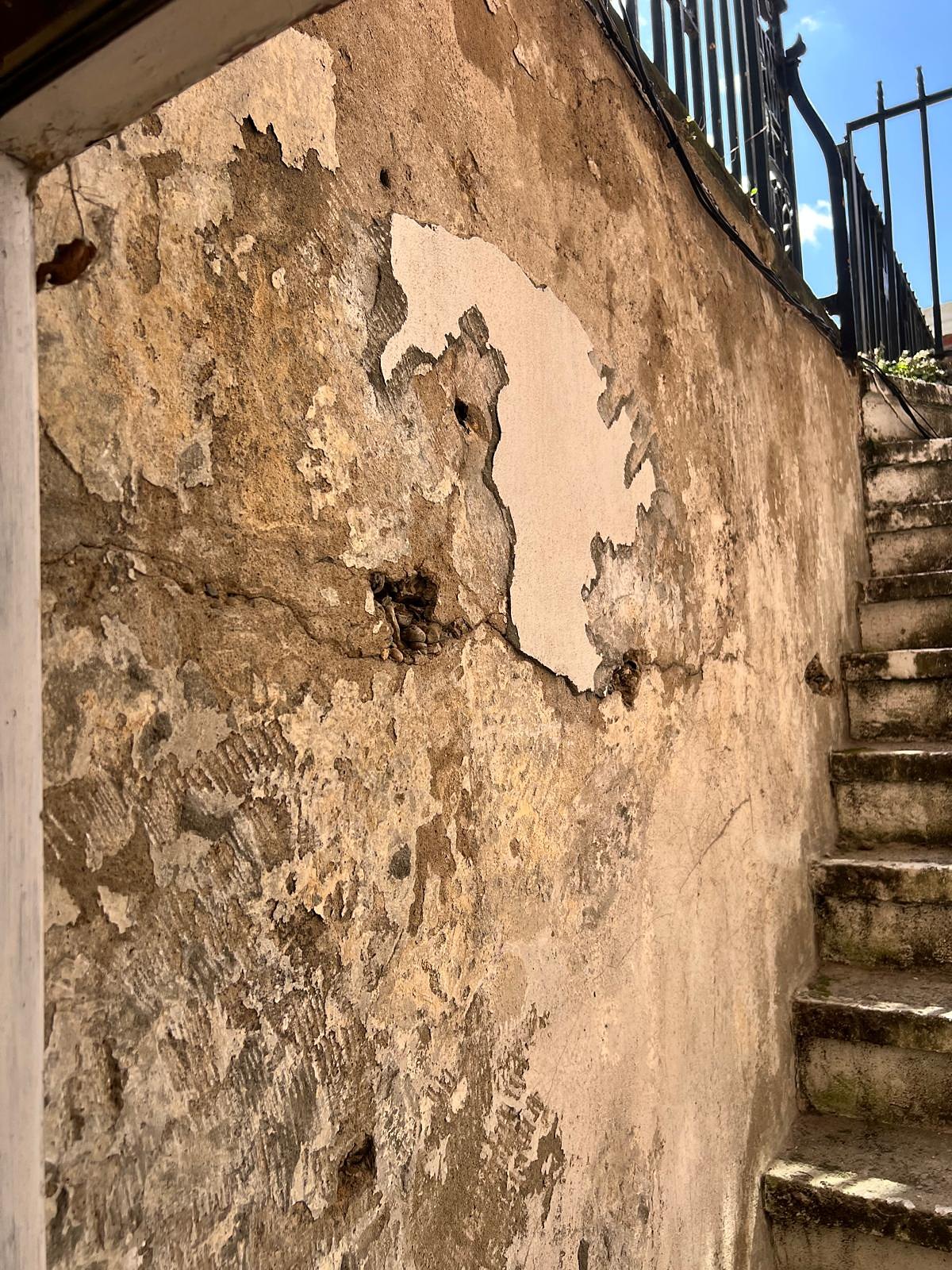
When does damp plaster need removing?
Whether plaster can stay depends on its composition and the damage. We can usually save it if the wall was wet only briefly, the leak was stopped promptly and the plaster remains firmly bonded, without flaking, deep mould or salt deposits. We then dry the wall, treat surface mould if needed and make good and redecorate once dry.
When plaster must come off
- It is flaking, sweating or falling off: water has weakened its binder, so fresh paint or filler would not remain attached.
- It sounds hollow: tapping produces a hollow note when plaster has lost its bond to the masonry.
- Mould has grown deep into it: prolonged wetting over weeks or months allows spores to penetrate beyond the reach of surface cleaning.
- Salt deposits have appeared: salts carried out of building materials crystallise within and on the plaster, breaking it down.
- It is gypsum plaster: gypsum takes up water readily, becomes soft and supports mould, making removal necessary more often than for cement-lime plaster.
A tap test helps distinguish sound plaster, which gives a clear, hard note, from detached plaster, which sounds dull and hollow. Where removal is required, we extend it around 50 cm beyond the visible patch because water may have travelled further through the wall.
From survey to finished wall
Support throughout the repair
One team handles the whole penetrating damp job, from the first visit to the finished wall. We locate the source, carry out exterior repairs and restore affected rooms, looking after the work both inside and out.
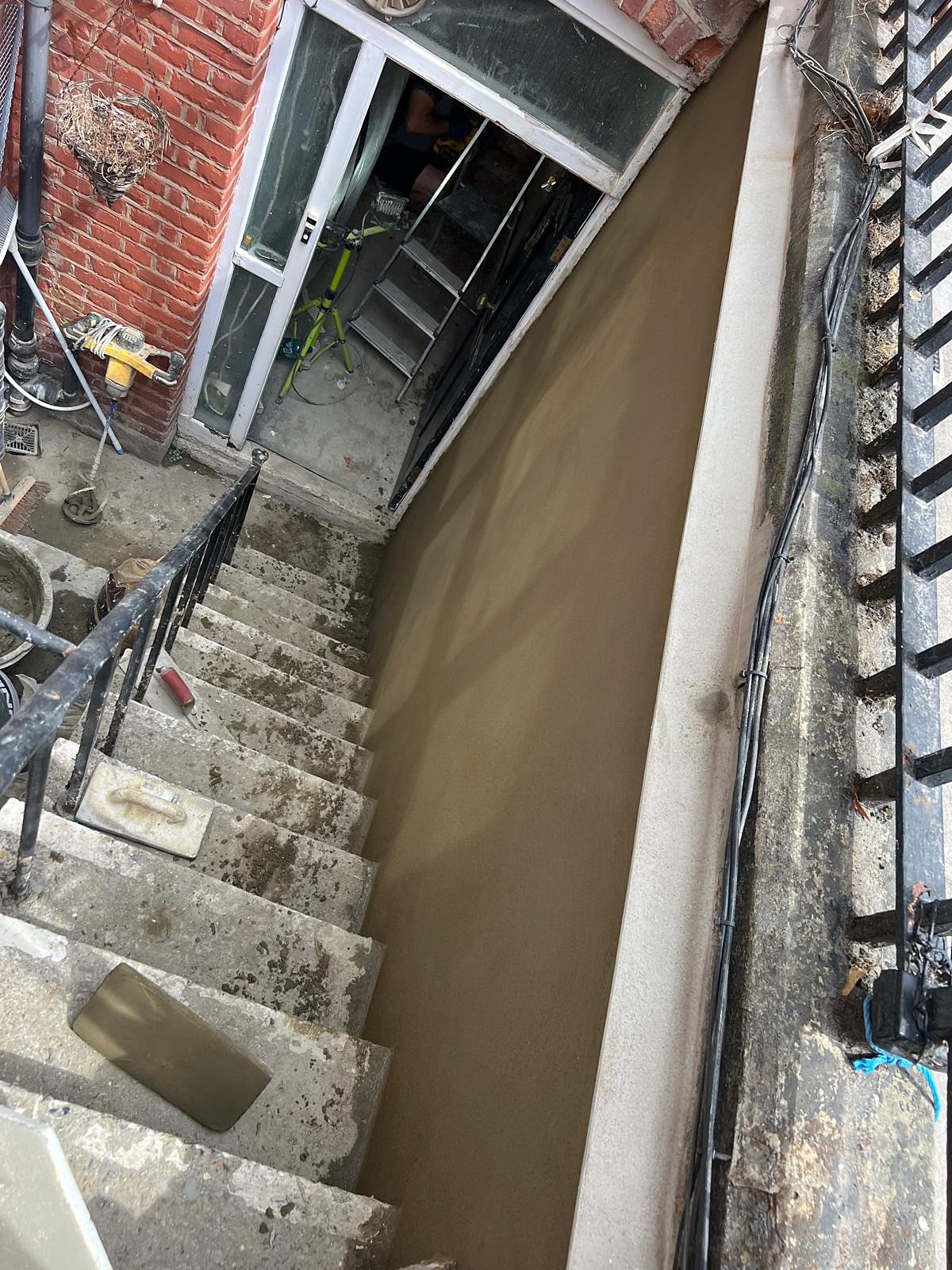
Advice on prevention: we explain what to watch after repairs to help prevent the damp returning. Check the facade and its render, flashings, gutters, and seals at doors and windows regularly: leaks often begin there. Keeping rainwater drainage clear and repairing small cracks promptly greatly reduces the risk of penetrating damp.
Materials
Proven products and established manufacturers
Our proven products come from well-known manufacturers, including Newton, Wykamol, Delta, Biokil and Mapei. We are approved installers for Wykamol, Delta and Biokil, and each waterproofing installation uses a complete system with compatible components.
NEWTON
Newton
Pump systems and cavity drainage membranes.

Wykamol
Sump pumps alongside membranes and tanking slurries.

Delta
Pumps, drainage channels and studded membranes.

Biokil
Treatments for mould and damp proofing.

Mapei
Waterproof coatings alongside repair mortars.
Your questions
Questions about penetrating damp
How does penetrating damp differ from rising damp?
Rising damp moves upwards from the ground through pores in the masonry, remaining low on a wall. Penetrating damp enters from outdoors or a leaking pipe and may occur from basement to top floor; it often worsens after heavy rain.
How will you locate the source of penetrating damp?
We examine affected rooms and the building exterior, take moisture readings and use thermal imaging to reveal hidden damp. This identifies the water's entry point rather than addressing only the visible patch.
Will fresh paint or plaster solve the damp?
No. While water continues to enter, damp, salts and mould can return through a new finish. We repair the source and dry the wall before applying new paint or plaster.
Should my basement use Type A tanking or a Type C membrane?
Many basements are suitable for either approach. With numerous structural cracks, building movement or traffic vibration, we use Type C: its membrane sits independently of the wall, keeping the room dry even when a new crack opens behind it.
Could a small crack outside cause damp indoors?
Yes. Capillary action draws water through even a hairline opening in render, brick or mortar, while driving rain pushes it further in. We inspect the inside and repair the exterior crack, often using helical bars.
Will all the damp plaster need to be removed?
Not necessarily. Plaster still firmly bonded after a short period of wetting can often be dried and redecorated. Hollow or flaking plaster, gypsum-based plaster, and plaster containing salts or deep mould usually needs removal, with a margin of around 50 cm beyond the patch.
Who is responsible for repairs in a rented home?
In the UK, responsibility generally lies with the landlord or the freeholder or managing agent collecting the service charge. Notify them in writing; our survey report can help establish where the water enters.
How can I arrange a penetrating damp survey in Croydon?
Arrange a survey online or speak to our specialists on 020 8432 3350 or 07720 752231. Consultation is free; surveys more than 10 miles from our base are charged according to our price list.
Free consultation
Arrange a penetrating damp survey in Croydon
Concerned about penetrating damp or any of the fungi described above? Contact us for a free consultation or survey. Surveys more than 10 miles from our base are charged according to our price list. Speak to our specialists on 020 8432 3350 or 07720 752231.
07720 752231
Describe your damp problem
Please fill in every field marked *. We will get in touch to arrange the survey once we receive your details.
Your local setting
Checking damp walls in Croydon
Across Croydon, homes include brick houses, conversions and properties with cellars or basements. Rather than assume that a damp patch has a particular cause because of its neighbourhood, we assess the building and the routes water could take into it.
We examine roof coverings, gutters, downpipes, render, pointing, cracks and window seals. We also check services within walls and, below ground, the walls, floor and joints. What we find determines whether to recommend an exterior repair, crack stitching, basement waterproofing or a combination.
Find and stop the water source
Our 5-star Google rating makes us proud. Read our reviews, arrange a survey or speak with our specialists on 020 8432 3350.
Qualified Specialists & a 10-Year Guarantee
Our family-run team holds CSSW qualifications, with a minimum of 10 years’ experience each. We back our work in Croydon with a 10-year guarantee covering workmanship, plus a QANW Insurance Backed Guarantee that transfers to the new owner if you sell your property. Based in Croydon, we work on domestic and commercial properties across London and the South East.

See What Our Clients Say
We are proud of our 5-star Google rating. Book a survey in our Booking Survey section, or call our specialists on 020 8432 3350 or 07720 752231.
Our service area
Penetrating damp services in Croydon and nearby
Crystal Damp Proofing & Basements Ltd treats penetrating damp across Croydon and nearby areas, including Norbury, Mitcham and Purley. Select an area below to view its local page.