

Leave your details and our team will get in touch.
Request a call back
Cellar Waterproofing in Richmond
Make a damp or flooded cellar dry and usable again.
Moisture in a cellar can damage the building, ruin stored belongings and allow mould spores to spread through the house.
At Crystal Damp Proofing & Basements Ltd, our CSSW-qualified team provides cellar waterproofing in Richmond TW9. We trace the source of the water, install permanent systems to keep the cellar dry for years to come and finish the walls with solid plywood boards, leaving the space ready to use when we leave.
Signs of damp in your cellar
Some clues are easy to spot; others appear gradually. Look out for:
- A musty smell that lingers even when you ventilate the space.
- Stains and salt deposits: dark marks, peeling paint or white powder associated with rising damp and penetrating damp.
- Mould: black, green or grey growth in corners, behind furniture or close to the floor.
- Condensation: droplets collecting on windows, walls or pipes.
- Standing water entering at floor or wall joints and gathering in puddles.
When does a cellar need waterproofing?
Waterproofing during construction is the cheapest and most effective approach. Existing homes may need protection added later, particularly if:
- The water table is high: groundwater reaches above cellar floor level, whether intermittently or throughout the year.
- You want to use the space differently: the cellar is intended as a living area, home office, gym or workshop. Explore our basement conversion service.
- The old waterproofing has failed: previous protection has cracked, deteriorated or was not installed properly.
- There is no waterproofing at all: this can occur in older homes, including Victorian and Georgian terraces.
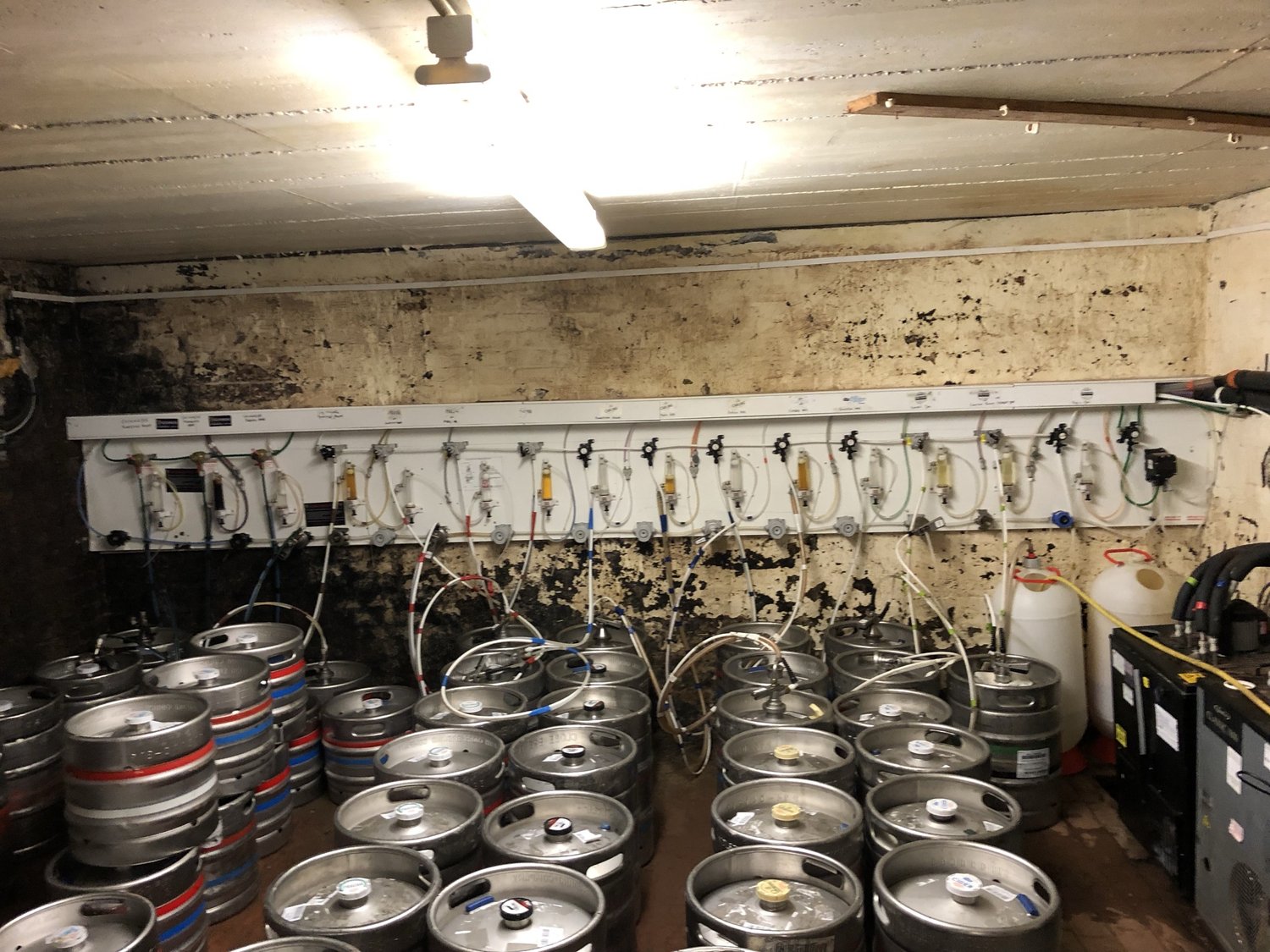
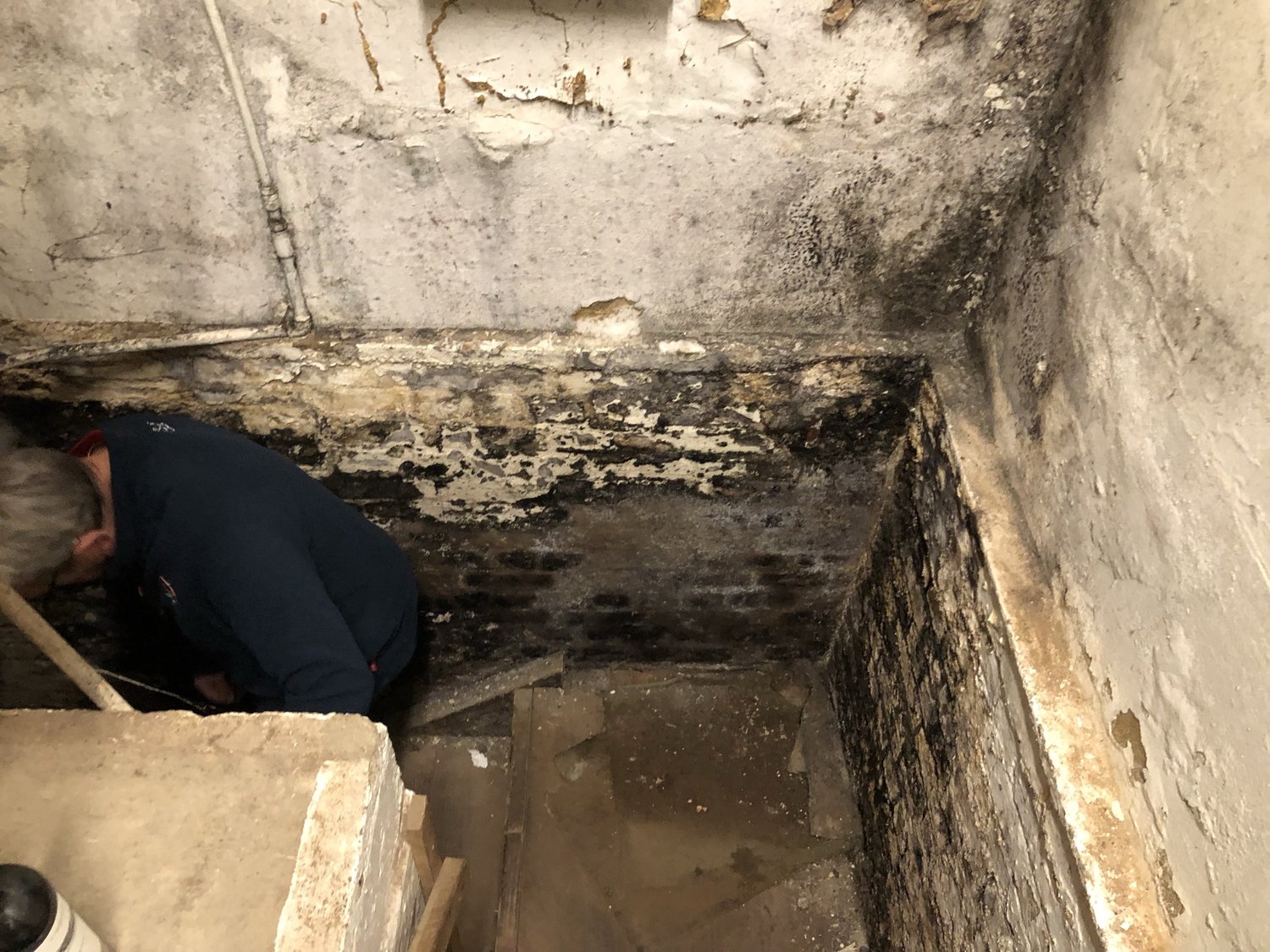
Before waterproofing
First steps in an emergency
What to do first if your cellar floods
If a cellar without proper waterproofing or tanking floods, deal with the immediate emergency first. Then arrange a lasting solution.
Then contact us and we’ll help. We remove plaster that has become soft, swollen or detached. For the best results with Type A and Type C systems, we recommend stripping it to ceiling level, or at least above the external ground level.
After the immediate danger has passed, we assess the cellar and recommend a permanent system to prevent further flooding.
Type C · Type A
Our permanent waterproofing options
Once the walls are dry, we select a system suited to the property, your budget and the water conditions.
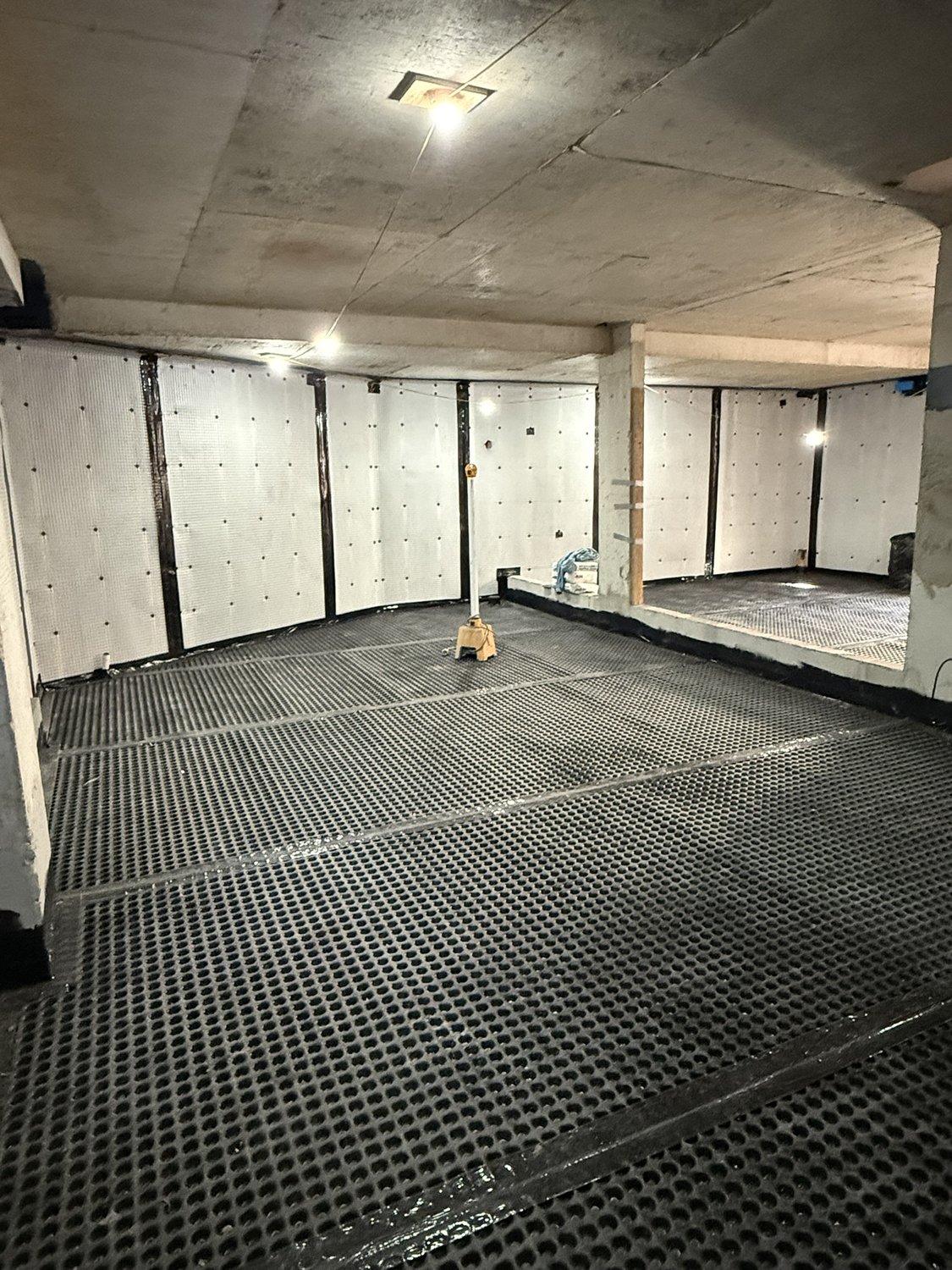
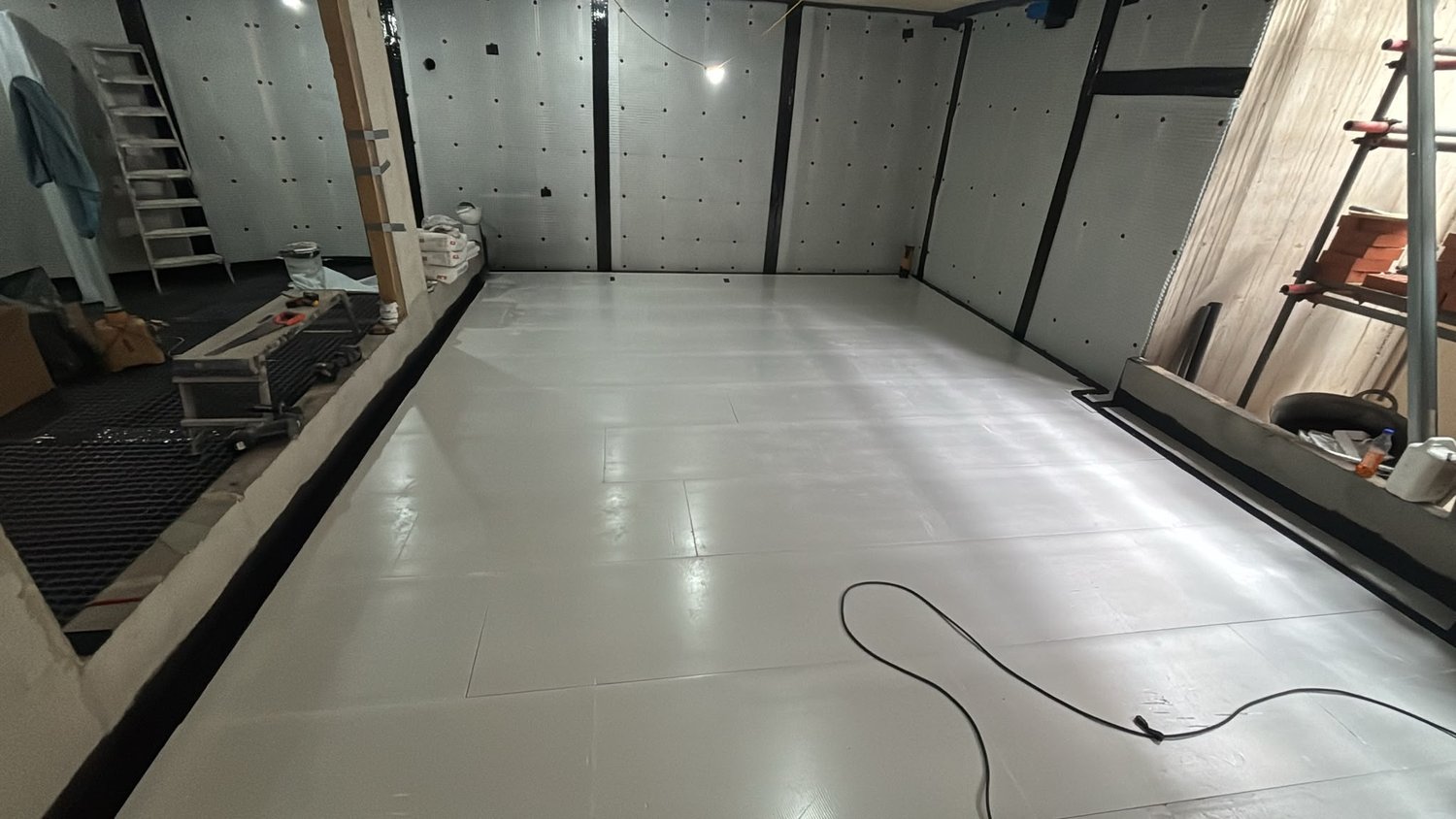
Cavity drain membrane system (Type C): a studded membrane covers the walls and floor. Water passes behind it into drainage channels, which direct it to a sump. An automatic sump pump then discharges it outside. By managing water instead of resisting its pressure, this is the most reliable and widely recommended UK method for flooding cellars. Learn about basement waterproofing.
Tanking (Type A): several layers of mineral waterproofing slurry form a watertight barrier on prepared walls. Tanking suits lower water pressure. With high hydrostatic pressure, we combine it with a membrane system or use a membrane instead. Explore spray-applied tanking.
Before the finish
Plywood wall finishes: fit any shelves you want
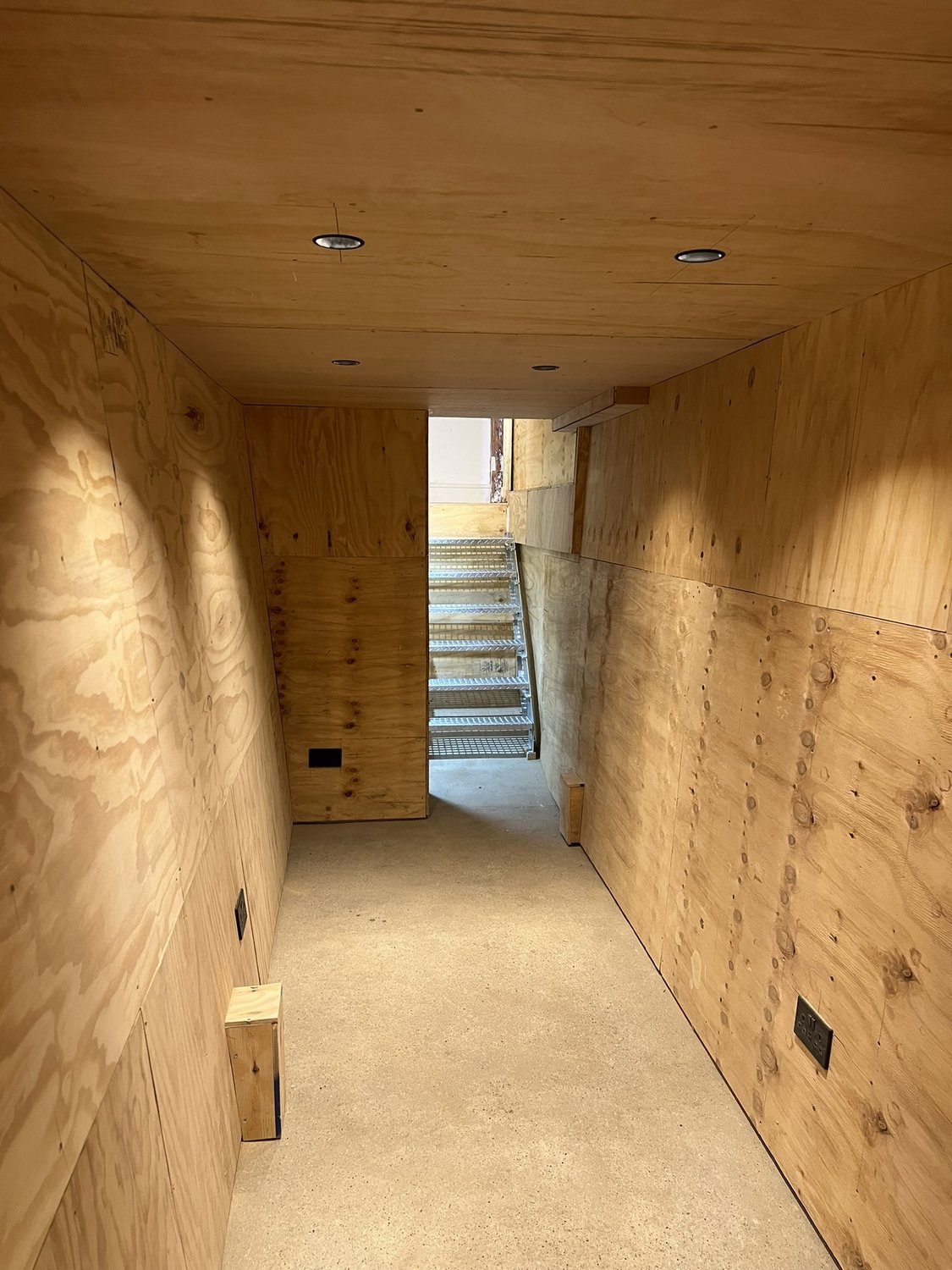
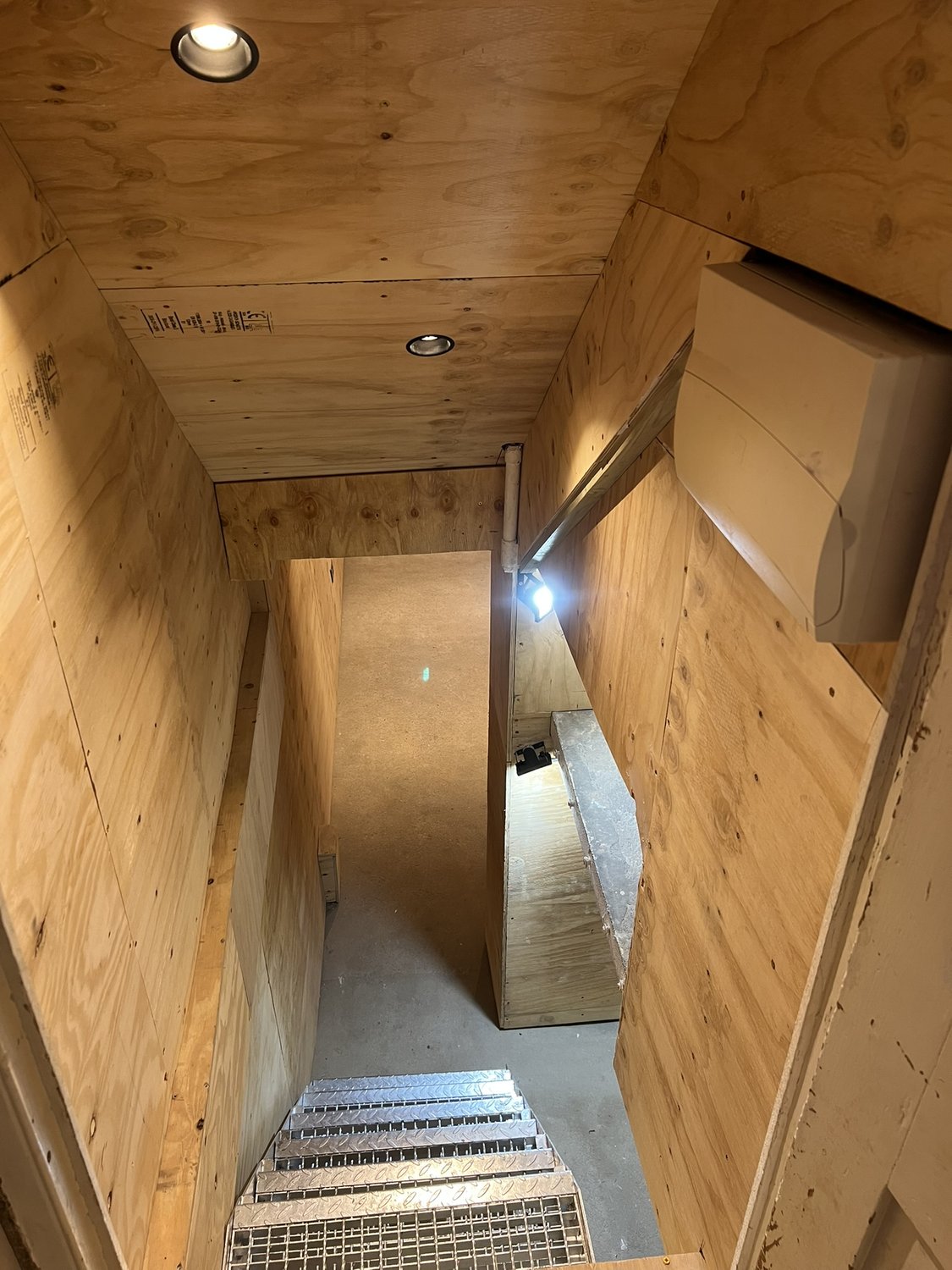
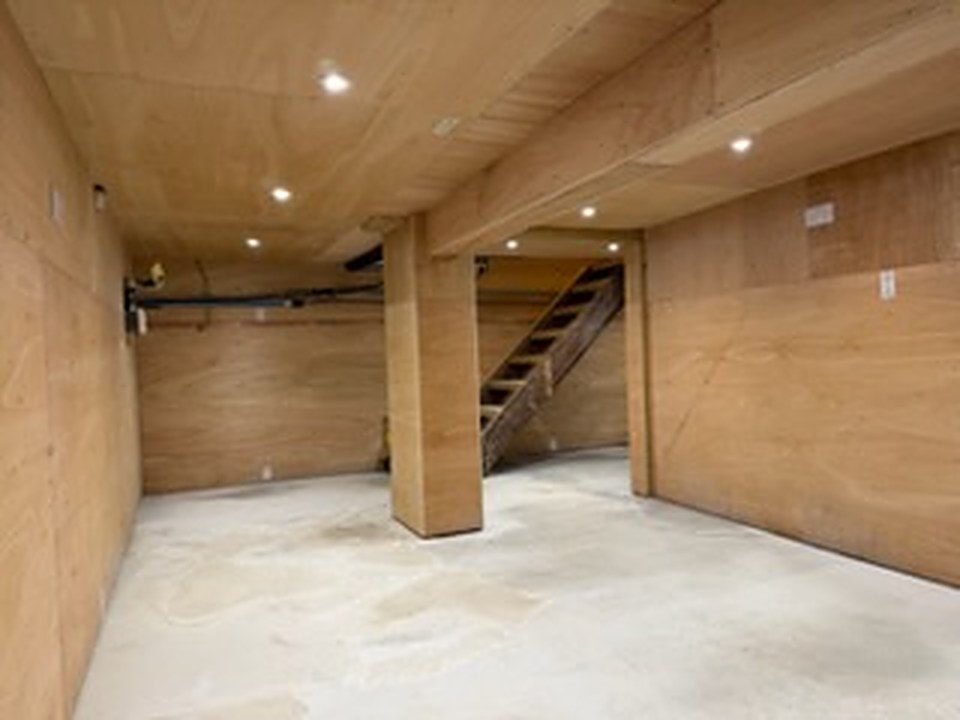
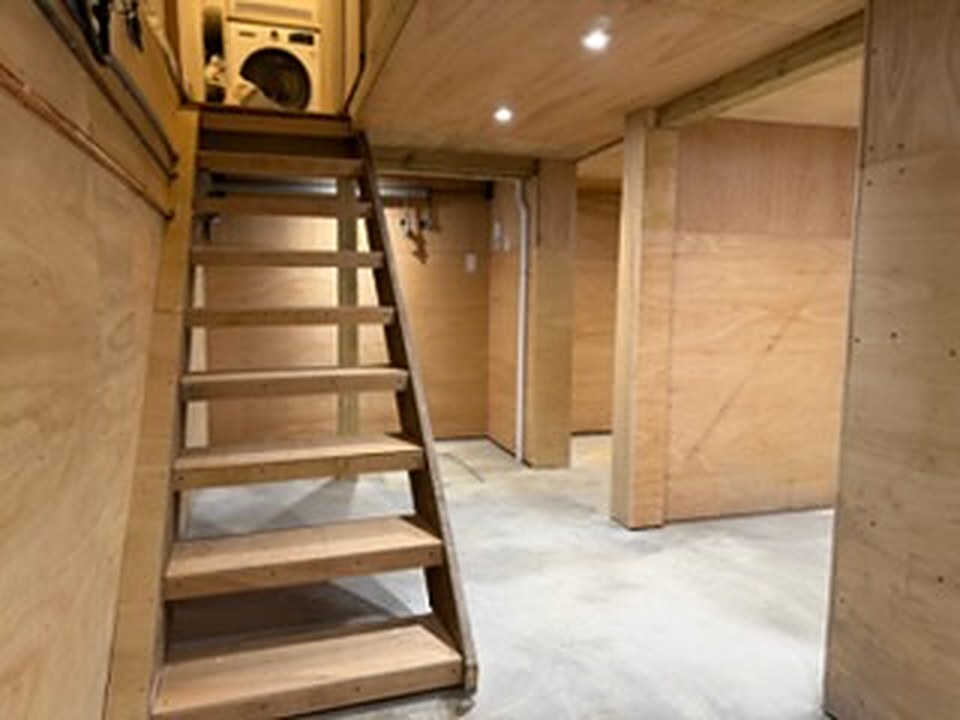
After waterproofing, we cover the cellar walls with solid plywood boards. This decorative finish creates a strong, level surface across the wall. Shelves, cupboards, racks and hooks can then go where you need them without damaging the waterproofing behind.
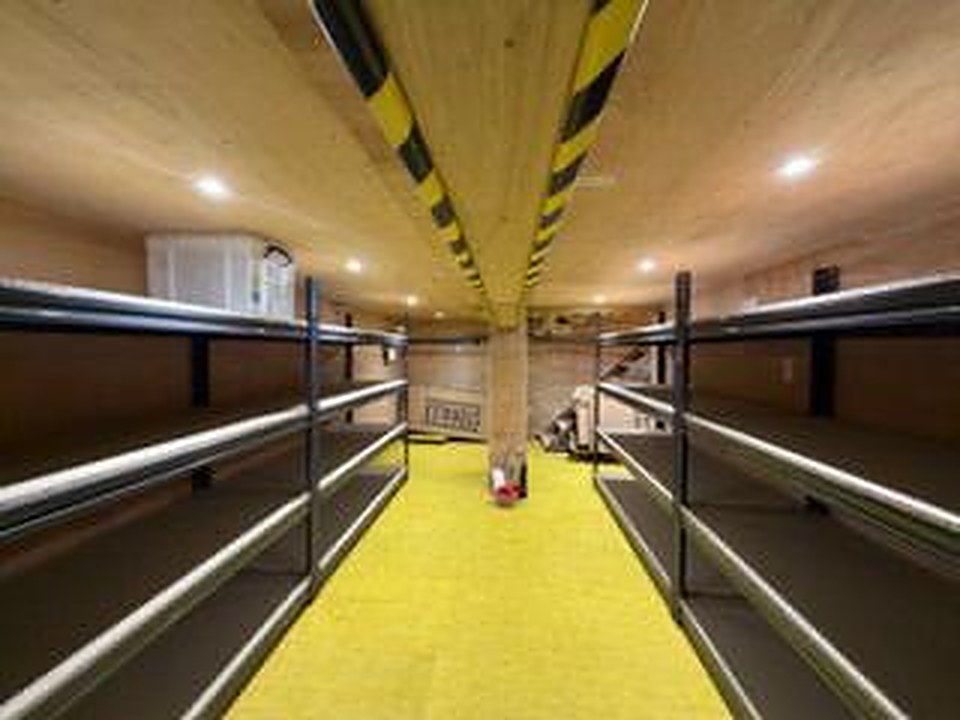
The warm timber finish also makes the room feel lighter and fresher. Instead of a dark, damp cellar, you have a clean space suitable for storage, a wine cellar, a workshop or a home gym.
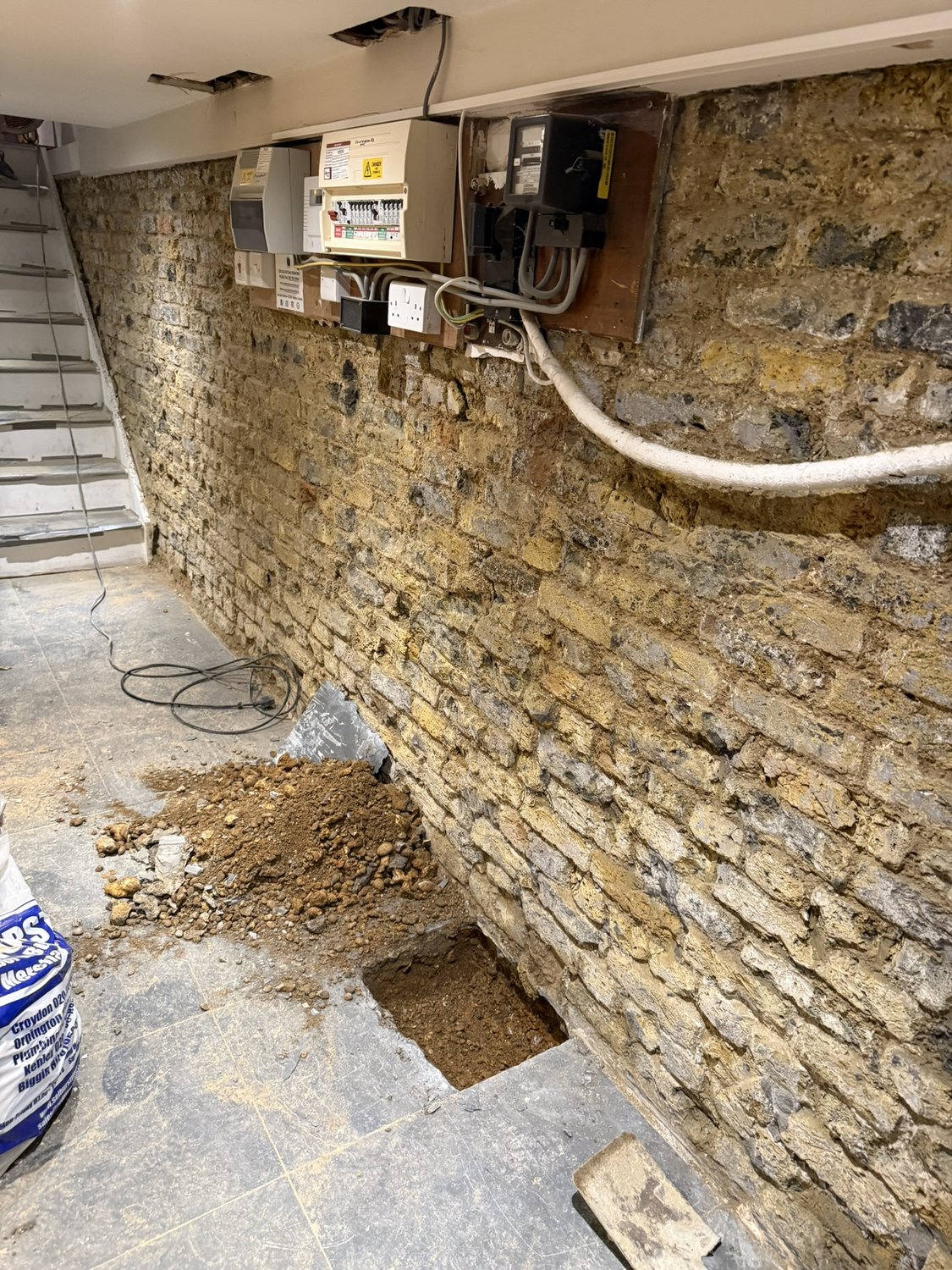
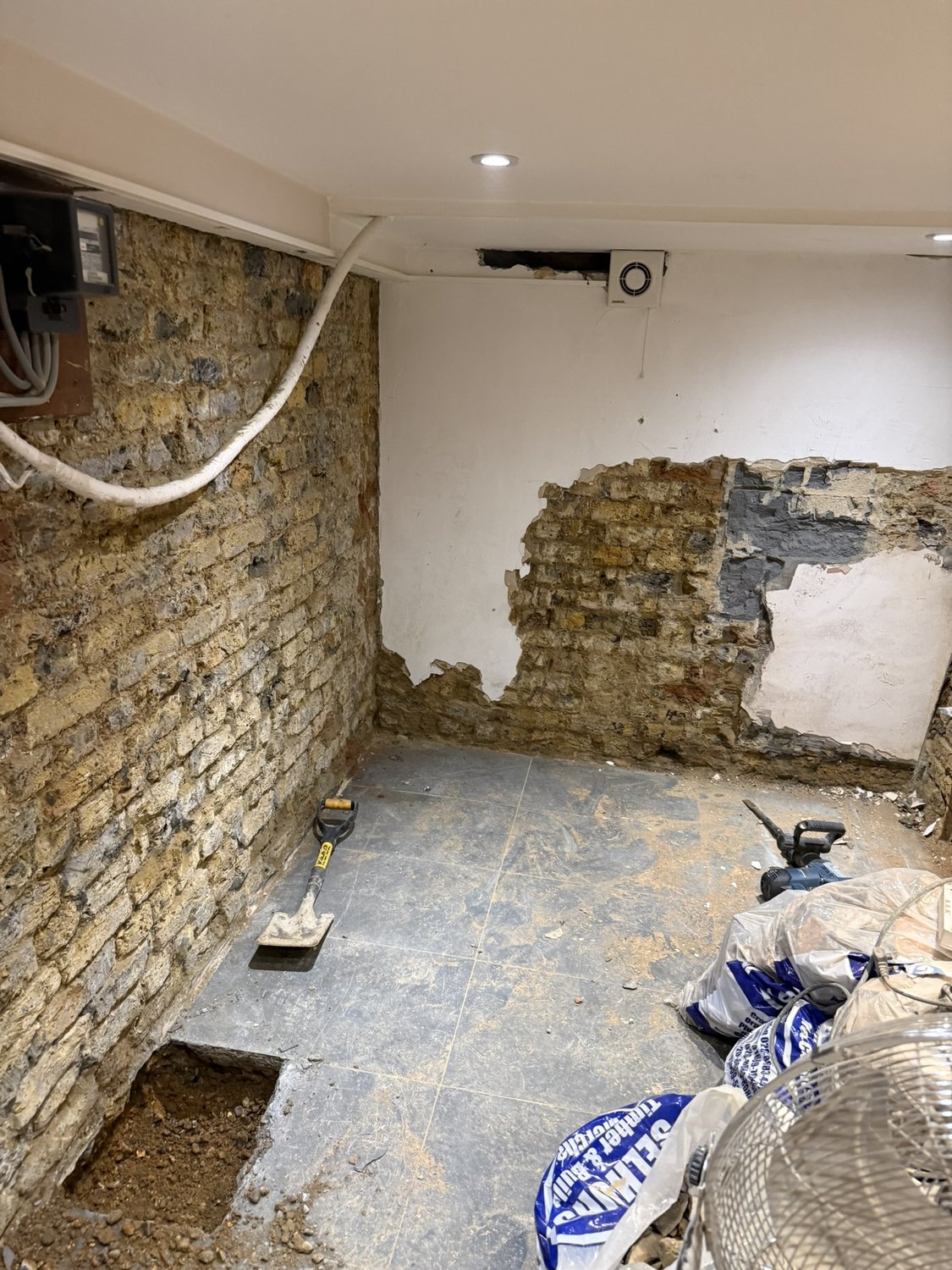
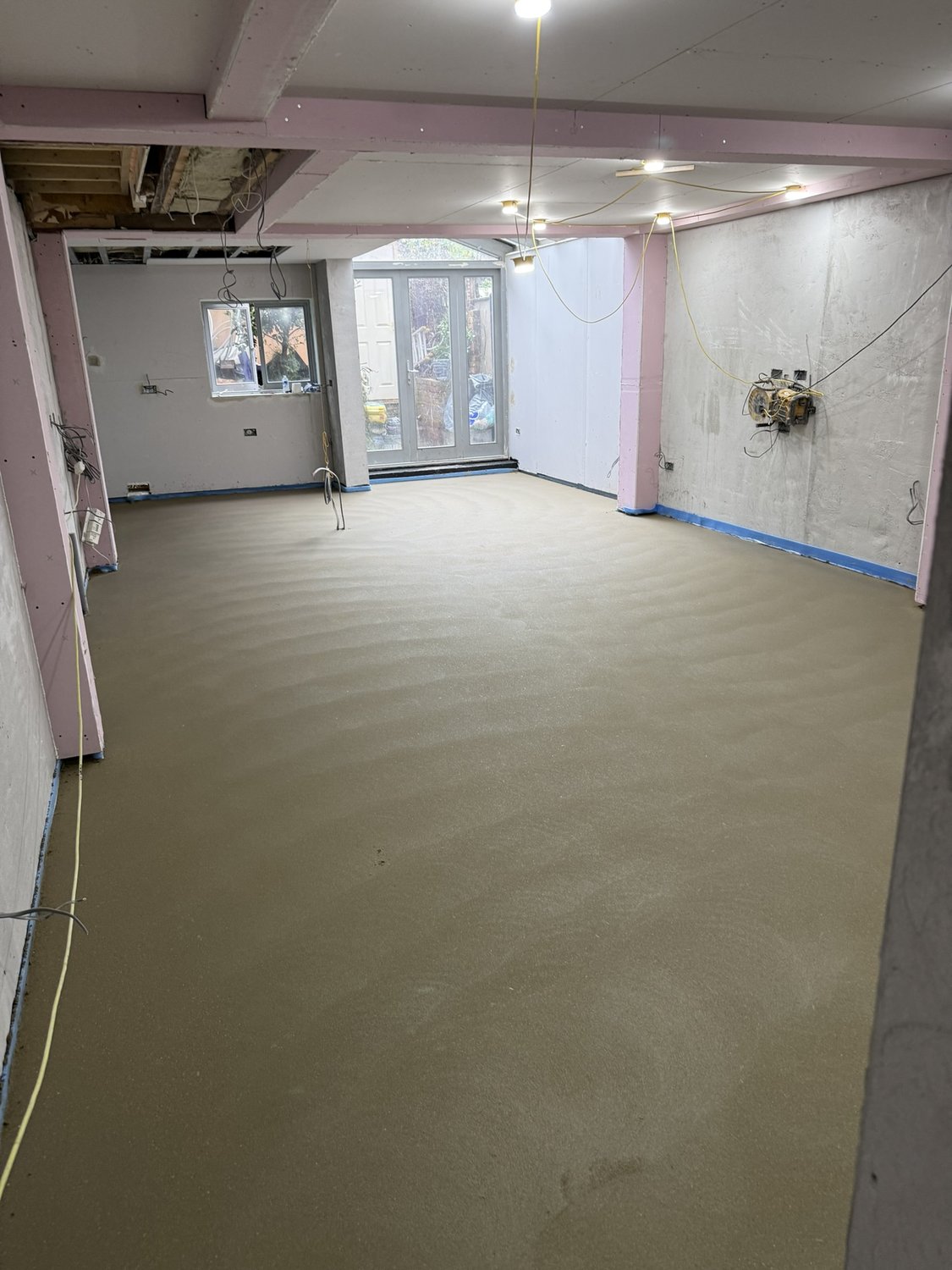
The photos compare the cellar before work with the same space after installation of the plywood finish.
The layers in sequence
Installing each layer in the right order
Correct sequencing protects the waterproofing. If the layers are installed out of order or the membrane is damaged while finishing, leaks can return. Here is our installation process.
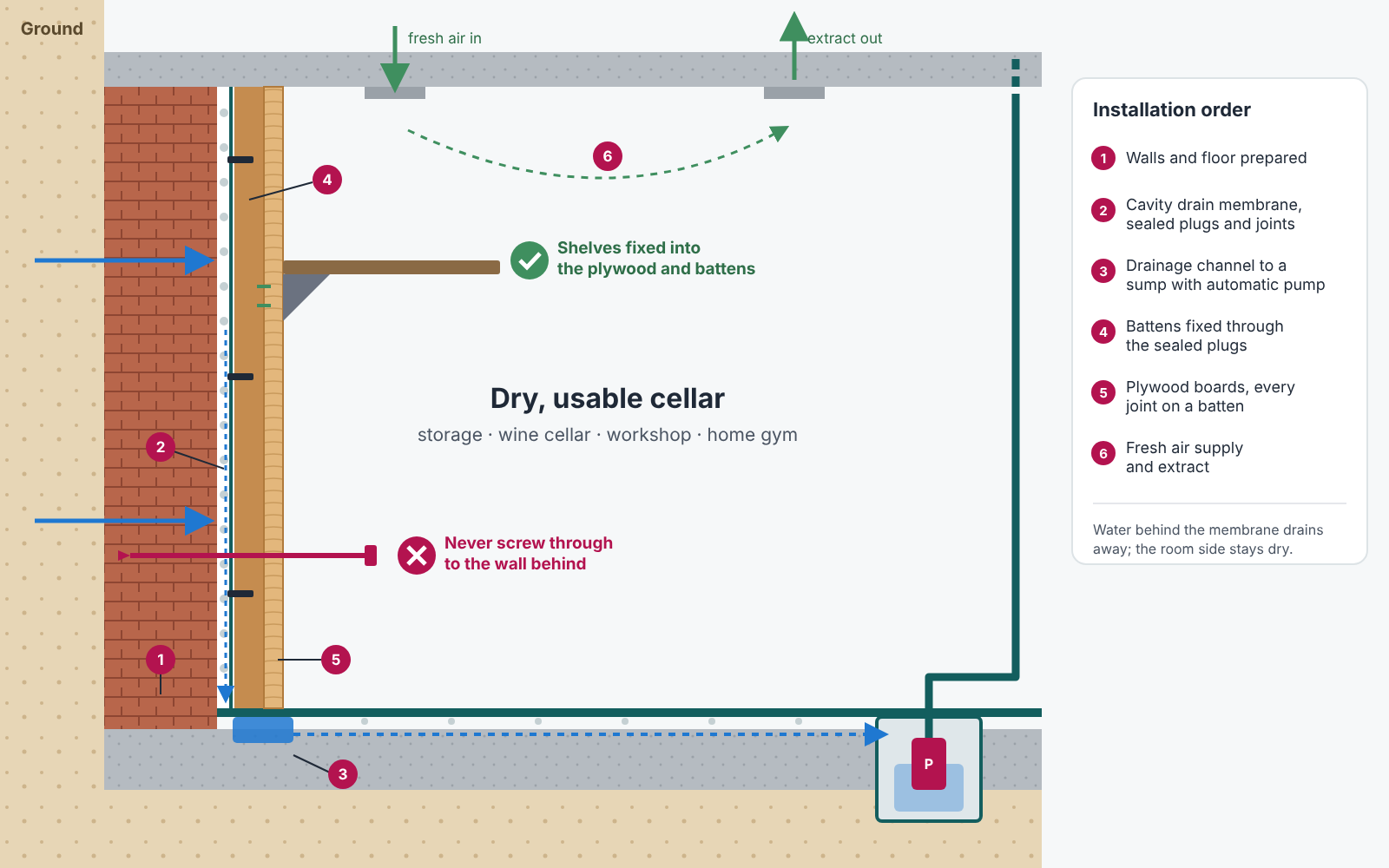
Important rule: do not put ordinary screws through both the plywood and membrane into the wall. Every hole could let water through the waterproofing. For later fittings, screw into the plywood or battens, not the wall behind. Call us for advice if you are unsure.
Specialist guidance
Why ask a cellar waterproofing specialist?
Waterproof paint may conceal damp for a few months while moisture continues to damage the structure. Finding the cause is essential to choosing the right repair.
Does water appear after rain or remain all the time?
- Only after heavy rain: blocked or faulty gutters, ground falling towards the house or saturated surface soil are often responsible. Gutter repairs and better drainage around the property can often resolve this.
- All the time: the cellar is below the permanent groundwater level. An effective solution then requires a full membrane and sump pump system or advanced injection waterproofing.
How a specialist helps
- The right diagnosis: our CSSW-qualified surveyors distinguish between groundwater pressure, condensation and poor ventilation, a burst pipe or a leaking roof.
- The right technology: we match the waterproofing method to the soil, walls and foundations.
- Professional equipment: we use thermal imaging cameras, moisture meters and specialist injection pumps.
- Structural safety: incorrect excavation around an older home's foundations can crack its walls. We take care to protect the building while working.
Waterproofing materials
Proven products from trusted manufacturers
Our materials come from established manufacturers including Newton, Wykamol, Delta, Biokil and Mapei. Used together, they create a complete system designed to keep the cellar dry for years to come.
NEWTON
Newton
Pump systems and cavity drain membranes.

Wykamol
Sump pumps, membranes and tanking slurries.

Delta
Pumps, drainage channels and studded membranes.

Biokil
Treatments for mould and damp proofing.

Mapei
Waterproof coatings and repair mortars.
Other services
Services related to cellar waterproofing
Alongside cellars, we waterproof vaults and complete basements. We also address damp using crystalline DPC injections.
Basement Waterproofing
Tanking, membranes and pumps.
Vault Waterproofing
Waterproofing under-pavement vaults.
Basement Conversion & Waterproofing
Turning cellars into living space.
Sump Pump System & Services
Pumping water away from the cellar.
Spray-Applied Basement Waterproofing
Spray-applied Type A tanking slurry.
Rising Damp
Moisture rising through walls from the ground.
Penetrating Damp
Moisture passing through walls.
ISO-Therm Membrane & Black Mould
Solutions for condensation and mould.
Thermal Inspection
Cameras to locate hidden damp.
Crystalline DPC Injections
Installing a damp proof course in walls.
Basement Waterproofing Technology
Understanding Type A, B and C systems.
Insurance-Backed Guarantee & Product Warranty
Cover transferable when the property is sold.
Common questions
Cellar waterproofing questions answered
Is it possible to keep a flooding cellar permanently dry?
Yes. We usually fit a cavity drain membrane system (Type C) in cellars that flood. Water moves behind the membrane into drainage channels and on to a sump, where an automatic pump discharges it outside. Managing water rather than resisting its pressure makes this the most reliable method for flooding cellars.
Is a membrane system or tanking right for my cellar?
The water conditions determine the choice. A cavity drain membrane (Type C) is suited to flooding cellars and those below groundwater level. Mineral slurry tanking (Type A) is better suited to lower water pressure. At high pressure, we pair it with a membrane or use a membrane instead. We advise you after surveying the cellar.
How far should plaster be stripped before cellar waterproofing?
For Type A and Type C systems, we recommend removing plaster to ceiling level for the best results, or at least above external ground level. BS 8102:2022 also calls for basement waterproofing to reach the damp proof course, or 150 mm above external ground level.
Can shelves be fitted to the plywood-finished walls?
Yes. Fit shelves, cupboards, racks or hooks where needed by fixing into the plywood or its battens. Do not screw through the plywood and membrane into the wall: each hole could compromise the waterproofing. Call us if you need advice.
Why does a waterproofed cellar need ventilation?
A fresh air supply and an extract keep air circulating. This prevents condensation building up and affecting the plywood boards or allowing damp and mould to return.
Does the membrane and sump pump system require servicing?
Yes. BS 8102:2022 requires a maintenance schedule for cavity drainage systems and an initial service inspection at handover. Regular checks of the pump and drainage channels help the system continue working as designed.
What guarantee comes with the work?
As an approved installer, we provide a 10-year workmanship guarantee on our waterproofing installations, alongside a QANW Insurance Backed Guarantee that passes to a new owner when you sell. Materials also have a 10-year manufacturer’s product warranty.
How can I arrange a cellar survey in Richmond?
Book online or speak to our specialists on 020 8432 3350 or 07720 752231. We will identify the source of the water and recommend a suitable permanent solution.
Free cellar survey
Arrange a cellar survey in Richmond
For a damp or flooded cellar, arrange a survey or speak to our specialists on 020 8432 3350 or 07720 752231. We will trace the water and suggest the right permanent solution.
07720 752231
Describe your cellar
Please complete the fields marked *. We will contact you to arrange a survey after receiving your details.
Understanding your cellar
What we check in cellars around Richmond
In Richmond, a cellar might be a compact former coal store beneath a terrace or a larger room under a house or shop. We assess the space itself before recommending waterproofing, rather than assuming that neighbouring properties have the same problem.
We check whether water appears after rain or persists, inspect the walls, plaster and floor, and look at gutters and drainage. We also ask how you intend to use the cellar. This helps us establish whether to address drainage outside or install a membrane and sump pump system inside.
Preparing for cellar waterproofing in Richmond
Every cellar waterproofing project in Richmond involves some practical planning.
- Clearing the cellar: remove stored belongings before we strip plaster and dry the walls.
- Where the water goes: the sump pump needs a route to discharge water outside, usually to a nearby drain.
- Power for the pump: we discuss the electrical supply needed for the automatic pump during the survey.
- Ventilation routes: fresh air and extracted air both need routes out of the cellar.
- Nearby areas: our cellar waterproofing service also covers Twickenham, Kingston upon Thames and Hounslow.
Getting started
Make your cellar a dry space you can use
Our 5-star Google rating is a source of pride. Arrange a survey, browse our reviews or speak to a specialist on 020 8432 3350.
Qualified Specialists & a 10-Year Guarantee
Our family-run team holds CSSW qualifications, with a minimum of 10 years’ experience each. We back every job in Richmond with a 10-year guarantee covering workmanship, plus a QANW Insurance Backed Guarantee that transfers to the new owner if you sell your property. We work on domestic and commercial properties in Richmond and across London and the South East.

See What Our Clients Say
★★★★★ Rated 5 stars on Google
We are proud of our 5-star Google rating: see our reviews. If your basement or property in Richmond is damp or takes in water, book a survey in our Booking Survey section, or call or message our fully qualified advisors.
Where we work
Cellar waterproofing across Richmond and nearby areas
Crystal Damp Proofing & Basements Ltd provides cellar waterproofing in Richmond and nearby areas, including Twickenham, Kingston upon Thames and Hounslow. Select an area below to explore its local page.