

Leave your details and our team will get in touch.
Request a call back
Croydon Cellar Waterproofing
Make your damp or flooded cellar a dry space you can use.
Moisture in a cellar can harm the structure, damage stored belongings and allow mould spores to move through the house. It is worth finding out where the water is coming from.
For homeowners in Croydon CR0, Crystal Damp Proofing & Basements Ltd provides cellar waterproofing in Croydon. Our CSSW-qualified team traces the source of the problem and installs permanent systems to keep the cellar dry for years to come. We finish the walls with solid plywood boards, leaving the space ready to use when we leave.
How to spot damp in a cellar
Damp is not always visible straight away. Watch for these signs:
- A musty smell that persists despite airing the cellar.
- Stains and salt deposits: look for dark marks, peeling paint or white powder, which can indicate rising damp or penetrating damp.
- Mould: patches of black, green or grey growth behind furniture, in corners or close to the floor.
- Condensation: droplets forming on cellar windows, pipes or walls.
- Standing water collecting in puddles after seeping through joints in the floor or walls.
When is cellar waterproofing needed?
Installing waterproofing as a house is built is the cheapest and most effective approach. For an existing home, it may need to be added later when:
- The water table is high: groundwater reaches above the cellar floor, either occasionally or throughout the year.
- You want to use the space differently: you are planning a living area, home office, gym or workshop. Our basement conversion service covers this work.
- The old waterproofing has failed: earlier protection has deteriorated, cracked or was installed poorly.
- There is no waterproofing at all: this is often the case in older properties, including Victorian and Georgian terraces.
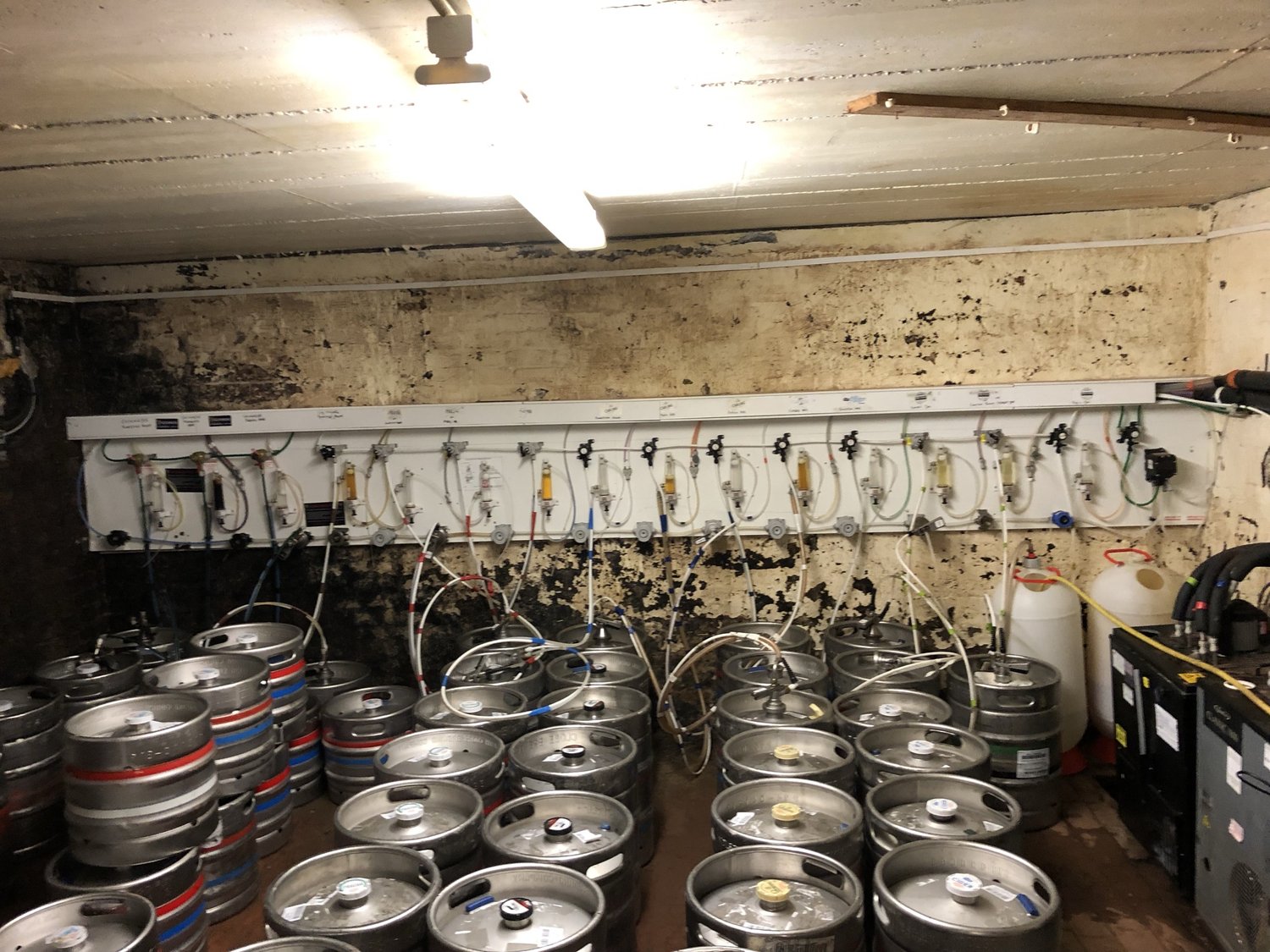
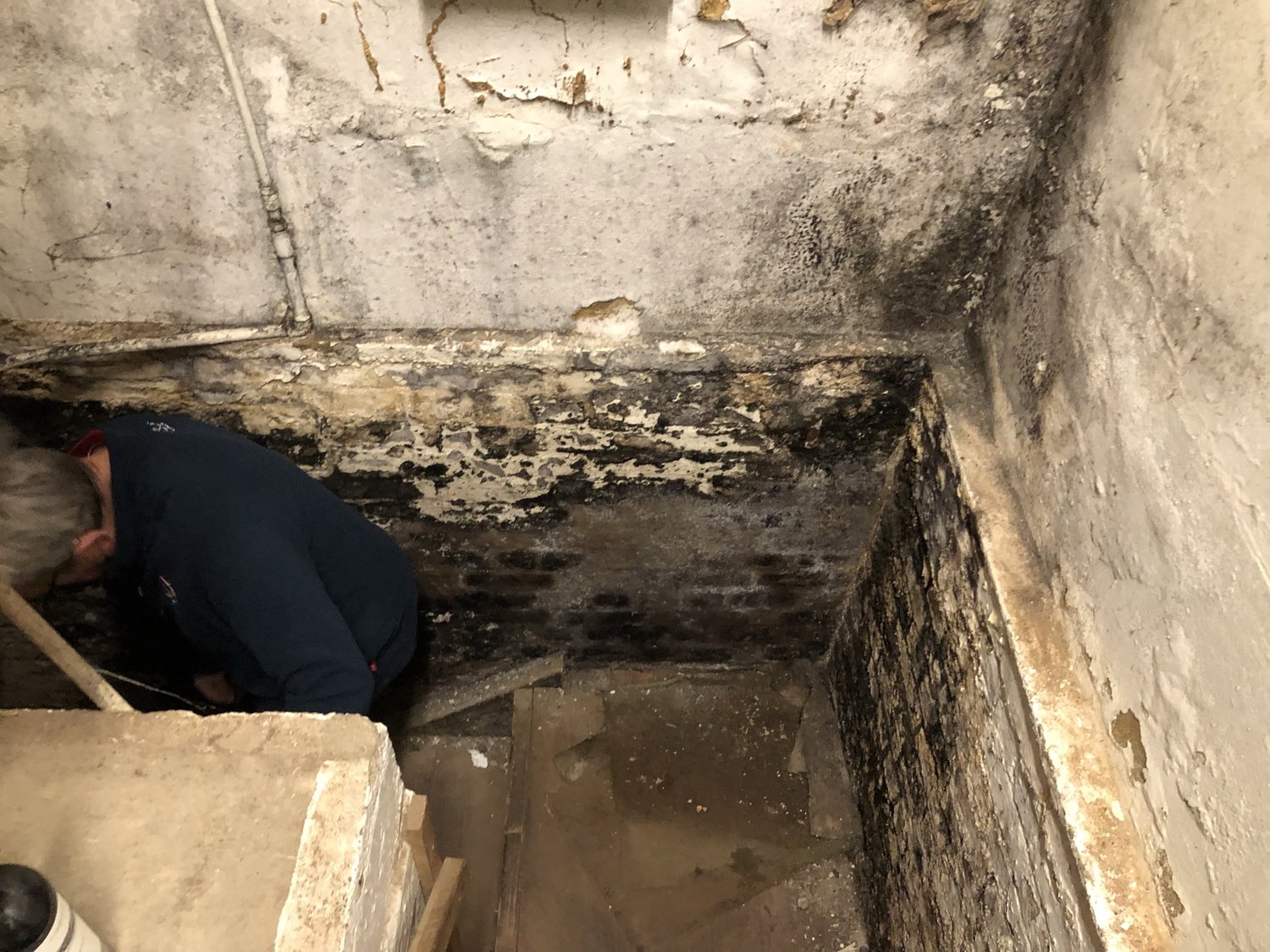
Before waterproofing begins
What to do immediately
What to do if your cellar has flooded
If a cellar without proper waterproofing or tanking floods, address the immediate emergency first. The next step is to arrange a permanent solution.
Then contact us and we’ll help. We remove plaster that has softened, swollen or detached from the wall. To get the best results from Type A and Type C systems, we recommend taking plaster up to ceiling level, or at least above external ground level.
After the immediate danger has passed, we assess the cellar and recommend a permanent way to prevent it flooding again.
Type C and Type A waterproofing
Choosing a permanent waterproofing system
When the walls are dry, we select a system to suit the property, your budget and the water conditions.
Cavity drain membrane system (Type C): we fix a studded membrane over the floor and walls. Water passes behind it into drainage channels, which lead to a sump. An automatic sump pump then discharges the water outside. By managing water instead of resisting its pressure, this is the most reliable and widely recommended UK method for cellars that flood. Find out more about basement waterproofing.
Tanking (Type A): several coats of mineral waterproofing slurry create a watertight barrier on prepared walls. This suits lower water pressure. If hydrostatic pressure is high, we use it alongside a membrane system or choose a membrane instead. Read about spray-applied tanking.
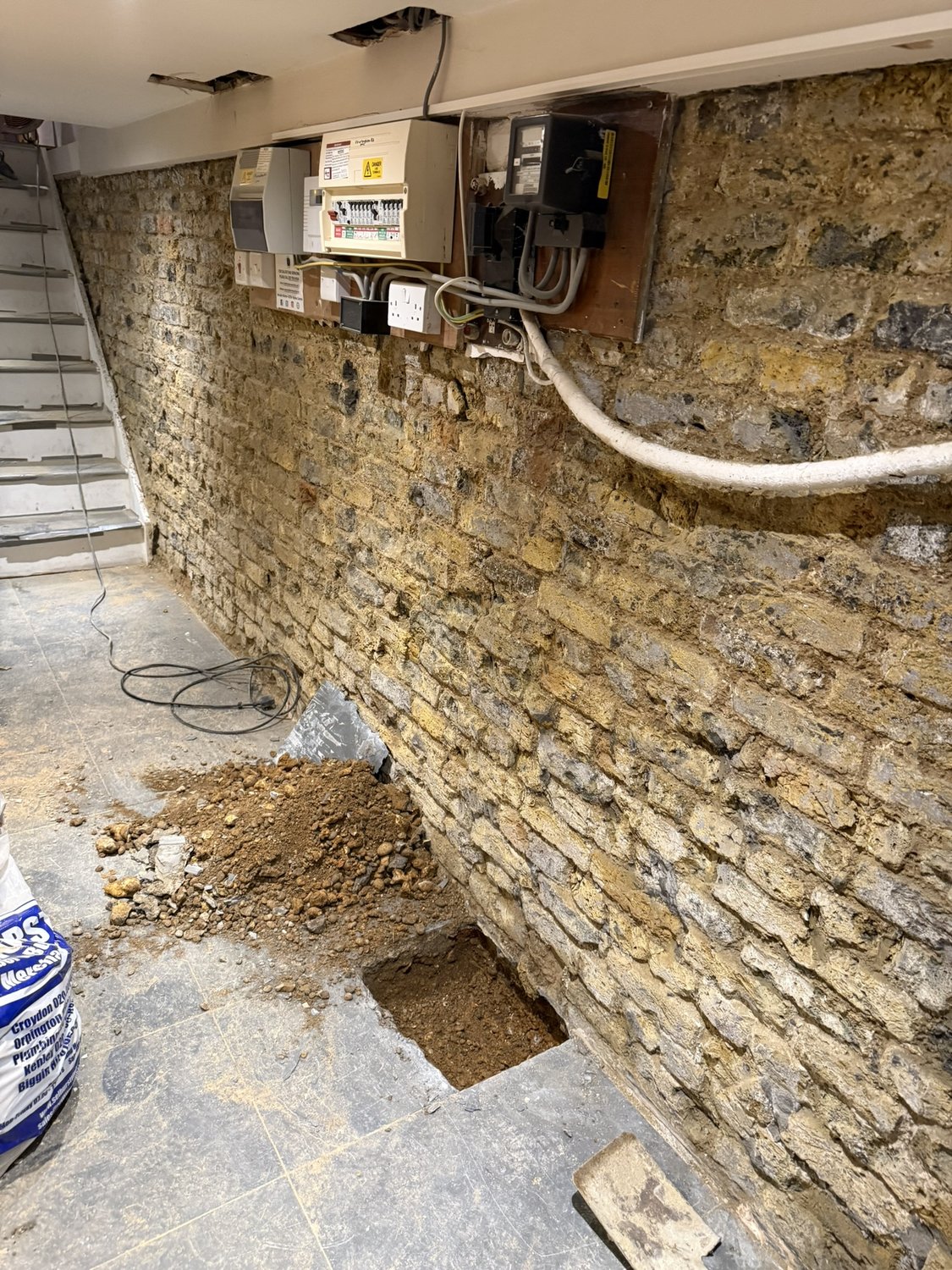
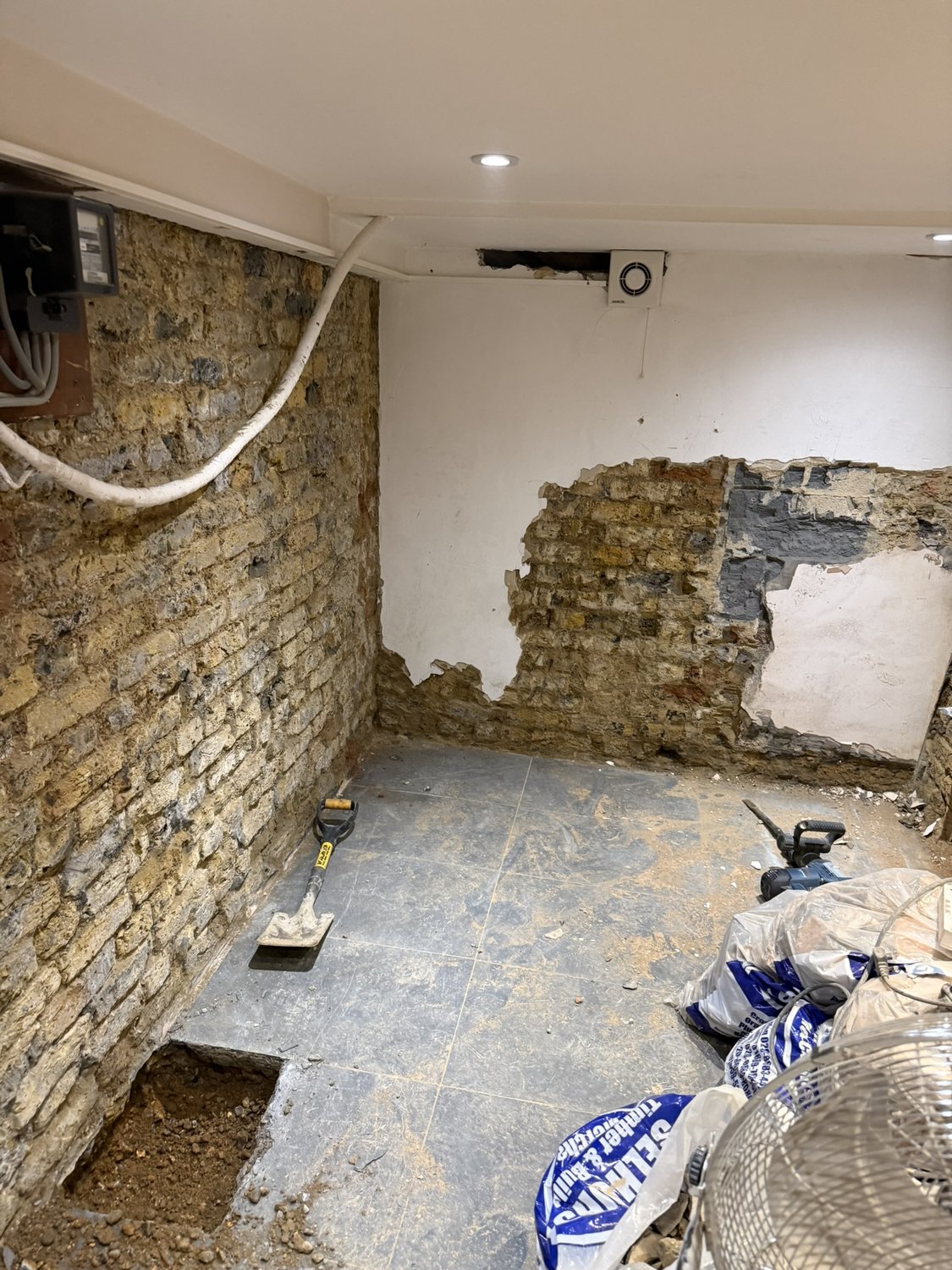
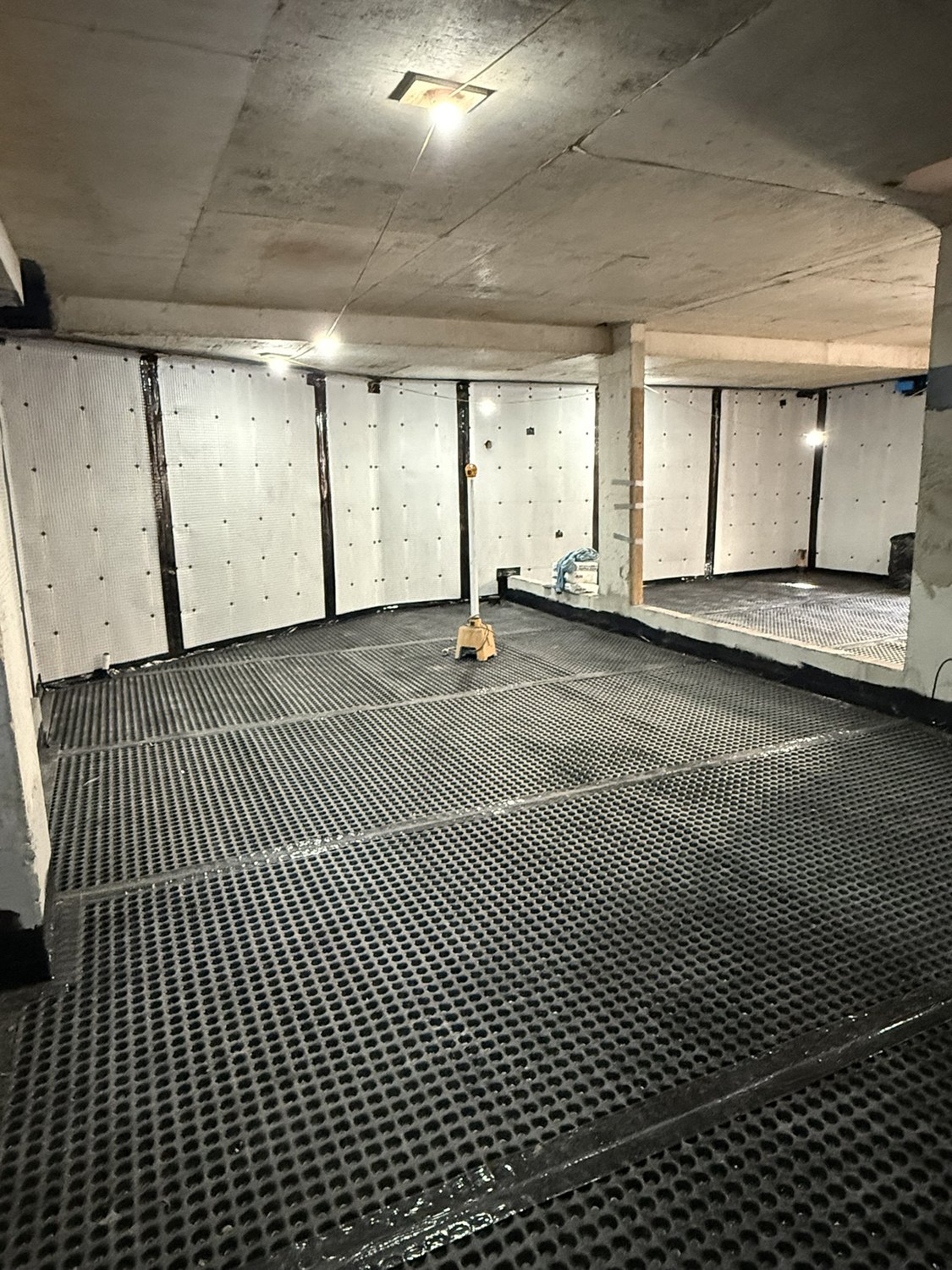
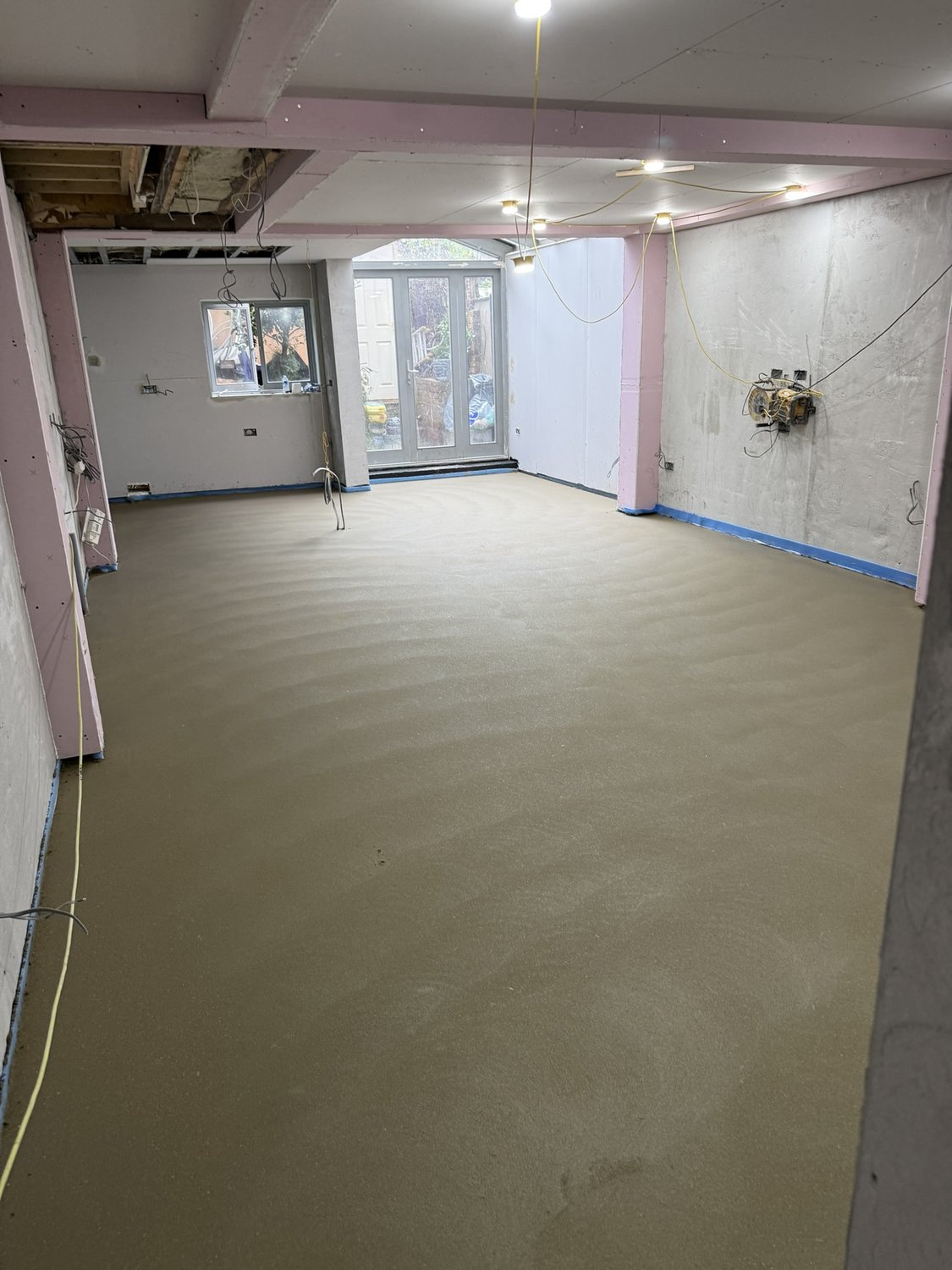
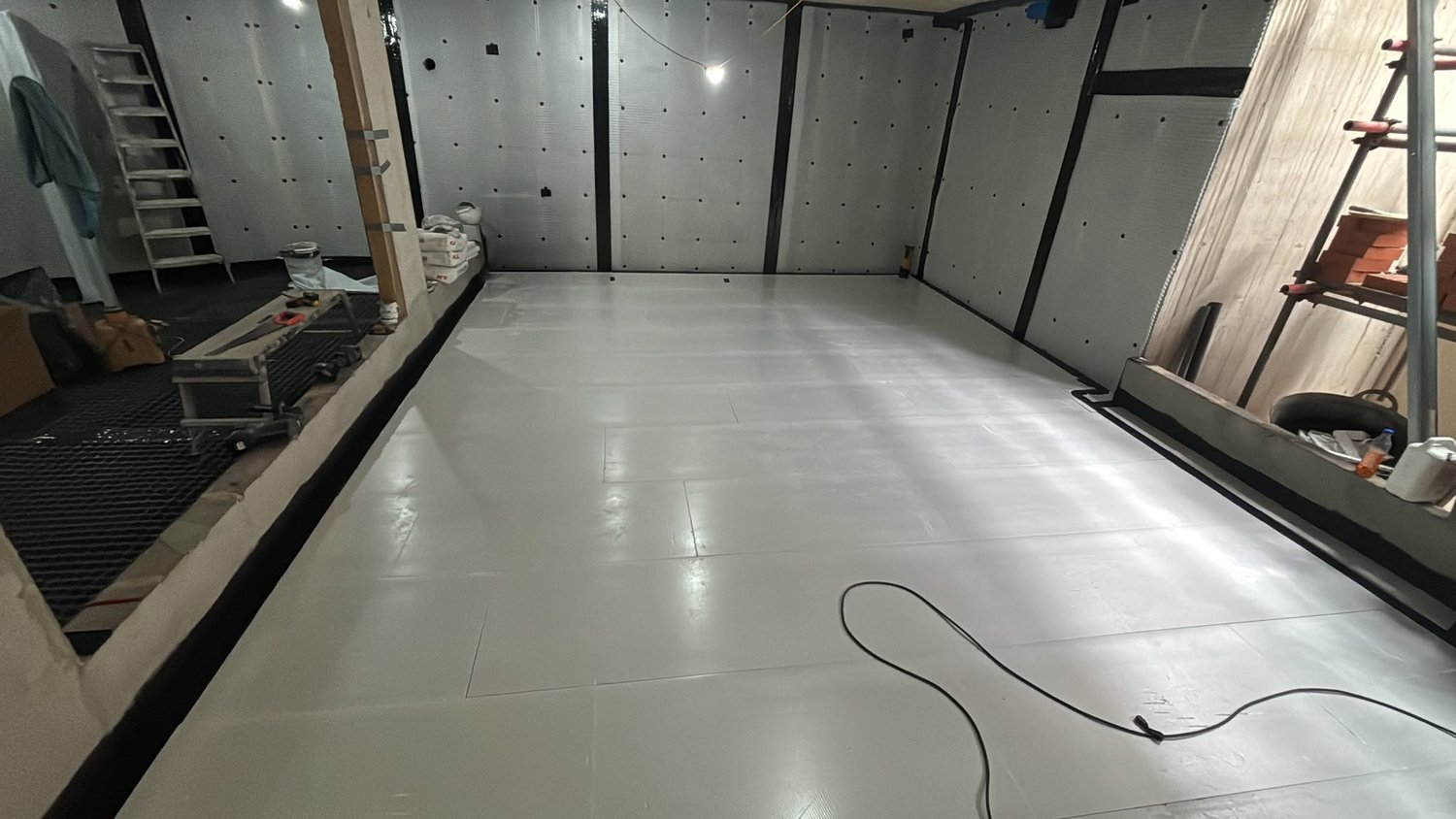
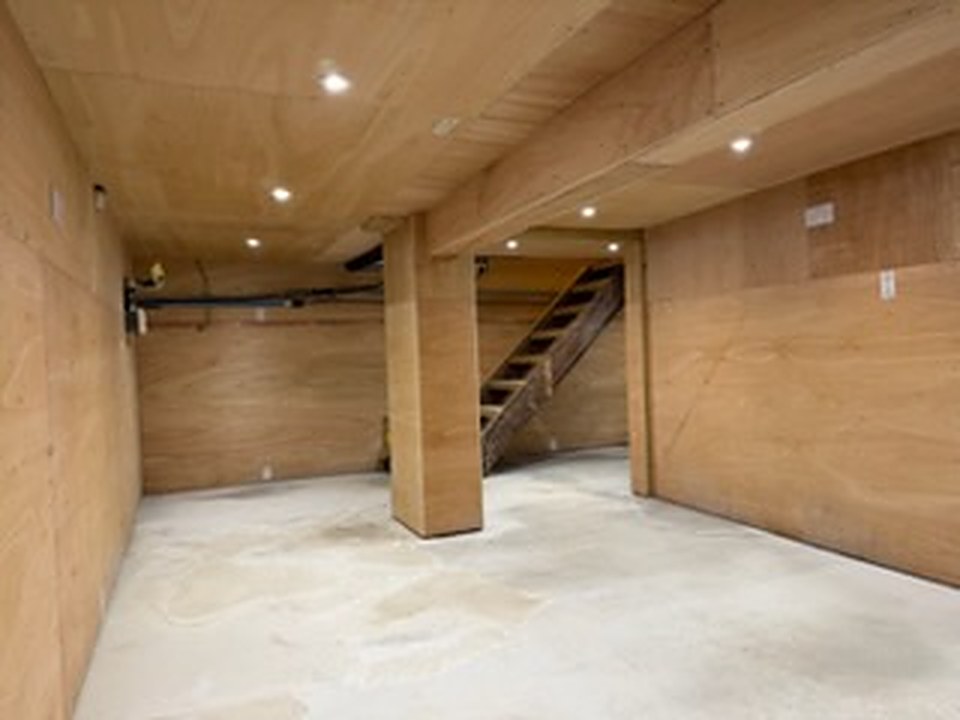
The cellar before finishing
Plywood wall finishes: fit any shelves you want
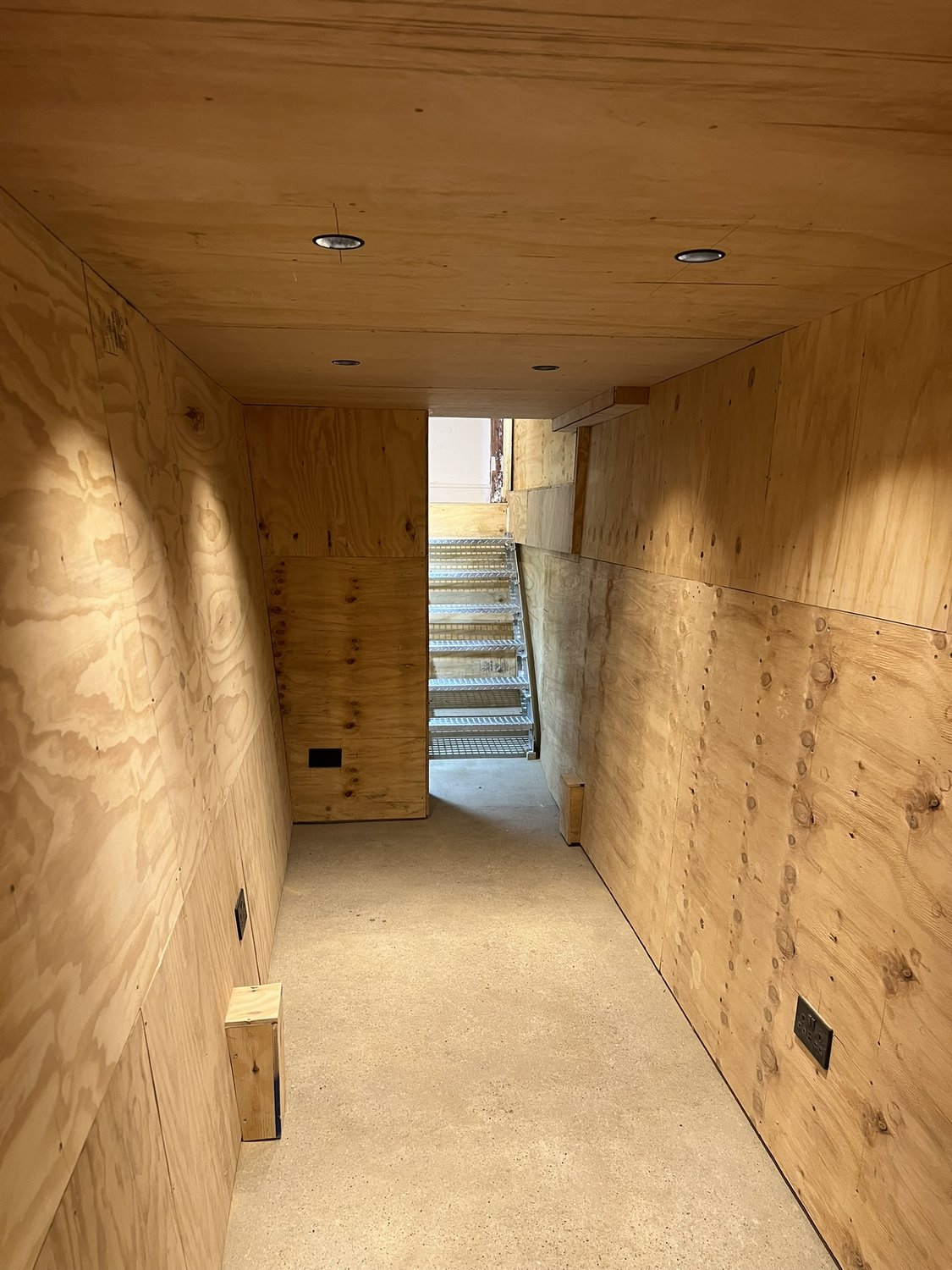
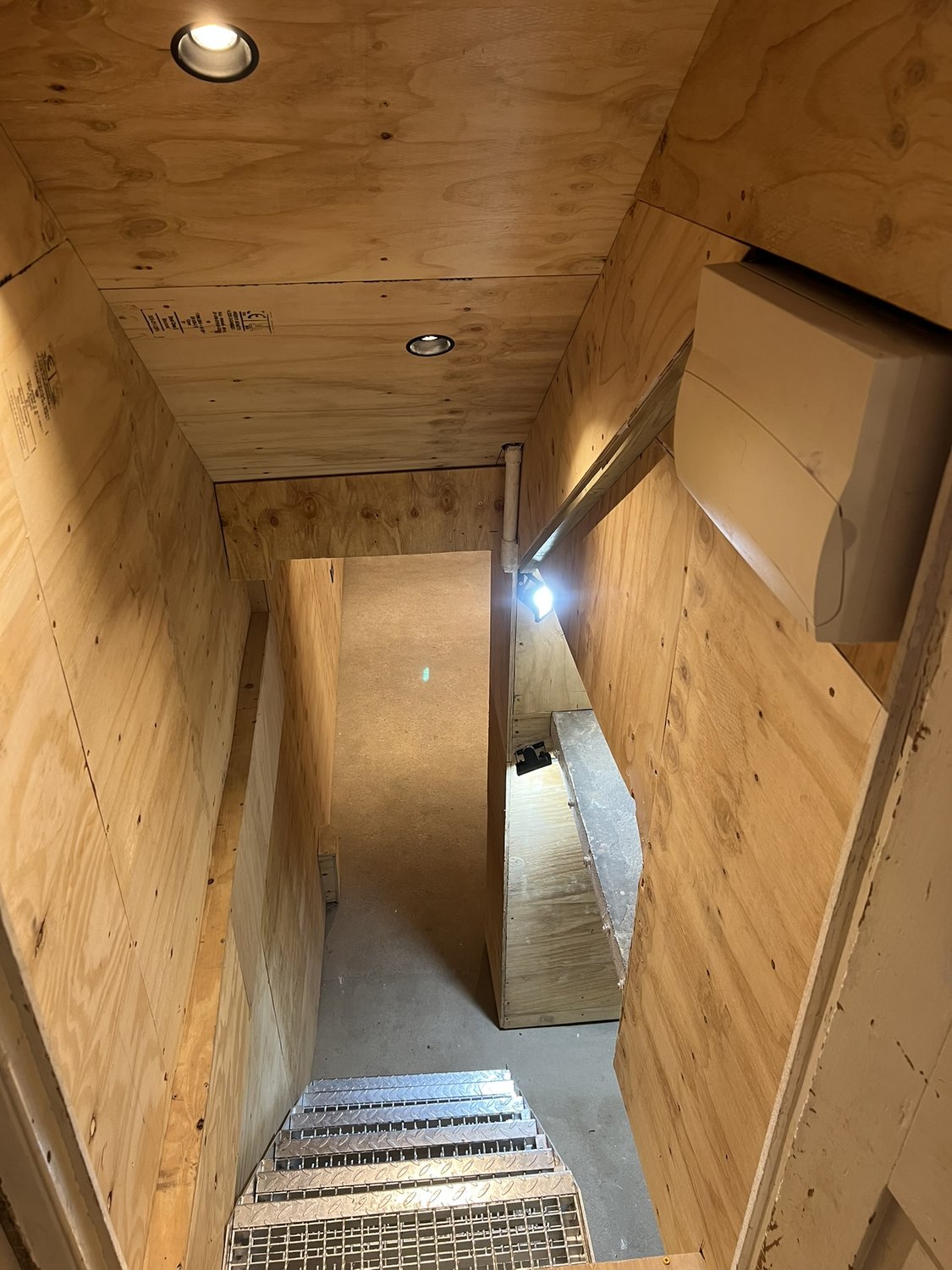
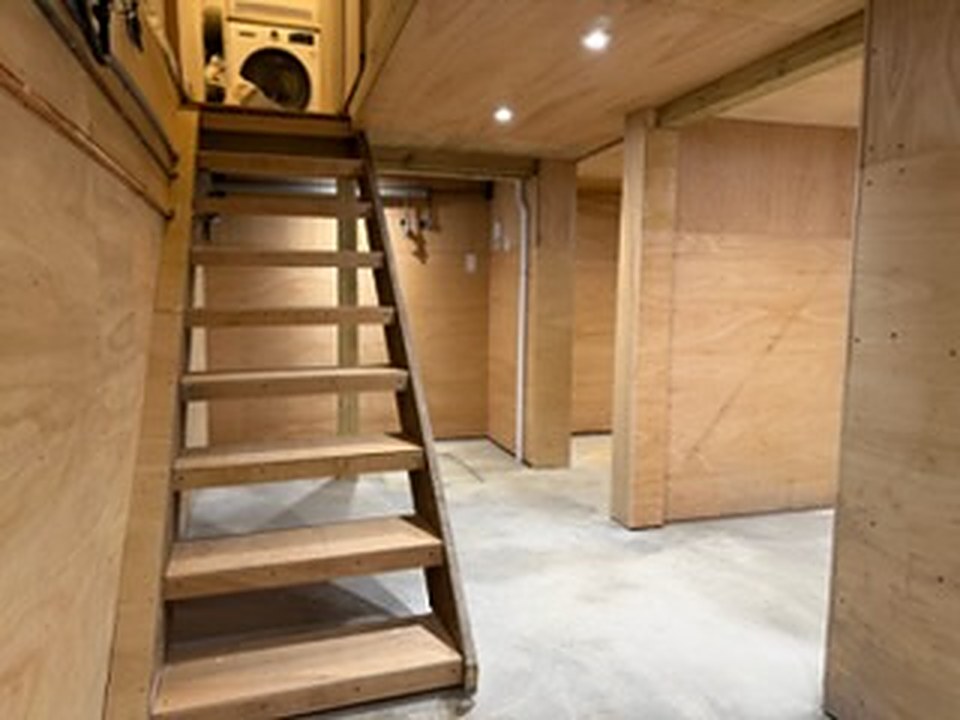
We complete the waterproofed cellar walls with solid plywood boards. As the final decorative finish, they provide a firm, even surface across the walls. Fix shelves, cupboards, hooks or racks into the plywood or battens wherever they are useful, without damaging the waterproofing behind.
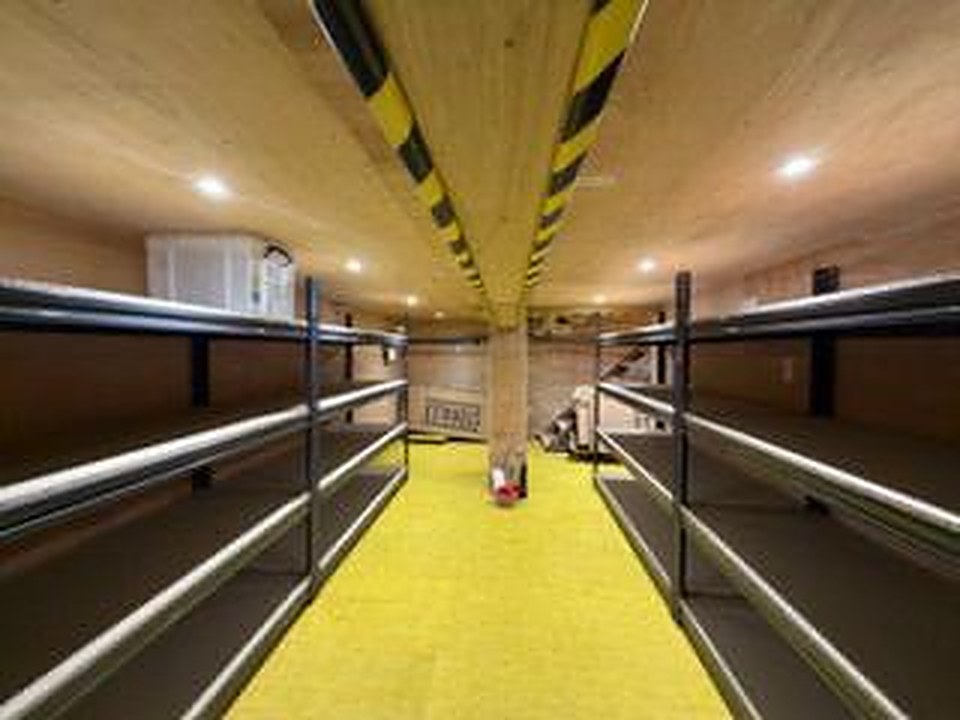
The timber's warm appearance makes the cellar feel fresher and lighter, replacing a dark, damp space with a clean room you can use for storage, a wine cellar, a workshop or a home gym.
The photographs compare the cellar before work with the same cellar after its plywood finish was installed.
How the layers fit together
Our cellar waterproofing installation sequence
Each layer must be fitted in the right sequence. Installing them out of order, or damaging the membrane during finishing, can allow leaks to return. Here is how we carry out the work.
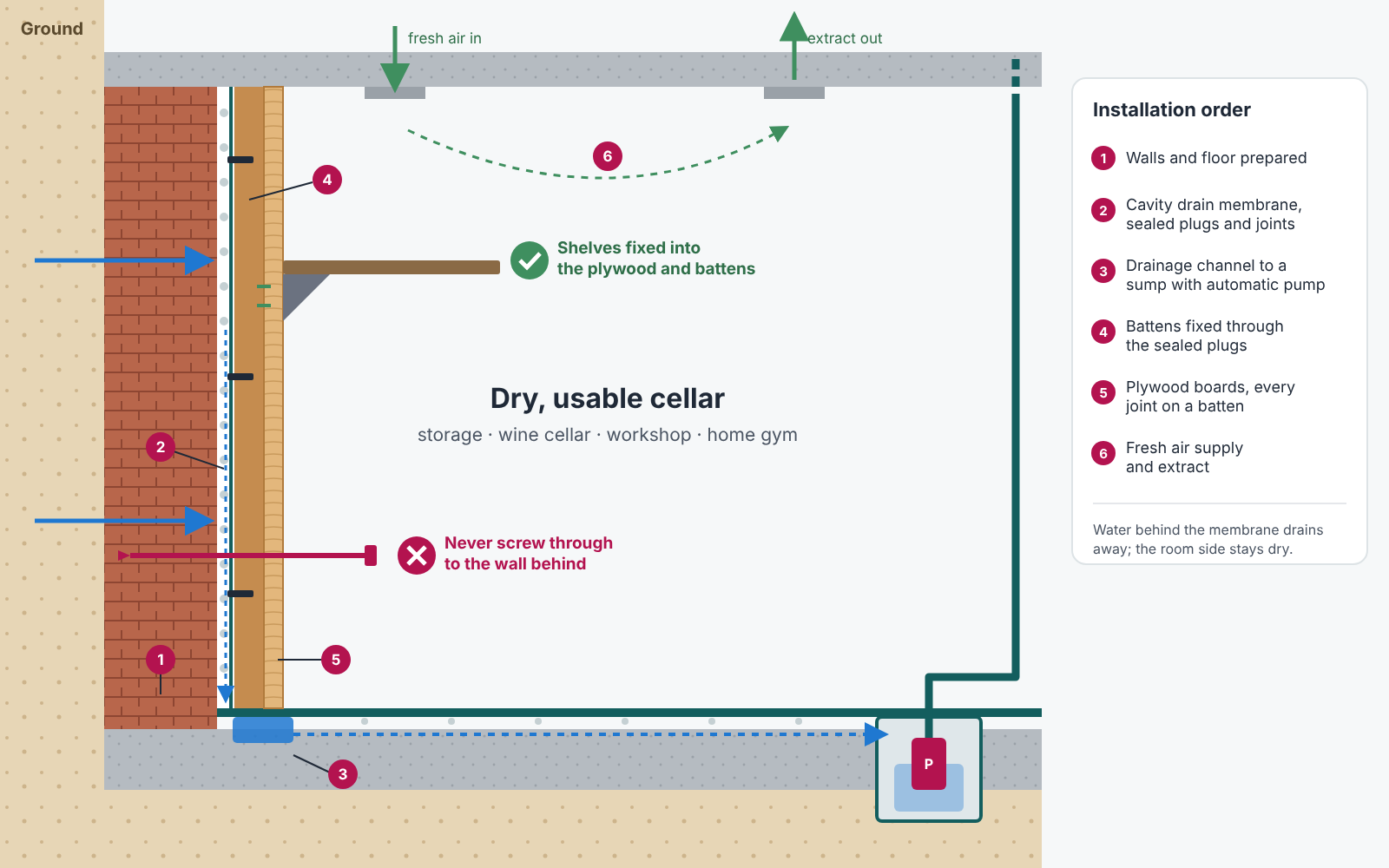
Important rule: do not put standard screws through the plywood and membrane into the wall. Every screw would puncture the waterproofing and allow water in. For anything you add later, fix into the plywood or battens instead, never the wall behind. Call us for advice if you are unsure.
Advice on the cause of damp
Why speak to a cellar waterproofing specialist?
Waterproof paint can cover up damp for a few months without stopping water from damaging the building inside. A specialist looks for the cause before recommending a repair, starting with two key questions.
Does the water appear after rain or persist?
- Only after heavy rain: check for faulty gutters, ground sloping towards the house or saturated surface soil. Repairing gutters and improving drainage around the property can often resolve the problem.
- All the time: the cellar lies below the permanent groundwater level. In that case, the only effective options are a full membrane and sump pump system or advanced injection waterproofing.
What specialist assessment provides
- The right diagnosis: our CSSW-qualified surveyors establish whether moisture is due to groundwater pressure, a leaking roof, a burst pipe, or poor ventilation and condensation.
- The right technology: we match the method to the type of soil, walls and foundations at your property.
- Professional equipment: our tools include thermal imaging cameras, moisture meters and specialist injection pumps.
- Structural safety: excavation around an older house's foundations can crack walls if done incorrectly. We protect the building during the work.
Materials we use
Established manufacturers and quality materials
Products from established manufacturers, including Newton, Wykamol, Delta, Biokil and Mapei, work together as a complete system to keep your cellar dry for years to come.
NEWTON
Newton
Pump systems alongside cavity drain membranes.

Wykamol
Tanking slurries, sump pumps and membranes.

Delta
Drainage channels paired with studded membranes and pumps.

Biokil
Treatments for mould and damp proofing.

Mapei
Waterproof coatings alongside repair mortars.
Explore related services
Services that work alongside cellar waterproofing
Our work also includes waterproofing vaults and complete basements, as well as tackling damp through crystalline DPC injections.
Waterproofing for Basements
Pumps, membranes and tanking.
Vault Waterproofing
Vaults beneath pavements.
Basement Waterproofing & Conversion
Convert a cellar into living space.
Sump Pump System & Services
Systems to discharge water outside.
Spray-Applied Waterproofing for Basements
Tanking slurry for Type A waterproofing.
Treatment for Rising Damp
Address moisture rising from the ground.
Treatment for Penetrating Damp
Tackle water entering through walls.
Black Mould & ISO-Therm Membrane
Address condensation and mould.
Thermal Inspection
Use cameras to find concealed damp.
Crystalline DPC Injections
Create a damp proof course in walls.
Technology for Basement Waterproofing
A guide to Type A, B and C systems.
Product Warranty & Insurance-Backed Guarantee
Cover passes to the new owner on sale.
Your questions
Cellar waterproofing questions answered
Can waterproofing keep a flooded cellar permanently dry?
Yes. In a cellar that floods, we usually fit a cavity drain membrane system (Type C). Water travels behind the membrane through drainage channels to a sump, and an automatic pump discharges it outside. Managing the water rather than resisting its pressure makes this the most reliable method for flooding cellars.
Is tanking or a membrane better for my cellar?
The water conditions determine the choice. A cavity drain membrane (Type C) suits cellars that flood or lie below groundwater level. Mineral slurry tanking (Type A) is better where water pressure is lower. At high pressure, we pair tanking with a membrane or use the membrane instead. We recommend a system after surveying the cellar.
How far should plaster be stripped before cellar waterproofing?
For the best results with Type A and Type C systems, we advise stripping plaster to ceiling level, or at least above external ground level. BS 8102:2022 also asks for basement waterproofing to reach the damp proof course, or 150 mm above external ground level.
Can shelves be fitted after the plywood finish?
Yes. Shelves, cupboards, racks and hooks can go where you need them by fixing into the plywood or its battens. Never screw through both the plywood and membrane into the wall: each hole would damage the waterproofing. If you are unsure, call us for advice.
Why fit ventilation to a waterproofed cellar?
We provide a fresh air supply and an extract to keep air circulating. This stops condensation building up, affecting the plywood boards and bringing back damp and mould.
Will the membrane and sump pump need servicing?
Yes. BS 8102:2022 asks for a cavity drainage system maintenance schedule, beginning with a service inspection at handover. Regular servicing of the drainage channels and pump keeps the system working as designed.
What guarantee comes with cellar waterproofing?
As an approved installer, we provide a 10-year guarantee on workmanship for our waterproofing installations, plus a QANW Insurance Backed Guarantee that passes to a new owner if you sell. The materials also have a 10-year manufacturer’s product warranty.
How can I arrange a cellar survey in Croydon?
Book online or call our specialists on 020 8432 3350 or 07720 752231. We will trace where the water enters and recommend a suitable permanent solution.
Arrange a free survey
Arrange your Croydon cellar survey
If water has entered your cellar or damp is causing concern, book a survey or speak to our specialists on 020 8432 3350 or 07720 752231. We will identify the source and advise on the right permanent solution.
07720 752231
Tell us what is happening in your cellar
Please fill in every field marked *. We will get in touch to arrange a survey once we receive your details.
Assessing your property
What we assess in Croydon cellars
In Croydon, a cellar may be a former coal store beneath an older terrace or a larger room under a house or shop. We assess the individual space instead of assuming it has the same problem as another property nearby.
We establish whether water appears after rain or remains present, inspect the plaster, walls and floor, and check gutters and drainage. How you plan to use the cellar matters too. These findings guide whether the answer is outside drainage work or an internal membrane and sump pump system.
Preparing for cellar waterproofing in Croydon
Practical preparation helps each cellar waterproofing project in Croydon run smoothly.
- Clearing the cellar: take stored belongings out before we remove plaster and dry the walls.
- Where the water goes: the sump pump needs a discharge route outside, usually into a drain nearby.
- Power for the pump: we discuss the electrical supply for the automatic pump during your survey.
- Ventilation routes: we plan routes for both the fresh air supply and the extract out of the cellar.
- Nearby areas: cellar waterproofing is also available in Norbury, Mitcham and Purley.
Your next step
Make your cellar dry and ready to use
Our 5-star Google rating makes us proud. Arrange a survey, explore our reviews or speak to our specialists on 020 8432 3350.
Qualified Specialists & a 10-Year Guarantee
Our family-run team holds CSSW qualifications, with a minimum of 10 years’ experience each. We back every job in Croydon with a 10-year guarantee covering workmanship, plus a QANW Insurance Backed Guarantee that transfers to the new owner if you sell your property. We work on domestic and commercial properties in Croydon and across London and the South East.

See What Our Clients Say
★★★★★ Rated 5 stars on Google
We are proud of our 5-star Google rating: see our reviews. If your basement or property in Croydon is damp or takes in water, book a survey in our Booking Survey section, or call or message our fully qualified advisors.
Our service areas
Cellar waterproofing around Croydon
For cellar waterproofing in Croydon or surrounding areas, including Norbury, Mitcham and Purley, contact Crystal Damp Proofing & Basements Ltd. Select an area below for its local page.