
Leave your details and our team will get in touch.
Request a call back
Basement Waterproofing in Croydon
A dry basement can become space you can use again.
A basement offers valuable space, but groundwater and heavy rain can let moisture through foundation walls. Left unchecked, that damp can damage the structure, encourage mould and make the room unusable.
At Crystal Damp Proofing & Basements Ltd, specialists qualified to CSSW, each with a minimum of 10 years’ experience, deliver robust, guaranteed basement waterproofing in Croydon CR0 to keep moisture out for good.
- Drained cavity membranes (Type C)
- Structural tanking slurry (Type A)
- Bitumen coatings and spray-applied tanking
10+
Years’ experience per specialist
How we waterproof basements
The right waterproofing system for your basement
Our specialists consider the building and its surroundings before recommending a waterproofing approach. We work with three established methods, using them together where appropriate.
1
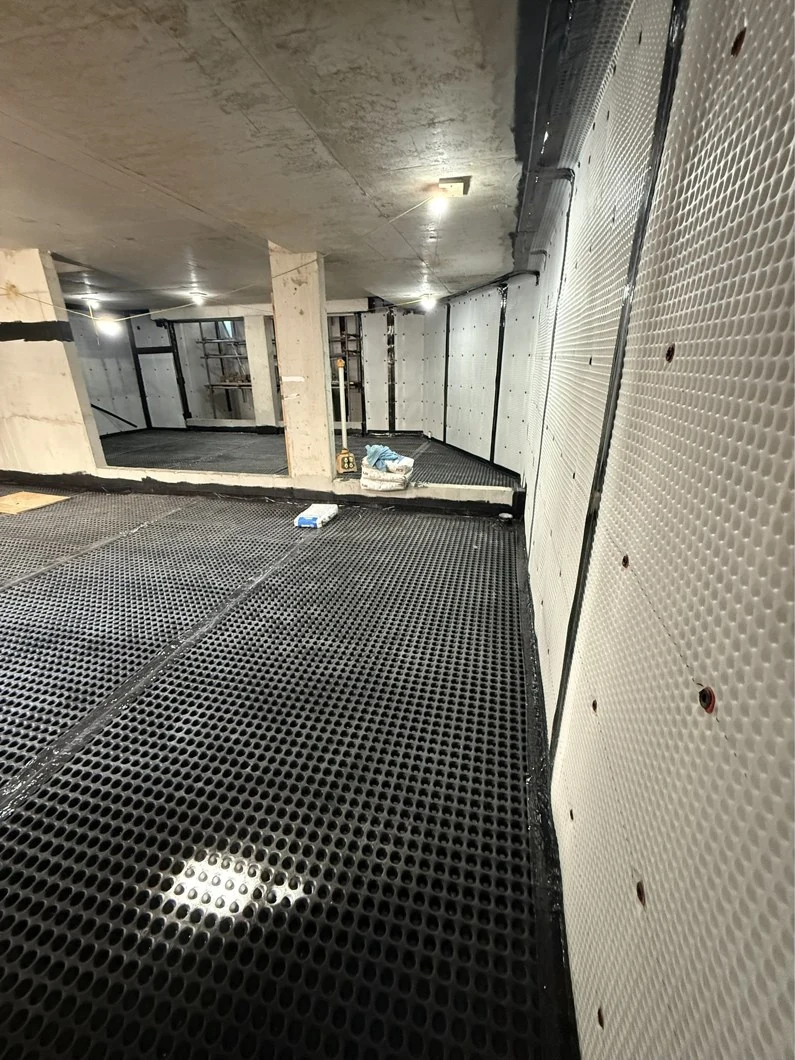
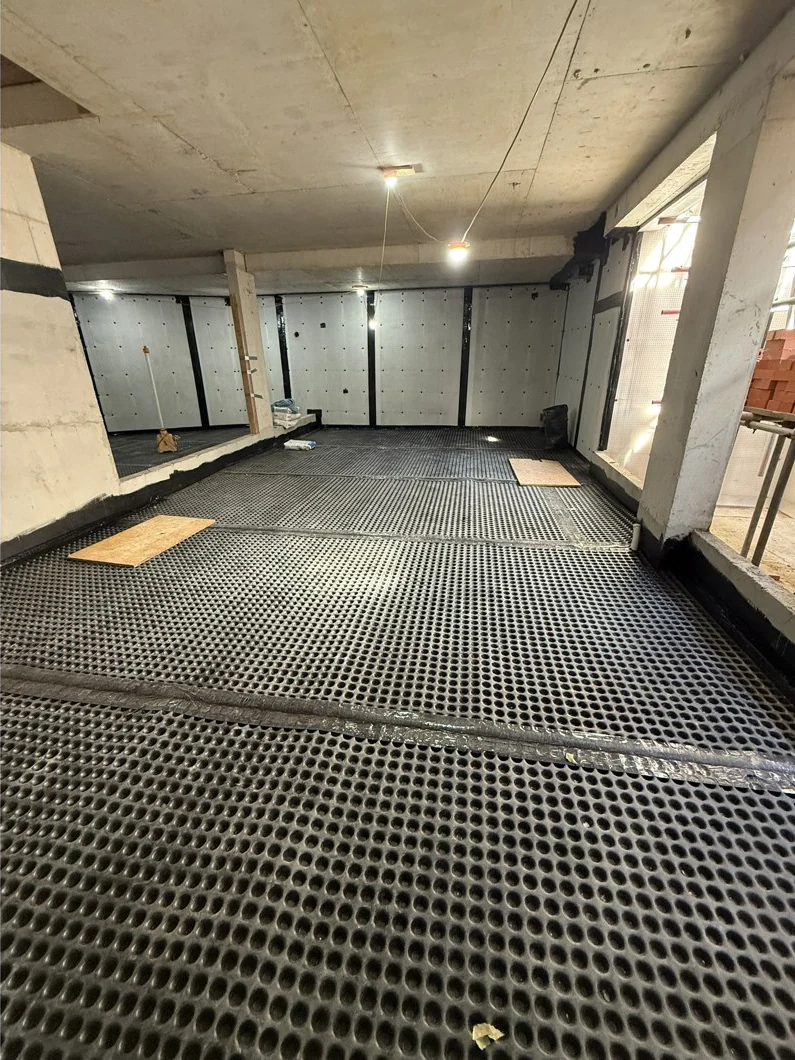
Cavity drain membrane systems
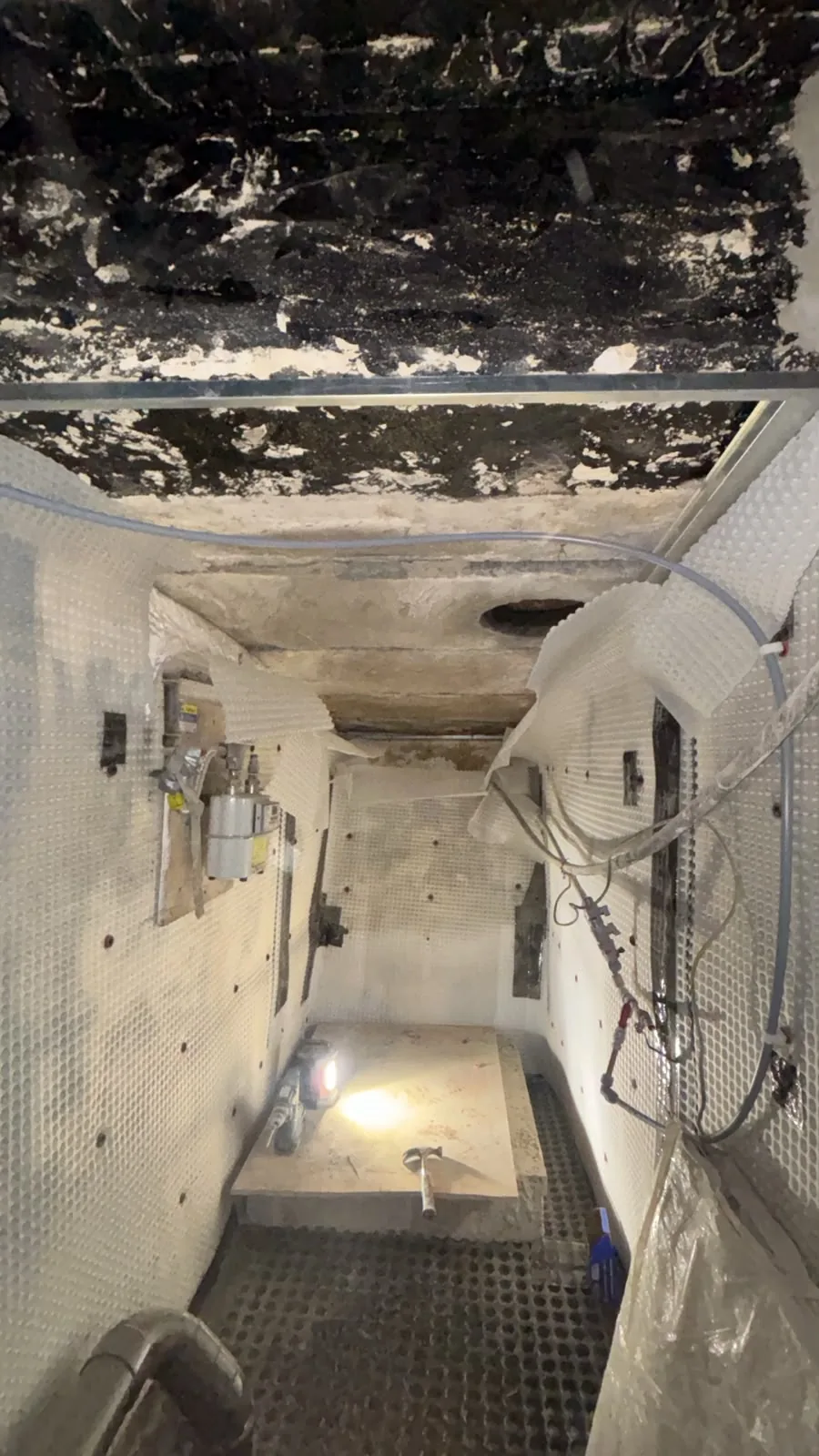
The system we choose most often. It manages incoming water rather than simply trying to block it. Specialist studded membranes line the walls and floor, creating a space behind them where groundwater entering through the outer masonry can drain into concealed channels. A high-performance sump pump then removes it quietly.
This leaves a dry, warm room ready straight away for plastering, decorating or a full basement conversion. Under BS 8102:2022, the method is classified as Type C (drained) protection.
2
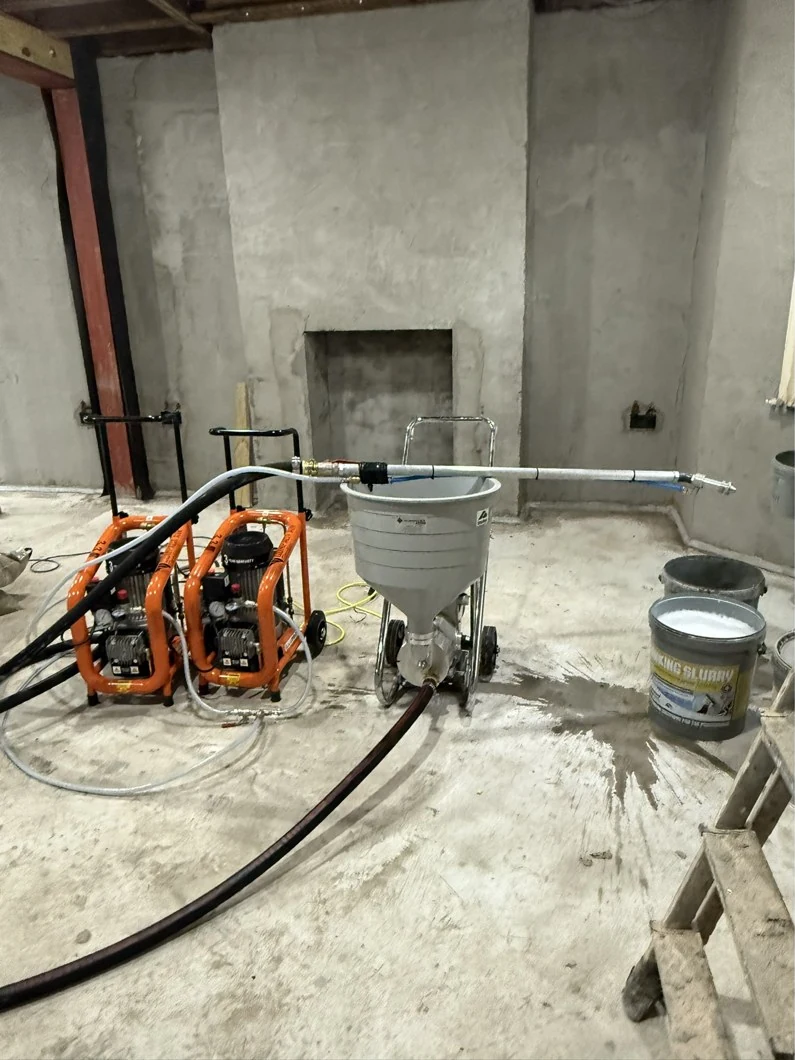
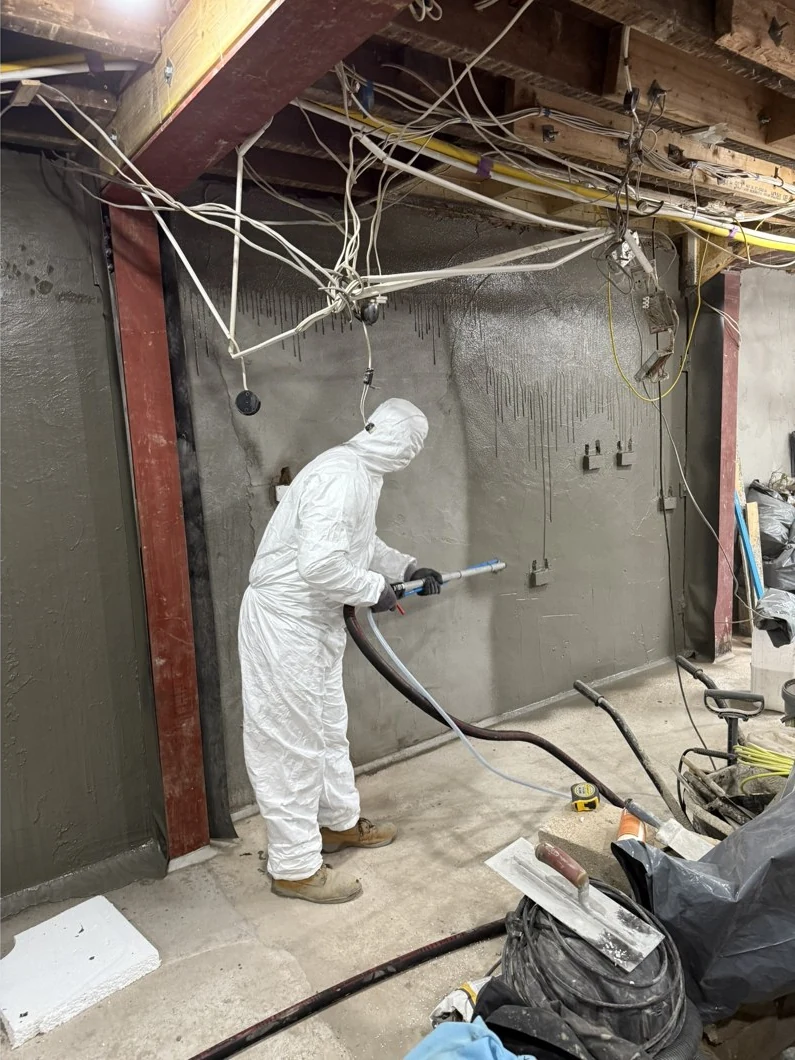
Structural tanking with slurry coatings
For a suitable structure, advanced tanking slurries create a tough waterproof barrier bonded directly to the masonry. This is Type A (barrier) protection under BS 8102:2022. Because overlooked micro-cracks can cause standard slurry to fail, we prepare the surface carefully:
- First, we strip the walls and clean them back to bare substrate.
- We make good visible cracks and defective mortar, carrying out structural crack repair as needed.
- Specialist primers stabilise the prepared surface.
- Finally, we build up precise coats of waterproof tanking render to create an unbroken seal against moisture.
3
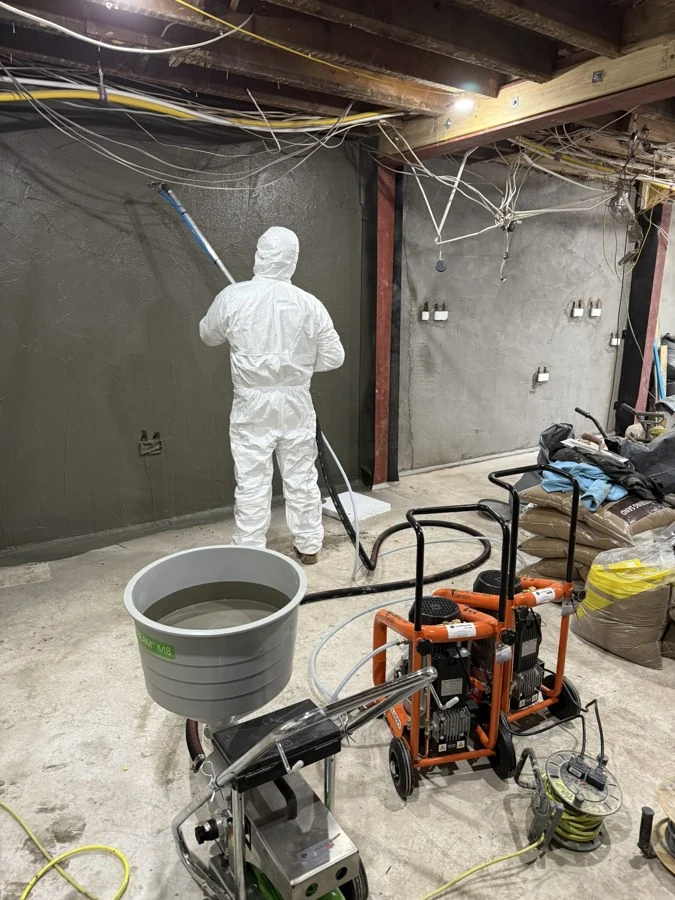
Bitumen coatings and spray-applied tanking
On larger areas and external structures, spray-applied tanking provides an even layer at a consistent thickness. The spray reaches uneven and awkward surfaces without leaving thin areas or gaps.
- Preparing the substrate: we repair and level it before spraying, using specialist levelling and repair mortars such as universal mortar. The coating can then be applied to a sound, even surface and perform as intended.
- Bitumen on external structures: we spray bituminous waterproofing coatings onto the outer face of retaining walls and foundations and other earth-retaining structures before backfilling. This intercepts groundwater outside the wall before it reaches the structure.
- Protection working together: spray-applied tanking outside can be paired with a cavity drain membrane inside for full A + C protection.
Answers to your questions
Your basement waterproofing questions answered
Why does a below-ground space need these systems?
Below-ground floors and walls remain in contact with damp soil. Heavy rainfall or a high water table can also create hydrostatic pressure, pushing water against the structure. Ordinary damp proofing for above-ground walls cannot withstand it. BS 8102:2022, the British Standard for below-ground protection, therefore sets out dedicated waterproofing systems.
• Cavity drain membranes guide water safely out instead of resisting its pressure. Pressure cannot build against the finished walls, making this the safest option for habitable rooms and high-water-table areas.
• Tanking slurry adheres to masonry to stop water at the surface. It suits sound, solid walls, lower-risk areas, lightwells and external walls, and rooms where every millimetre of space counts.
• Combined systems (A + C) put slurry in front of a membrane that provides back-up if water passes the barrier. We often use both for new basements and full conversions. BS 8102 recommends combined protection for higher-risk spaces or rooms intended for living in.
How long can the waterproofing systems last?
• Cavity drain membranes are made of high-density polyethylene (HDPE). It does not rot and withstands chemicals, salts and mould; a properly installed membrane is designed to last decades.
• Sump pumps have mechanical components that need care. We usually recommend servicing every 6 months, depending on system size. A maintained pump normally lasts many years, while a battery back-up or dual pump keeps the system operating during a power cut.
• Tanking slurry is cement-based and can last decades on stable, properly prepared masonry. Its lifespan depends on the substrate, so we prepare the wall and repair cracks before applying the first coat.
• Sprayed external bitumen coatings sit beneath backfill after the ground is reinstated. With a protection board, they last decades without maintenance.
Checks and pump servicing help the system work as well in 20 years as on day one. We offer aftercare packages to support this.
What happens to the walls and floor below ground?
• Walls: a cavity drain membrane separates the room from damp masonry rather than drying the wall behind it. Moisture drains safely down the gap, preventing pressure from building or pushing the membrane off. Plasterboard can be fitted on battens or with dot-and-dab; mesh membranes can also be plastered directly.
• Floors: we connect a membrane laid over the existing slab to perimeter drainage channels. A screed or floating floor provides a base for tiles, laminate or carpet. The build-up usually uses only a few centimetres of height, which we account for during the survey. XPS floor insulation can add warmth.
• Tanking slurry on walls: bonded slurry adds almost no thickness. It stops water at the surface and needs sound masonry, so we repair cracks and defects first.
• The structure itself: both systems guard against ongoing water damage, including rusting steel, frost damage, salt staining and mould. They also allow insulation and a warm, healthy finish.
What guarantees are available and how long do they last?
Yes. Each waterproofing system we install has a guarantee:
• Company workmanship guarantee: our written installation guarantee lasts 10 years.
• Insurance Backed Guarantee (IBG): provided through QANW, this insurance policy protects the guarantee if the installing company stops trading. It lasts 10 years, transfers to a new owner if you sell and is often requested by mortgage lenders and buyers’ surveyors.
• Manufacturer’s product warranty: the waterproofing materials carry a 10-year product warranty, also called a manufacturer’s warranty.
• Sump pump warranty and service plan: the manufacturer’s warranty covers pumps for up to 2 years. Regular servicing keeps both the pump warranty and system guarantee valid.
Your written quotation explains which guarantees cover your project from day one.
How can I arrange a damp survey in Croydon?
Send the short form on this page or call our specialists on 020 8432 3350 or 07720 752231. We will arrange a survey to identify the cause of damp, then provide a written quotation explaining the recommended system and applicable guarantees.
The manufacturers we use
Premium products from leading manufacturers
To protect your home without compromising on quality, Crystal Damp Proofing & Basements Ltd uses proven products from leading manufacturers. We select materials to suit each building, rather than applying the same system to every project.
Wykamol
Membranes for cavity drainage, tanking slurries and sump pumps.
NEWTON
Newton
Membrane systems with cavity drainage and pumps.
Delta
Studded, high-performance membranes for floors and walls.

Mapei
Coatings for waterproofing, plus mortars for levelling and repairs.
Biokil
Products for protecting properties and tackling damp.
Recognising the signs
Signs your basement may need waterproofing
Basement damp in Croydon is worth investigating before it leads to costly structural problems. Older properties without foundation protection, or homes in areas with a high water table, may be at risk.
Our specialists trace the cause before proposing a solution, whether that means penetrating damp, rising damp, inadequate insulation or poor rainwater drainage. We use thermal imaging to locate damp that is hidden.
See our work
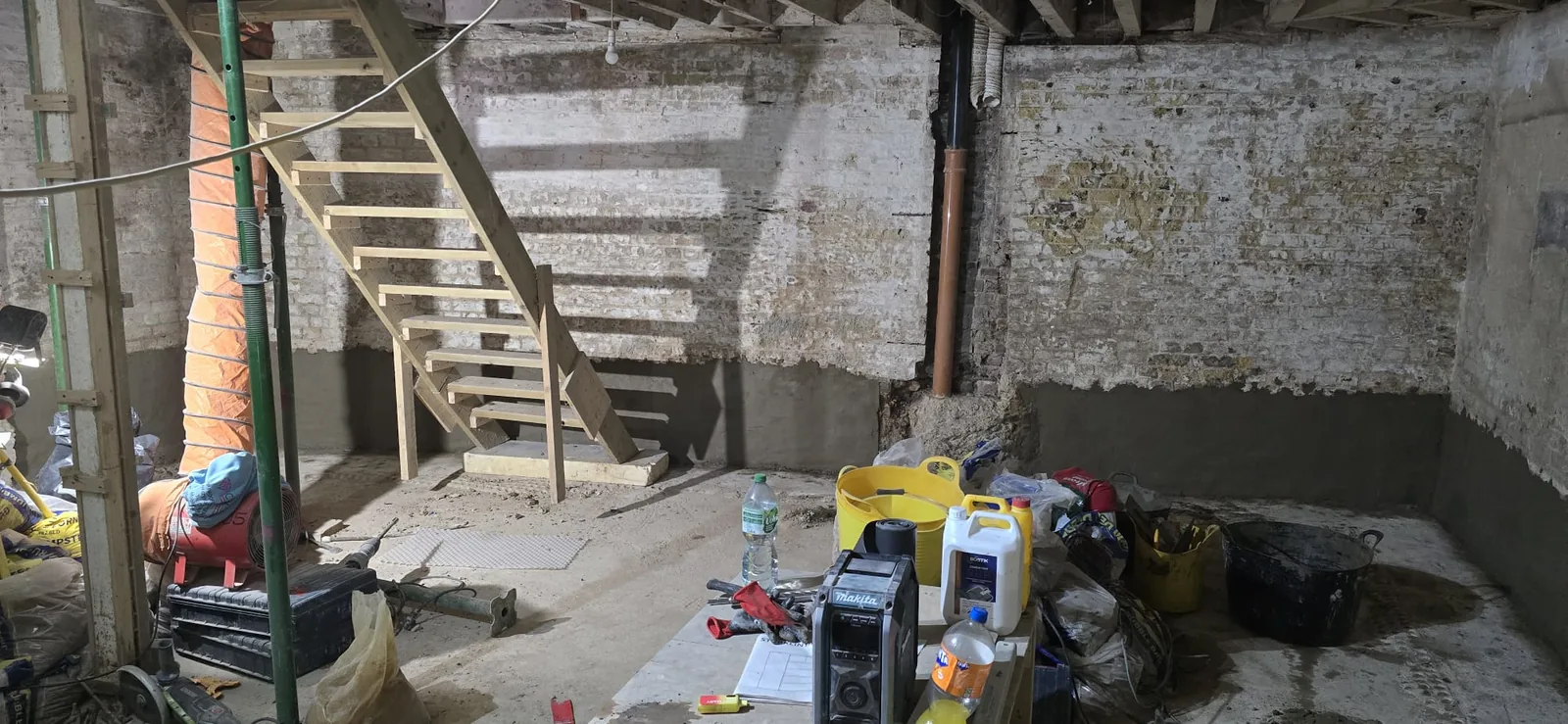
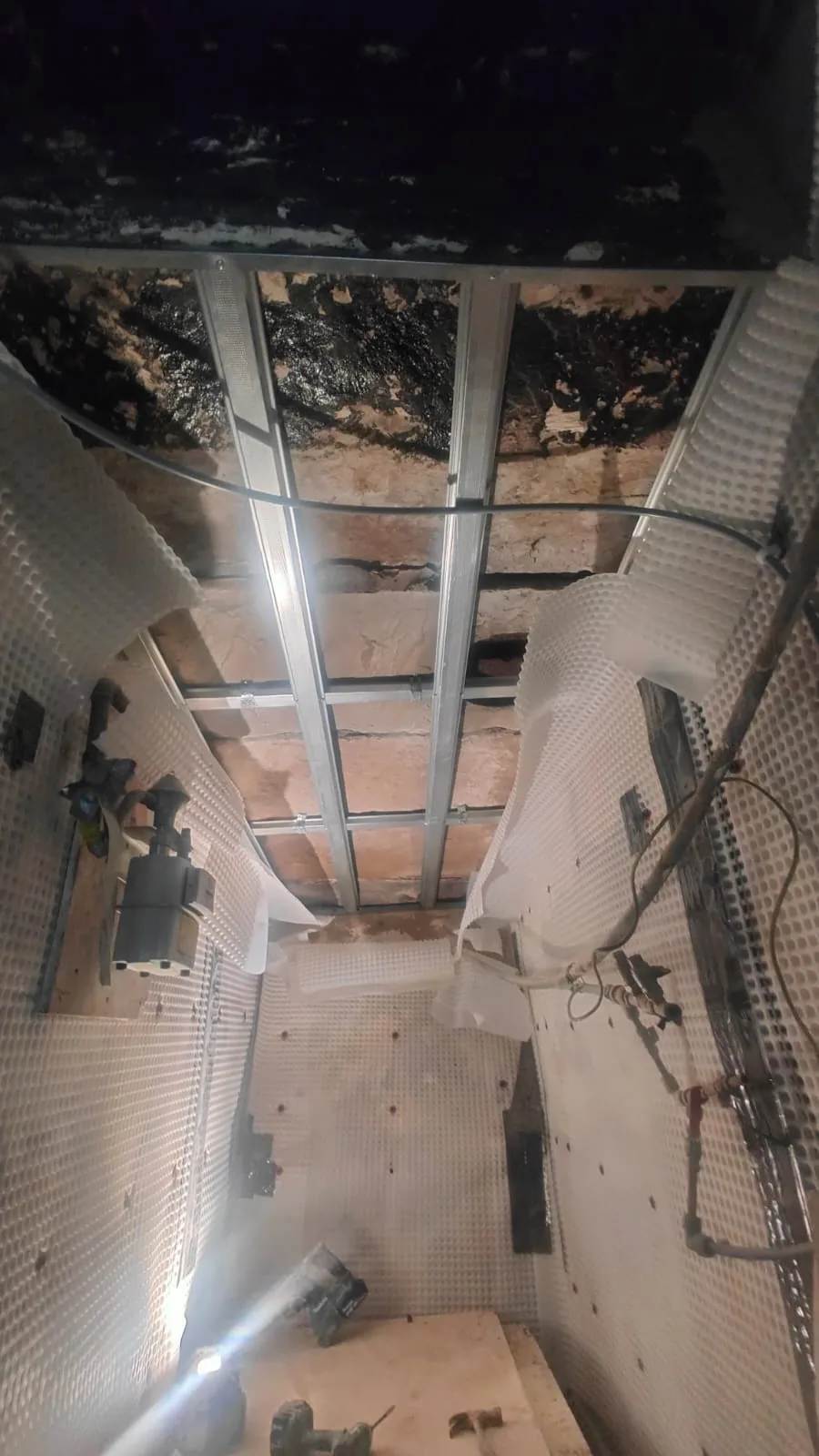
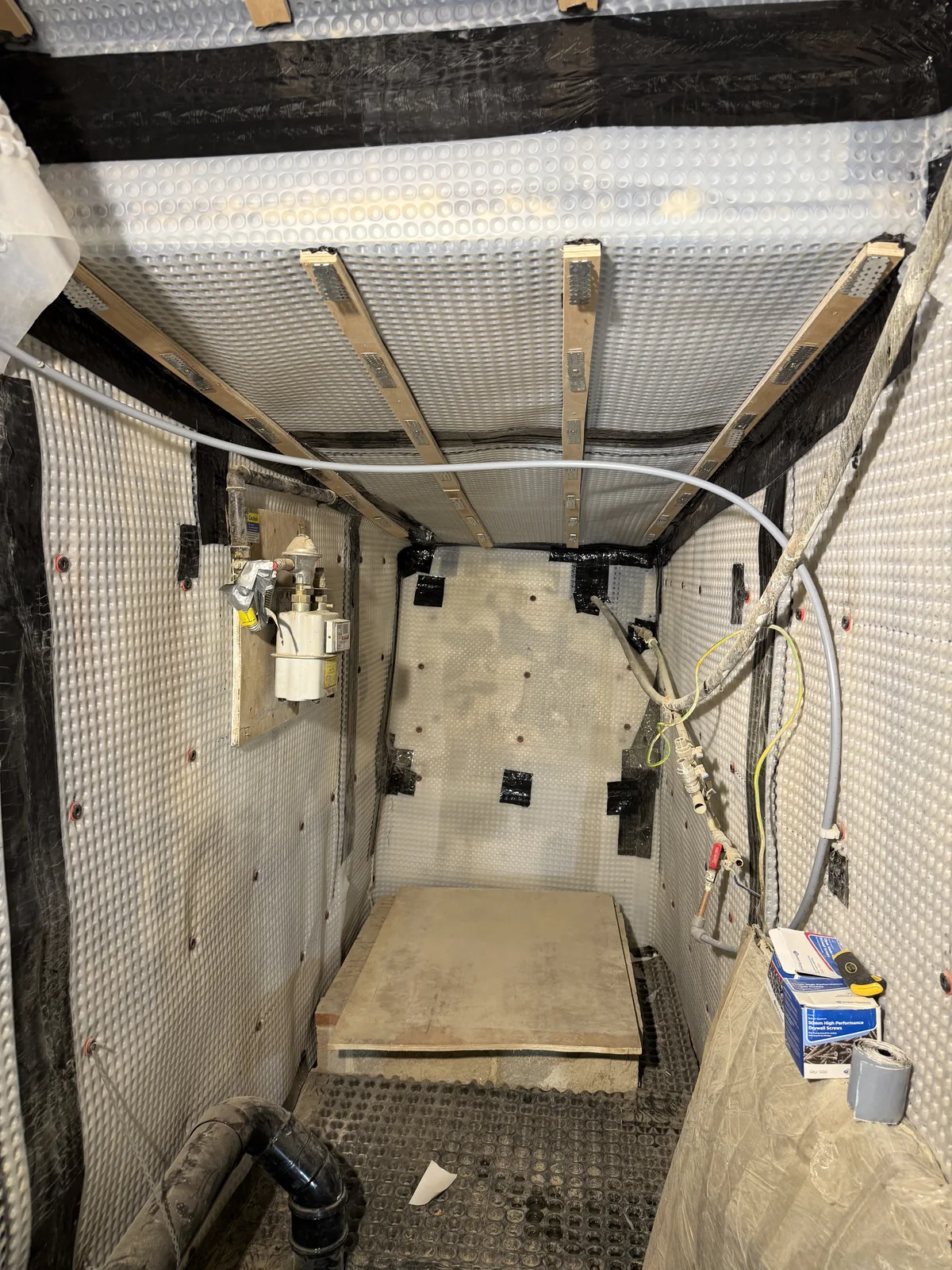
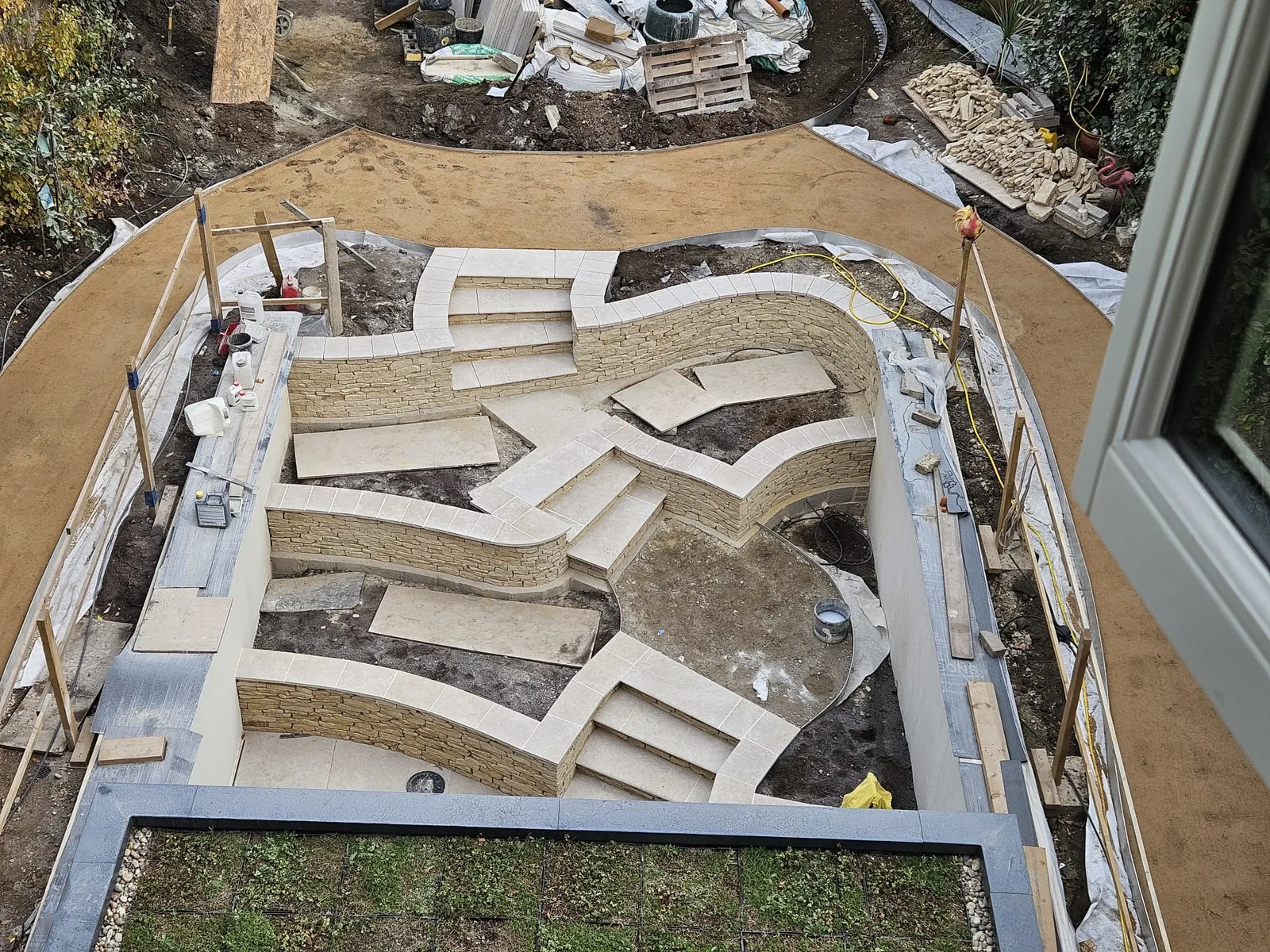
Basement waterproofing project photos
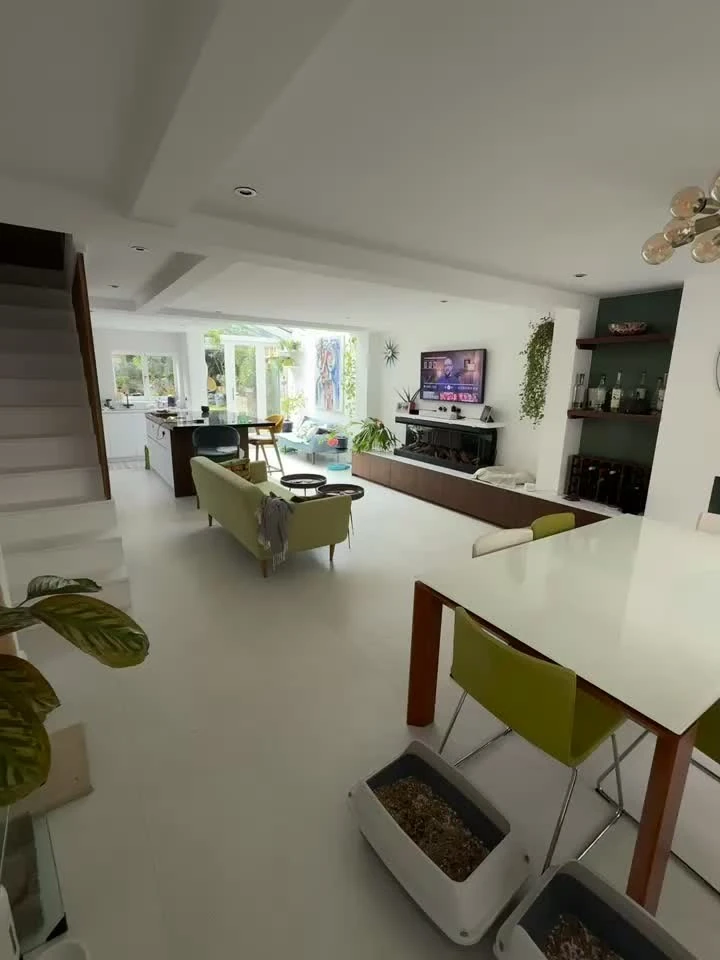
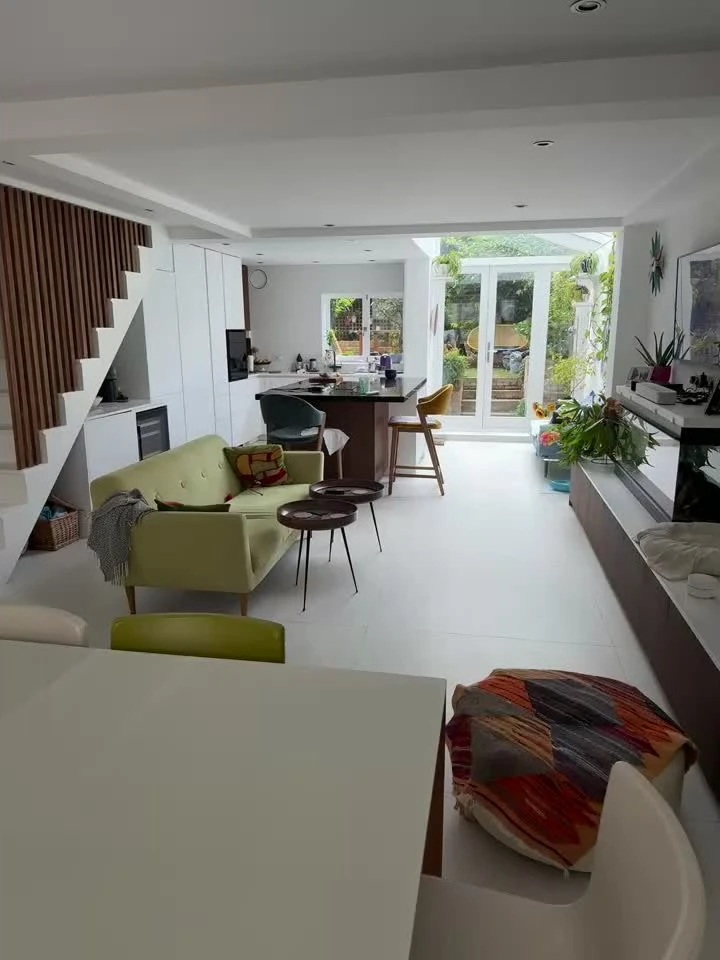
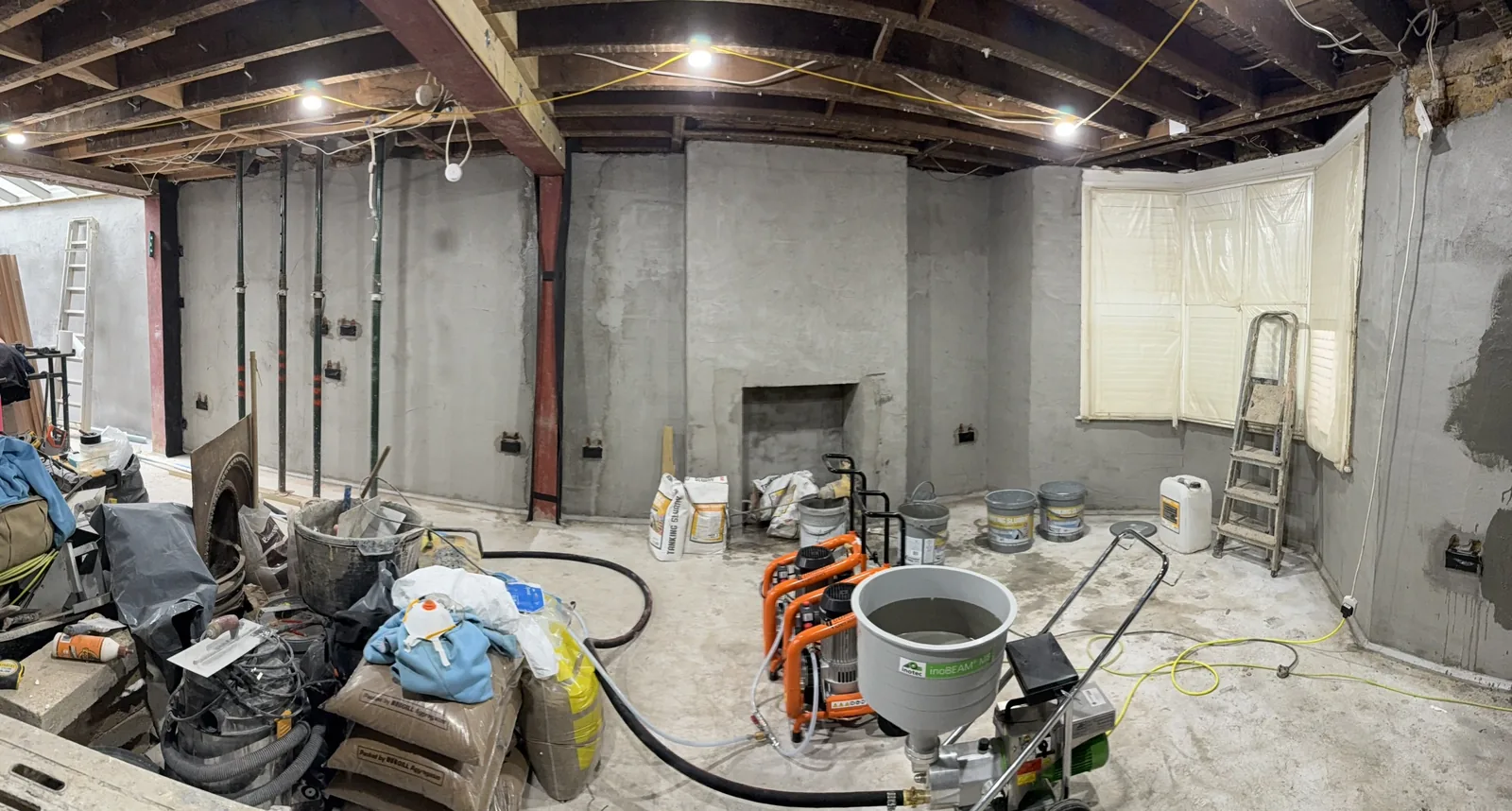
Explore photographs from our basement waterproofing projects, showing membrane-lined vaults, sump installations and lightwells being built.
Other services
Services that support below-ground protection
Our specialist services can work alongside waterproofing; learn more about the methods on our basement waterproofing technology page.
Basement Waterproofing Technology
How Type A, B and C work.
Basement Conversion & Waterproofing
Make a damp cellar usable as living space.
Spray-Applied Basement Waterproofing
Uniform coating for extensive surfaces.
Retaining Wall & Foundation Waterproofing
Protect the outside before backfilling.
Sump Pump System & Services
Installation and servicing for pumps.
Structural Cracks Repair
Prepare sound walls for tanking.
Basement Floor & XPS Insulation
Insulation above the slab for a warmer floor.
Iso-Therm Membrane & Black Mould
Line walls affected by mould and cold.
Thermal Inspection
Locate damp concealed from view.
Penetrating Damp
Address water passing through walls.
Rising Damp
Deal with moisture moving upwards from the ground.
Insurance-Backed Guarantee & Product Warranty
Cover passed on when the property is sold.
What our clients say
Feedback from Crystal Damp Proofing & Basements clients, as published on our testimonials page.
They carried out basement damp-proofing for us and did a fantastic job. I had a lot of issues with damp and the basement was in very poor condition, but fortunately I found this company. […] Well done — I highly recommend them.
Although we had cheaper quotes, the quality Crystal delivered was on another level — worth every penny. They were friendly, reliable, and exceptionally thorough.
To Whom it may concern, I would like to say a huge thank you to Lukasz and his team who carried out the damp proofing at my house. Their work can only be described as professional, quick and hassle-free. House was cleaned each day, all rubbish was taken away.
Survey at no charge
Arrange a damp survey in Croydon
Ready to take a step towards a dry basement in Croydon? Use the short form to book a damp survey, or speak to our specialists on 020 8432 3350 or 07720 752231.
07720 752231
Arrange your damp survey
An * marks a required field. After we receive your details, we will get in touch to arrange the survey.
Understanding your property
Choosing basement waterproofing around Croydon
Water table conditions
Foundation protection in older homes
Access to lightwells
Start with a survey
No two basements around Croydon respond to moisture in quite the same way. Damp may persist, or water may appear after heavy rain; an older building might have no foundation protection. We look at the property before deciding which waterproofing method fits.
At the survey, we check the location of moisture, the construction of the floor and walls, and whether the problem changes with the weather. Accessible external walls or a lightwell may allow external coatings to contribute; where water pressure is likely, an internal drained system offers the most reliable result.
Your written quotation sets out why a cavity drain membrane, tanking slurry or both together are recommended for the property.
How basement waterproofing works in Croydon
From the initial visit to aftercare, here is what a basement waterproofing project in Croydon involves.
- Survey: we investigate the source of damp, using thermal imaging for hidden moisture.
- Written quotation: we clearly explain the proposed system and applicable guarantees.
- Preparation: we strip walls, repair cracks and level surfaces before applying anything.
- Installation: our own specialists install membranes, tanking or spray-applied coatings.
- Aftercare: regular pump servicing helps keep the system working. Our coverage also includes Norbury, Mitcham and Purley.
A careful approach
Start towards a dry, usable basement
Arrange a damp survey online or speak with our specialists on 020 8432 3350 today.
Qualified Specialists & a 10-Year Guarantee
Our family-run team holds CSSW qualifications, with a minimum of 10 years’ experience each. We back every job in Croydon with a 10-year guarantee covering workmanship, plus a QANW Insurance Backed Guarantee that transfers to the new owner if you sell your property. We work on domestic and commercial properties in Croydon and across London and the South East.

See What Our Clients Say
★★★★★ Rated 5 stars on Google
We are proud of our 5-star Google rating: see our reviews. If your basement or property in Croydon is damp or takes in water, book a survey in our Booking Survey section, or call or message our fully qualified advisors.
Where we work
Basement waterproofing in Croydon and surrounding areas
Crystal Damp Proofing & Basements Ltd waterproofs basements, cellars and vaults across Croydon and nearby areas, including Norbury, Mitcham and Purley. Select an area below for its local page.