

Leave your details and our team will get in touch.
Request a call back
Vault Waterproofing in Richmond
Keep the space beneath the pavement dry and ready to use.
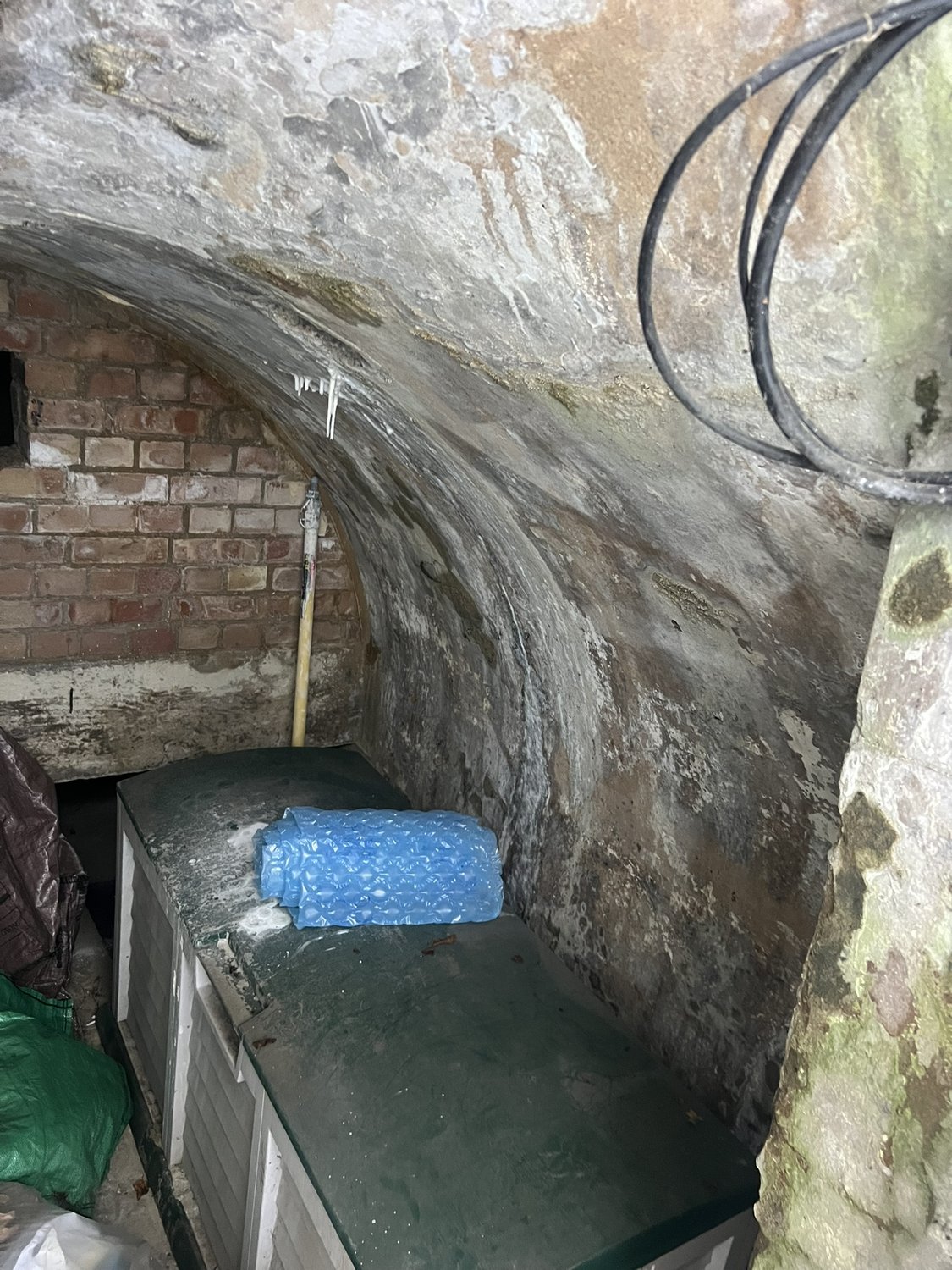
In Richmond, a vault beneath a pavement or road can face water seeping down from above, vibration from passing traffic and winter road salt. Left unchecked, moisture can lead to leaks, mould and deterioration of the masonry.
At Crystal Damp Proofing & Basements Ltd, our CSSW-qualified team provides vault waterproofing in Richmond TW9, helping turn damp vaults into dry storage, wine cellars, playrooms, offices or living space.
What are vaults?
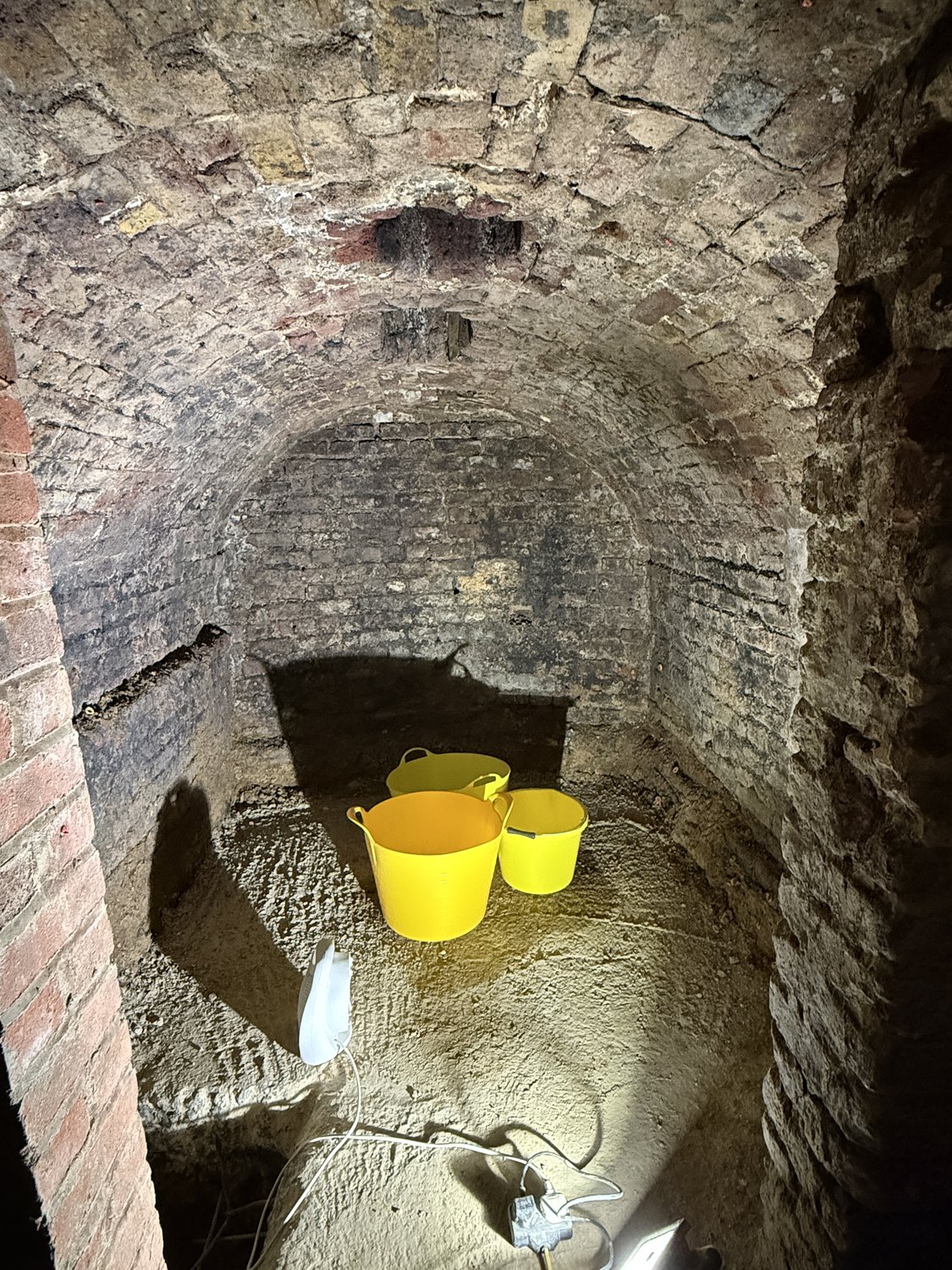
A vault is an arched brick or stone space with a curved ceiling. Across London, vaults are commonly found beneath pavements outside period homes, below shops, pubs and restaurants, and under roads and railways.
Some form part of a below-ground cellar or basement. Others began at ground level but were later covered by earth or a road, leaving them exposed to conditions much like those in a basement. Whichever form they take, keeping water out makes the space useful.
What causes vault leaks?
When does a vault leak?
The point where water enters is not always obvious. Noting when a leak appears can help identify its source; these are the patterns we encounter most often.
Our approach to preventing leaks
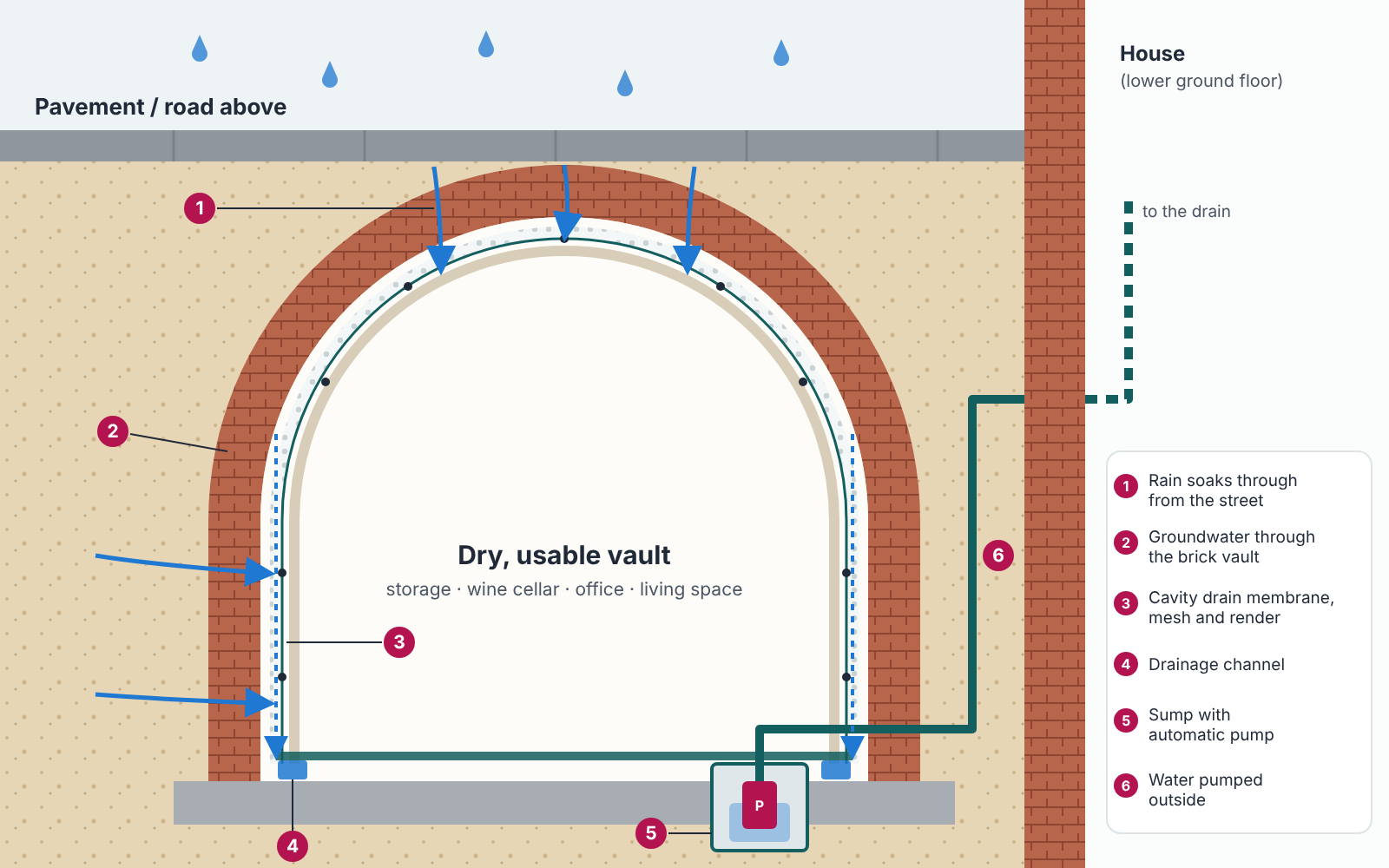
First, we trace the source of the water. Faulty drains, gullies and pipes need repairing before the vault is waterproofed; a waterproofing system should not have to handle a continuing flow of waste water. We then install a system that manages water entering the structure and directs it away from the finished space.
A typical situation: decades-old tanking has begun to fail, allowing heavy rain from the road above into a listed vault. The planning authority permits an updated system provided the historic structure is not harmed. A reversible cavity drain membrane system can meet that condition.
Type C · BS 8102:2022
Why membrane waterproofing works for vaults and historic buildings
Our recommended approach for vaults is a cavity drain membrane system: Type C waterproofing under BS 8102:2022. Rather than relying on a barrier to stop every drop, it collects water that enters and guides it away.
Drainage is central to this approach, so we provide access to the channels and sump for future inspection and servicing.
When installation goes wrong
Badly installed membranes: what can go wrong
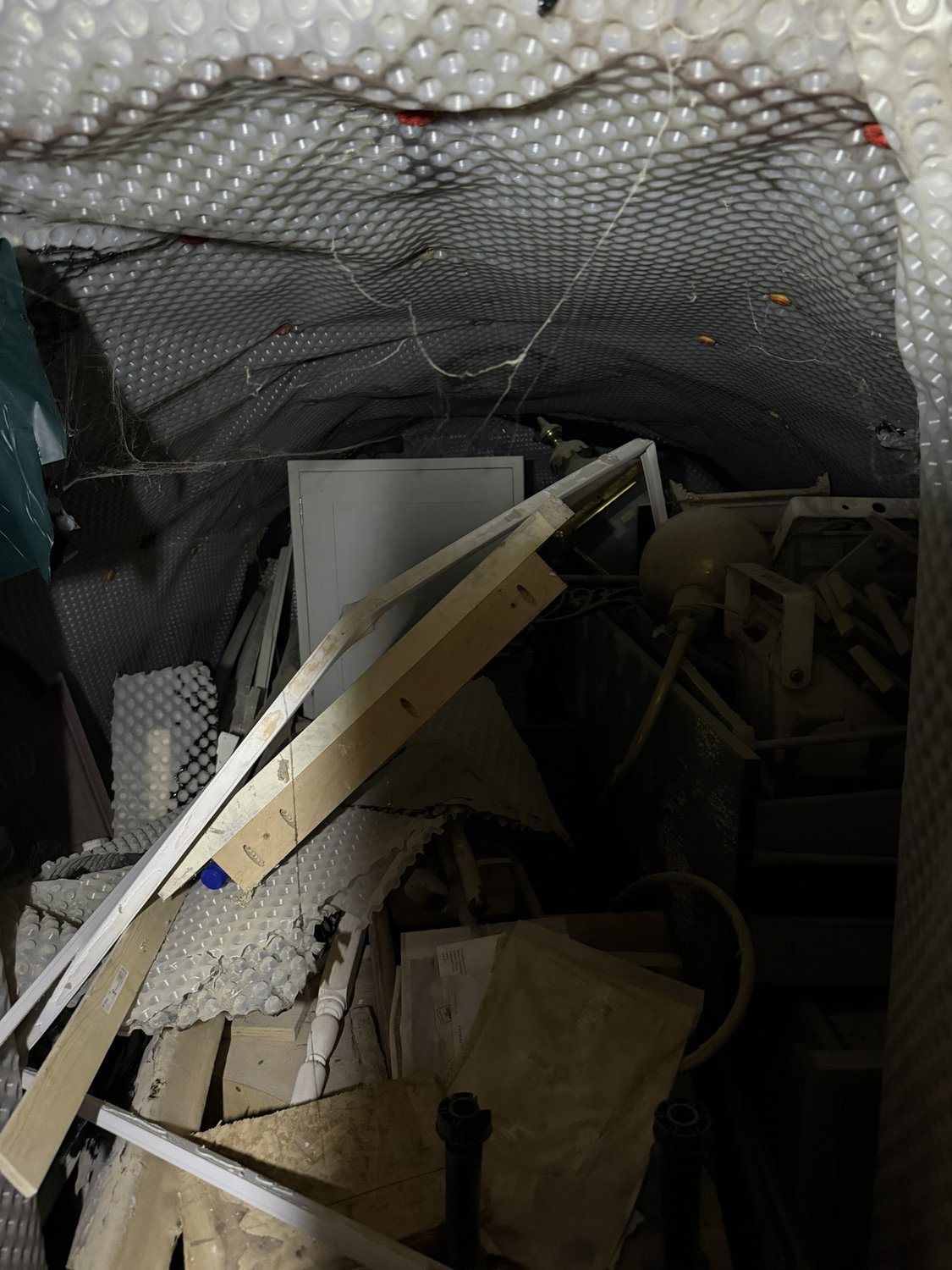
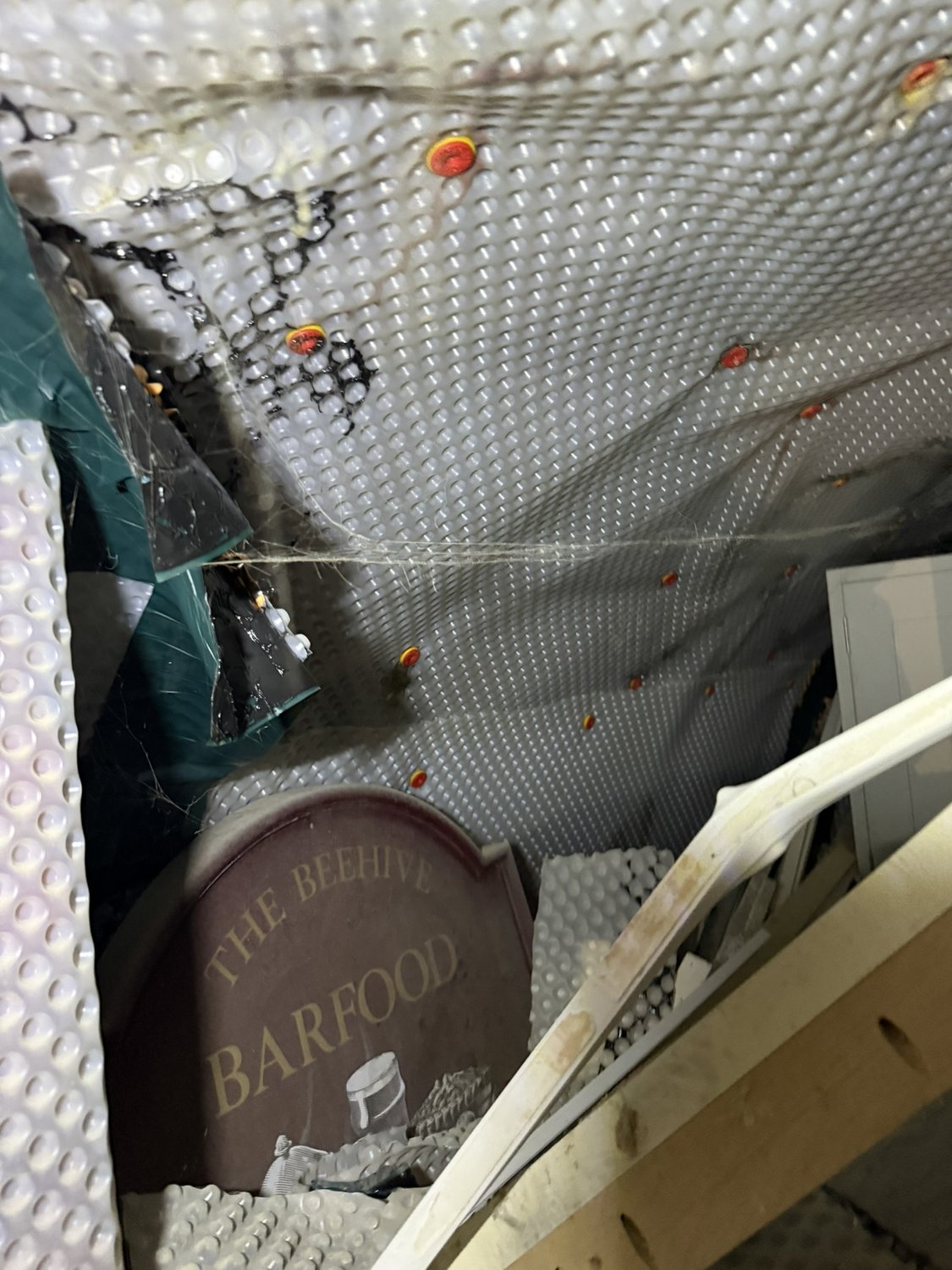
We are sometimes asked to inspect vaults where a cavity drain membrane was sold by one company, including well-known firms, but installed by subcontractors. Teams unfamiliar with vaults may be working under pressure to meet tight budgets and schedules.
- Lack of experience: the curve of a vaulted ceiling makes fixing and sealing more demanding than on a flat wall. Joints and fixings need careful planning.
- The wrong materials: membranes, fixings and seals suited to straight walls may be unsuitable overhead on a curved surface subject to street vibration.
- No proper preparation: cleaning the surface, making good defects and sealing the wall-to-floor junction all provide a sound base for the system.
Instead of keeping the vault dry, a loose membrane can pull away from the ceiling and balloon. The plastic may then split or tear, allowing water into the room and potentially causing further damage.
How we do it instead
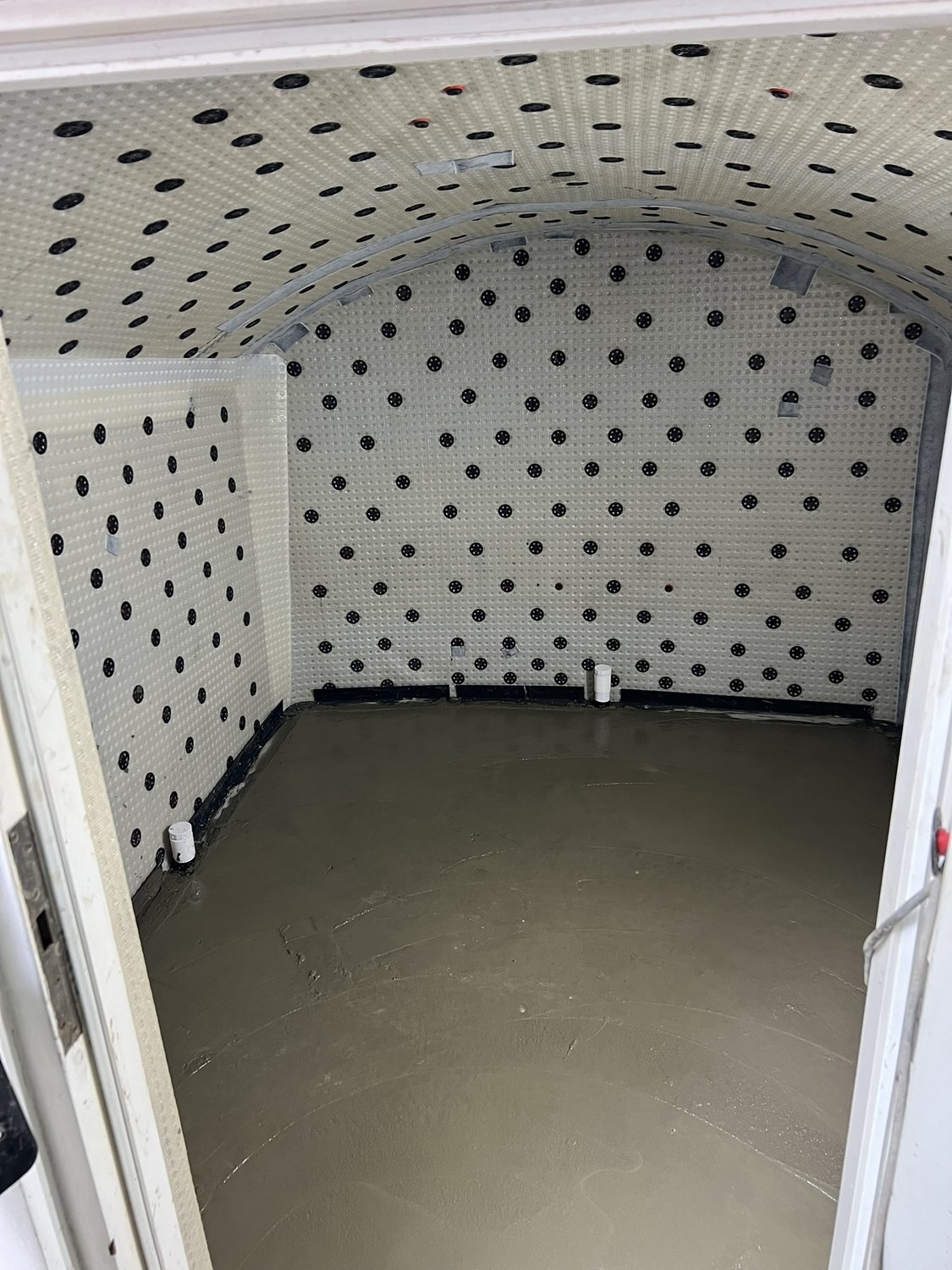
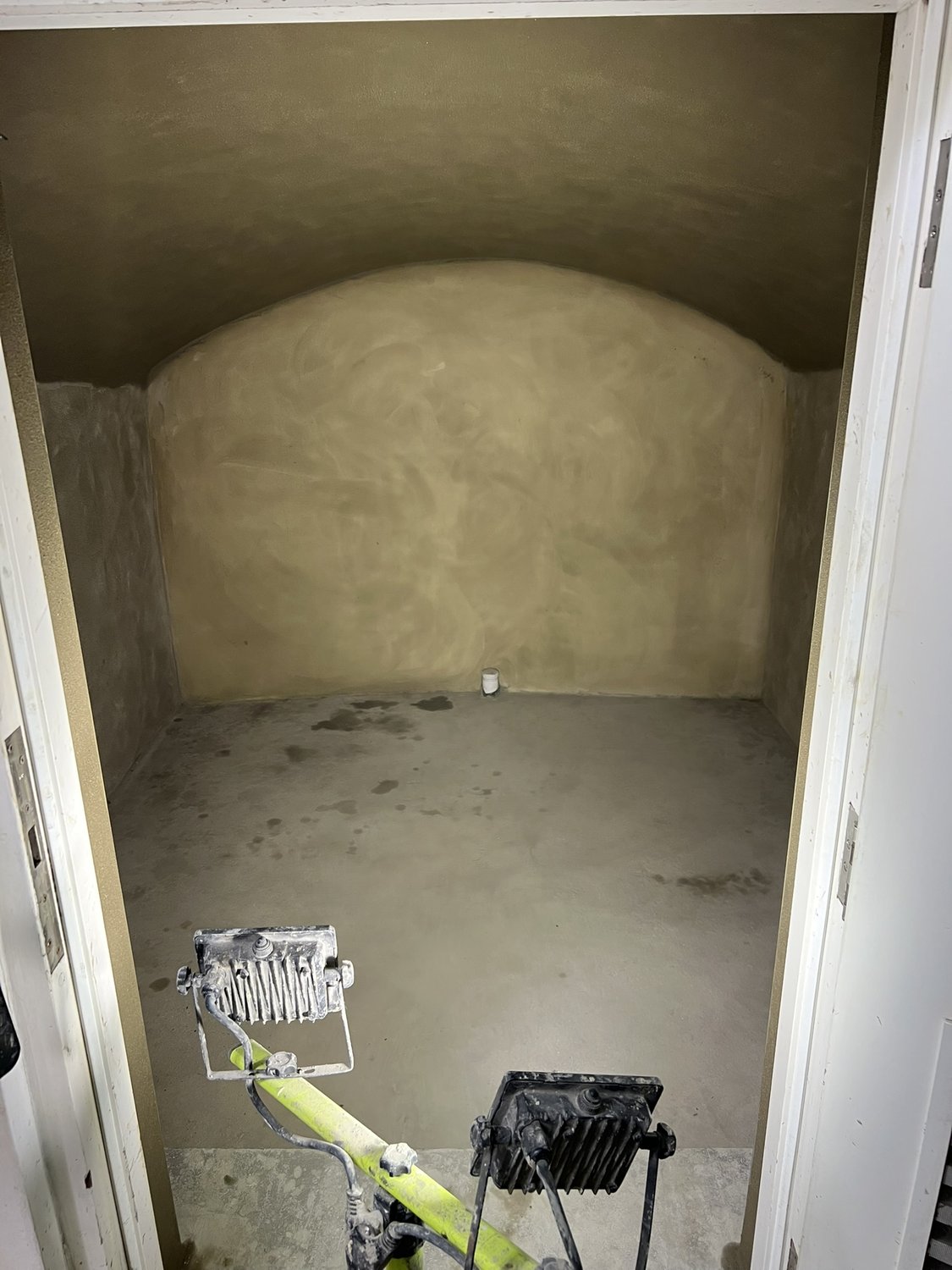
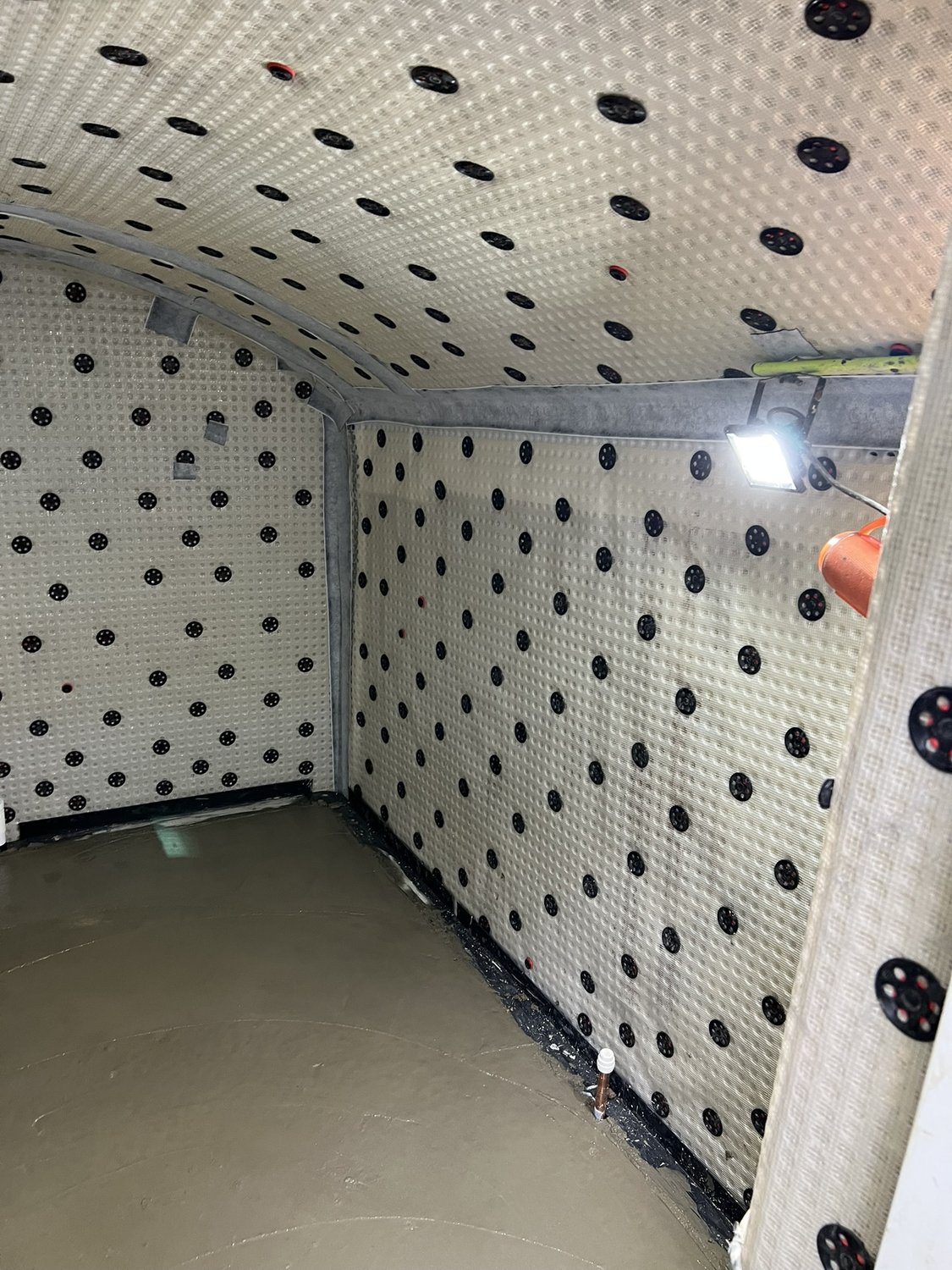
For vaults, we generally fit a cavity drain membrane with mesh and cover it with waterproof render. Bonding to the mesh, the render supports the membrane across the ceiling’s curve while the cavity behind continues to drain water. We use closer, more numerous fixings than on a flat wall to support the additional weight overhead and prevent ballooning.
The process
Our vault waterproofing process, step by step
Although each vault needs its own plan, the sequence is consistent: identify and address the water source, prepare the structure, then install drainage and waterproofing around the space.
1
Survey
We inspect the vault and identify where water enters, then agree the proposed work with you and, where required, the conservation officer.
2
Preparing the floor slab
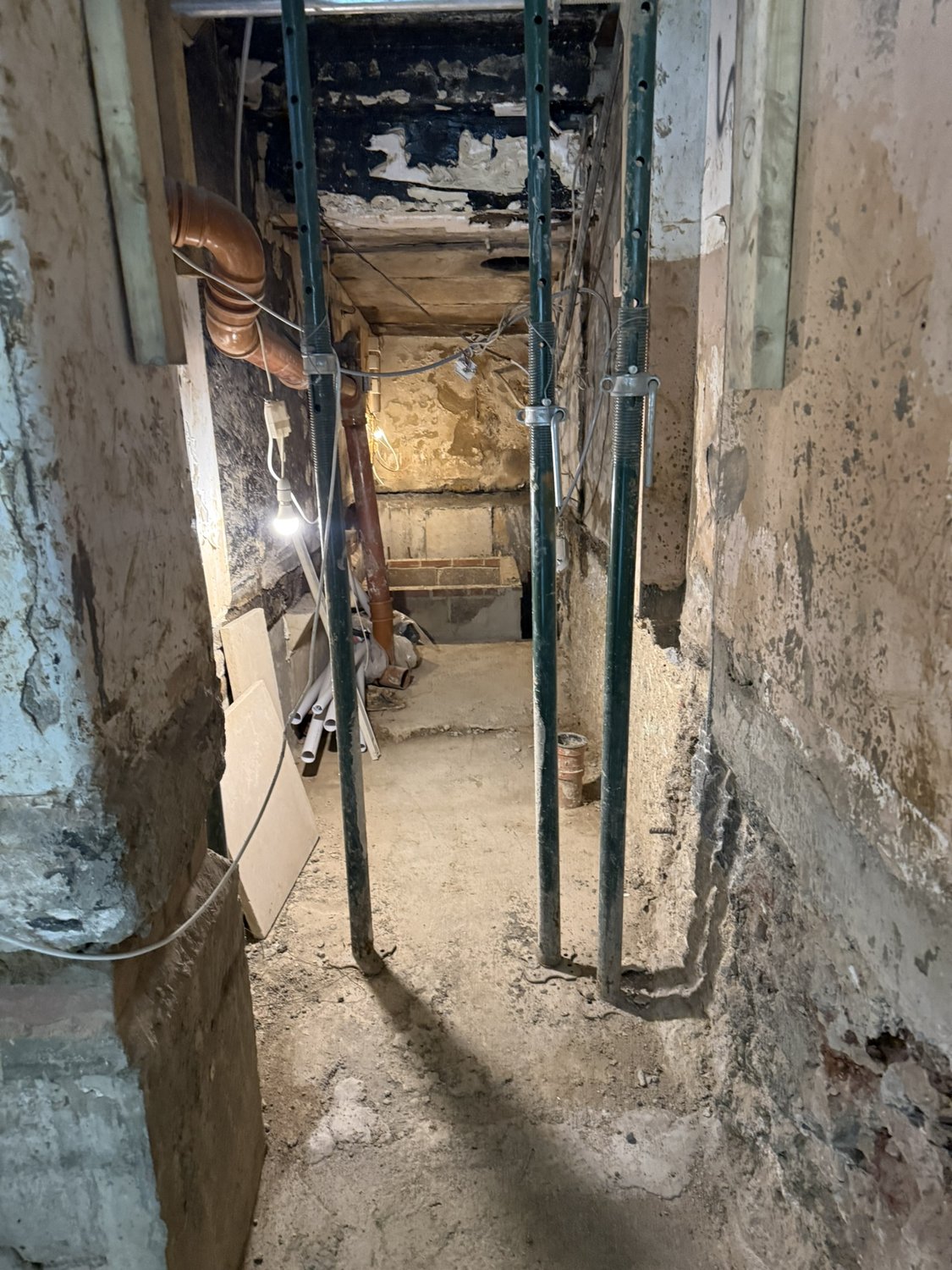
The existing slab is prepared, or a new slab laid, to accommodate the sump and drainage channels.
3
Preparing the walls and ceiling
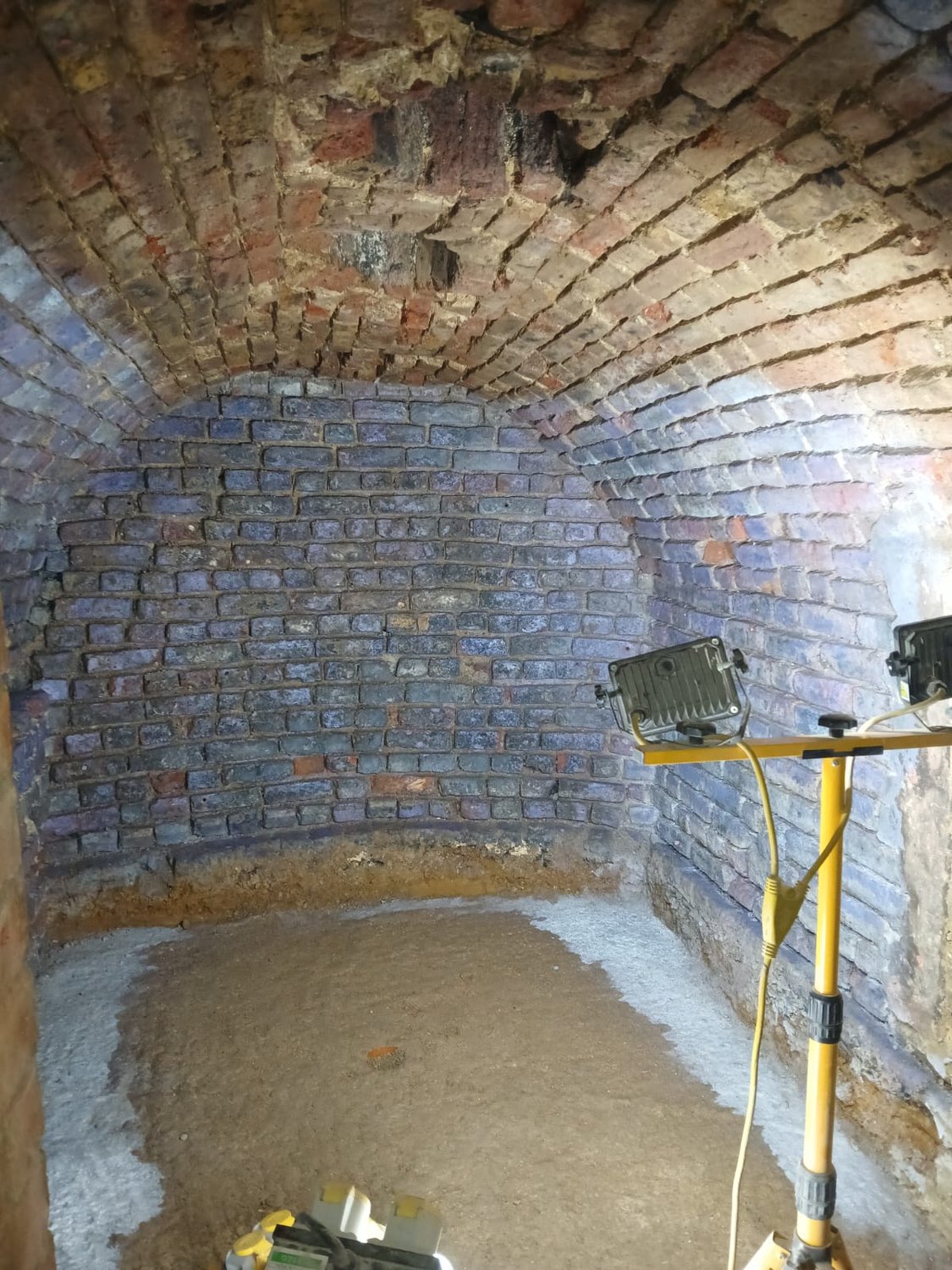
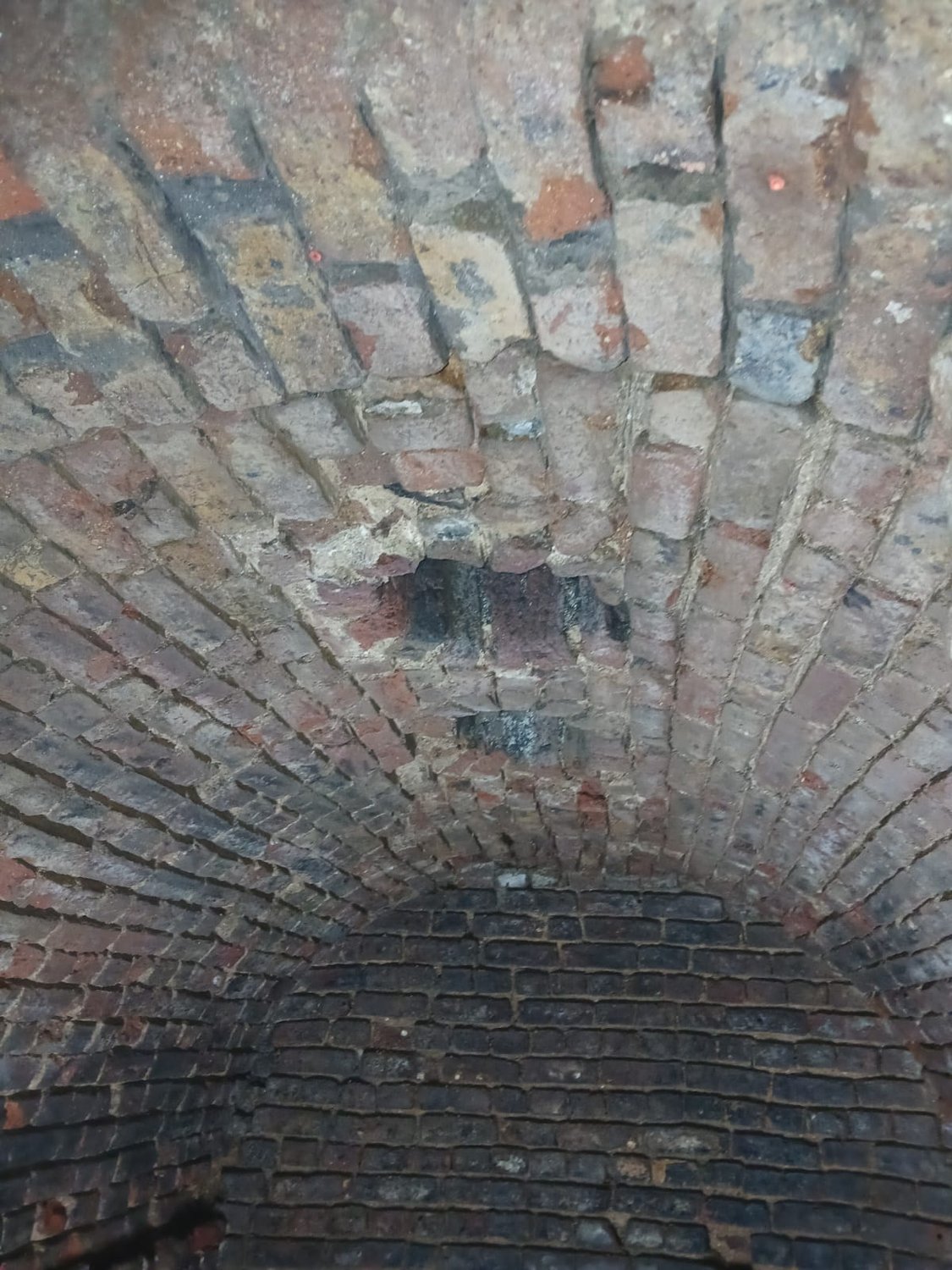
We make sure the walls and curved ceiling are clean and sound, clearing loose material, filling defects, carrying out crack repairs and adding a sealing fillet at the wall-to-floor junction.
4
Extra barrier where the risk is high
If the risk of water entering is substantial, we can apply cementitious tanking before fitting the membrane. This optional layer provides a further line of defence.
5
Membrane on the walls and vaulted ceiling
A meshed cavity drain membrane is fixed along the walls and around the ceiling’s curve. We seal the joints, position fixings close together and add waterproof render to support the membrane and prevent it from bulging.
6
Drainage channels and sump
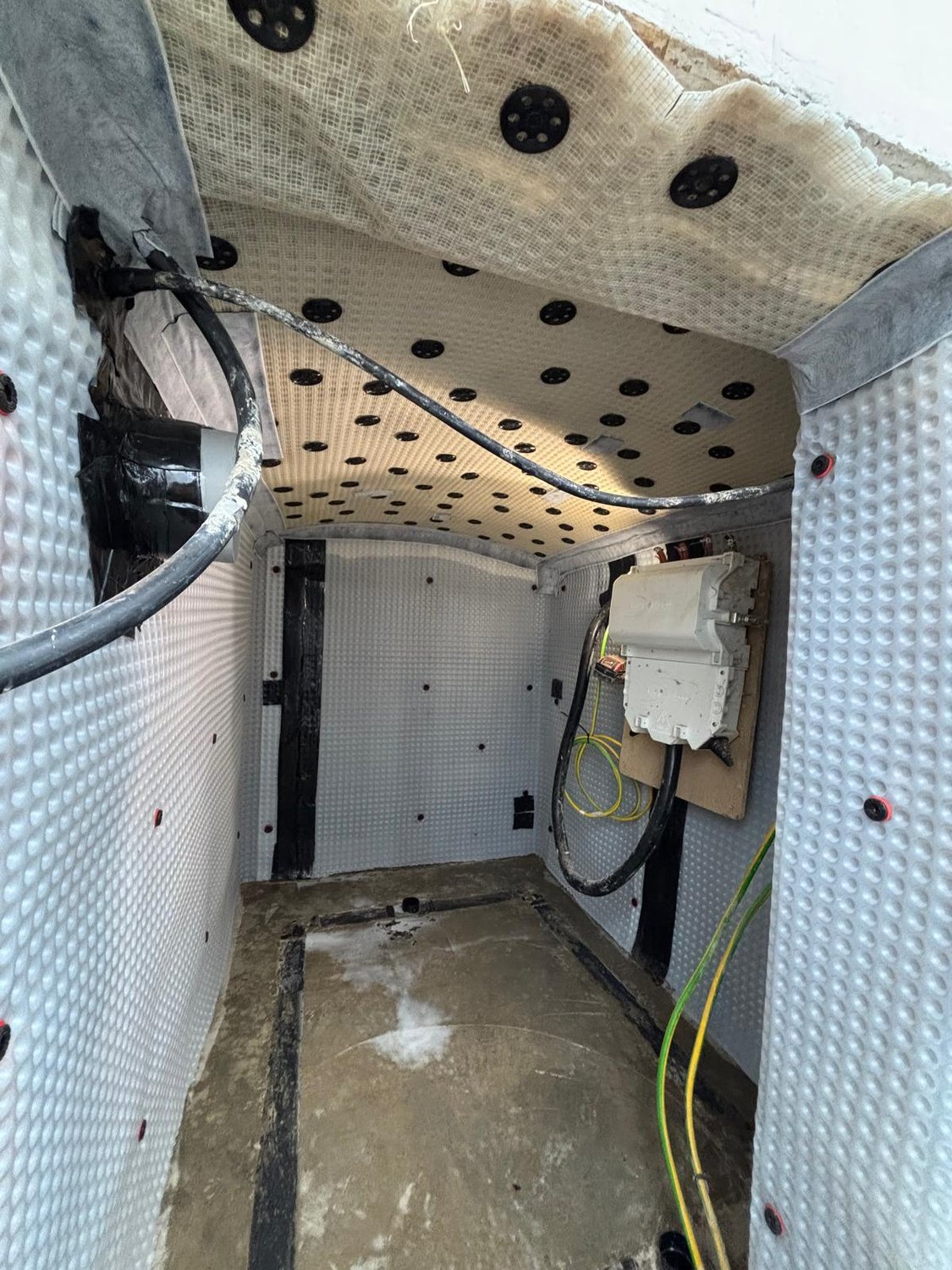
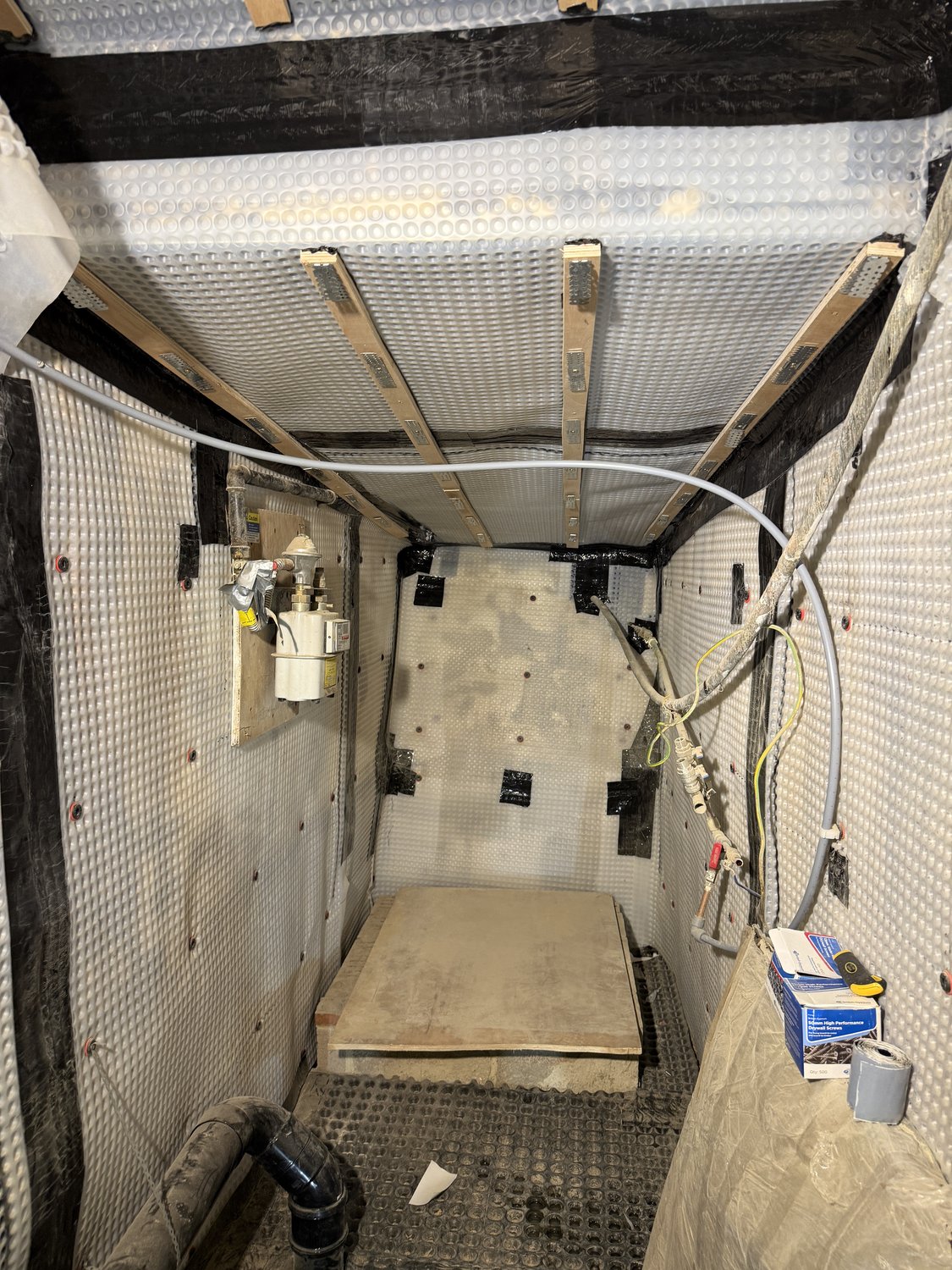
Channels around the perimeter, and across the floor if needed, direct water to a sump with automatic pumps for discharge outside.
7
Floor membrane
The floor membrane goes over the channels and joins the wall membrane to complete the drained system.
8
Finishing
Finally, the vault can be finished for its intended use, whether that is straightforward dry storage or a finished room.
The benefits
What can a dry vault offer?
Waterproofing a vault helps protect the surrounding building, improves the home environment and creates space you can use.
For your home
- Protects the structure: helps prevent water from weakening masonry, opening cracks or corroding steelwork.
- Healthier home: reducing damp stops mould spores spreading into the air you breathe.
- No more musty smell: keeping the vault dry helps the property feel fresher.
- More usable space: a vault can serve as storage, a wine cellar, a playroom or an office.
Added value when selling your property
- More usable space: buyers can picture a home office, gym, utility room or living area instead of a damp store.
- A cleaner survey report: visible damp or flooding can prompt buyers to withdraw or seek a substantial reduction in price.
- A guarantee that transfers to the new owner: our QANW Insurance Backed Guarantee passes to the buyer when the property is sold.
Materials
Trusted manufacturers & high-quality materials
We bring together products from established manufacturers, including Newton, Wykamol, Delta, Biokil and Mapei, to create a complete system designed to keep the vault dry for years to come.
NEWTON
Newton
Membranes for cavity drainage and pump systems.

Wykamol
Tanking slurries, membranes and sump pumps.

Delta
Drainage channels and studded membranes.

Biokil
Treatments for mould and damp proofing.

Mapei
Waterproof renders and repair mortars.
Related services
Waterproofing beyond vaults
Our work also covers cellars and complete basements. If you have wider plans, we can help you plan a basement conversion.
Cellar Waterproofing
Keeping older cellars dry.
Basement Waterproofing
Pumps, membranes and tanking.
Basement Conversion & Waterproofing
Waterproofing planned around the structure.
Sump Pump System & Services
Pumps to remove collected water.
Spray-Applied Basement Waterproofing
Tanking beneath the membrane.
Structural Cracks Repair
Repairing brickwork before waterproofing.
Waterproof Render Interior & Exterior
Waterproof render supporting mesh membranes.
ISO-Therm Membrane & Black Mould
Addressing mould and condensation.
Basement Waterproofing Technology
Understanding Type A, B and C.
Retaining Wall & Foundation Waterproofing
Waterproofing soil-retaining walls.
Penetrating Damp
Tackling water entering through walls.
Insurance-Backed Guarantee & Product Warranty
Cover transferable when you sell.
Your questions
Vault waterproofing questions answered
Can a leaking vault under the pavement be made dry?
Yes. We locate the source of the leak and repair any faulty drains, gullies or pipes first. We then line the vault with a cavity drain membrane, supported by mesh and waterproof render. Drainage channels take any remaining water to a sump with automatic pumps, keeping it away from the finished space.
Why do you recommend a membrane system rather than tanking for vaults?
A cavity drain membrane system, Type C under BS 8102:2022, drains water in a controlled way rather than depending solely on blocking it. It avoids aggressive preparation of historic masonry, can be reversed and tolerates traffic vibration without letting pressure build up. Where water ingress presents a high risk, cementitious tanking can be added beneath it as another line of defence.
Can a membrane be fitted to a curved, vaulted ceiling?
Yes, provided the installation is designed for the curve. We use a meshed membrane, closely spaced fixings and sealed joints, then strengthen it with waterproof render. This supports the membrane across the ceiling and prevents bulging, ballooning and tearing.
Do I need permission to waterproof a vault in a listed building?
A listed property requires Listed Building Consent from the local council before work begins. Conservation officers usually accept a reversible membrane system because it does not damage the original masonry. We can help prepare the drawings and technical information for your application.
Who is responsible for a vault under the public pavement?
The vault usually belongs to the adjoining property, making its upkeep the owner’s responsibility. The council, as highway authority, regulates work on the pavement or road above; waterproofing from inside the vault does not normally involve the highway. We check the position for your vault at the survey.
Does a vault waterproofing system need maintenance?
Yes. The drainage channels and sump pumps need regular servicing because the membrane system depends on them. We include access points for inspection and cleaning.
What guarantee do I get?
Our work comes with a 10-year workmanship guarantee and a QANW Insurance Backed Guarantee, which transfers to a new owner if you sell. The waterproofing materials also have a 10-year product warranty.
How do I book a vault survey in Richmond?
Arrange a survey online, or speak to our specialists on 020 8432 3350 or 07720 752231. We will inspect the vault, trace the water and advise on a suitable system.
Free survey
Arrange a vault survey in Richmond
Concerned about damp, leaks or mould in your vault? Arrange a survey or call our specialists on 020 8432 3350 or 07720 752231. We will trace the water and recommend a suitable system.
07720 752231
Tell us about your vault
Please complete the fields marked *. When we receive your details, we will get in touch to arrange the survey.
Local considerations
What we look for in vaults around Richmond
Around Richmond, a vault may be a small space beneath a front path or an arch below a shop, pub or road. We assess the individual structure rather than assuming that all vaults in the area have the same water problem.
Our survey records where and when water appears, examines the brickwork and mortar, and checks nearby drains, gullies and pipes. We also establish whether the property is listed or within a conservation area. These findings inform the preparation, drainage and pumping design, as well as any approvals required before work.
Listed buildings and conservation areas in Richmond
Period and listed buildings across London can contain vaults. If yours is listed, you must obtain Listed Building Consent from the local council before work begins. Undertaking work on a listed building without consent is a criminal offence.
Conservation officers usually accept a reversible membrane system because it protects the vault without damaging its original masonry. Working with our architects and engineers, we help prepare drawings and technical details for your Listed Building Consent application and assist with its submission.
We also provide vault waterproofing in Twickenham, Kingston upon Thames and Hounslow.
Listed Building Consent
Make your damp vault dry and usable
We are proud of our 5-star Google rating. Read our reviews, arrange a survey or speak to our specialists on 020 8432 3350.
Qualified Specialists & a 10-Year Guarantee
Our family-run team holds CSSW qualifications, with a minimum of 10 years’ experience each. We back every job in Richmond with a 10-year guarantee covering workmanship, plus a QANW Insurance Backed Guarantee that transfers to the new owner if you sell your property. We work on domestic and commercial properties in Richmond and across London and the South East.

See What Our Clients Say
★★★★★ Rated 5 stars on Google
We are proud of our 5-star Google rating: see our reviews. If your basement or property in Richmond is damp or takes in water, book a survey in our Booking Survey section, or call or message our fully qualified advisors.
Where we work
Vault waterproofing across Richmond and nearby areas
Crystal Damp Proofing & Basements Ltd provides vault waterproofing throughout Richmond and nearby areas, including Twickenham, Kingston upon Thames and Hounslow. Select an area below for its local page.