

Leave your details and our team will get in touch.
Request a call back
Thermal Imaging Damp Survey in Abridge
Thermal imaging damp survey reveals hidden moisture before it causes serious damage.
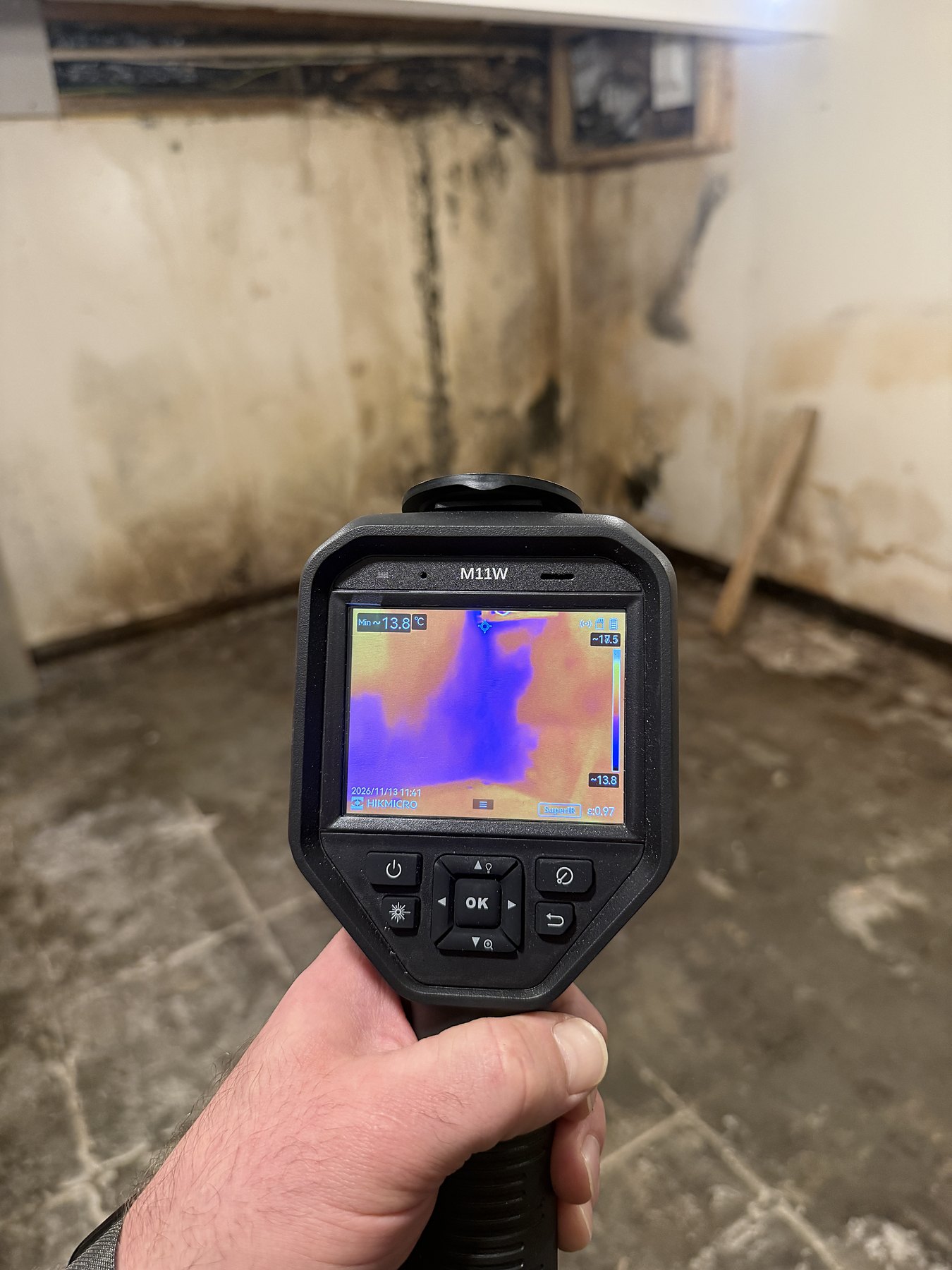
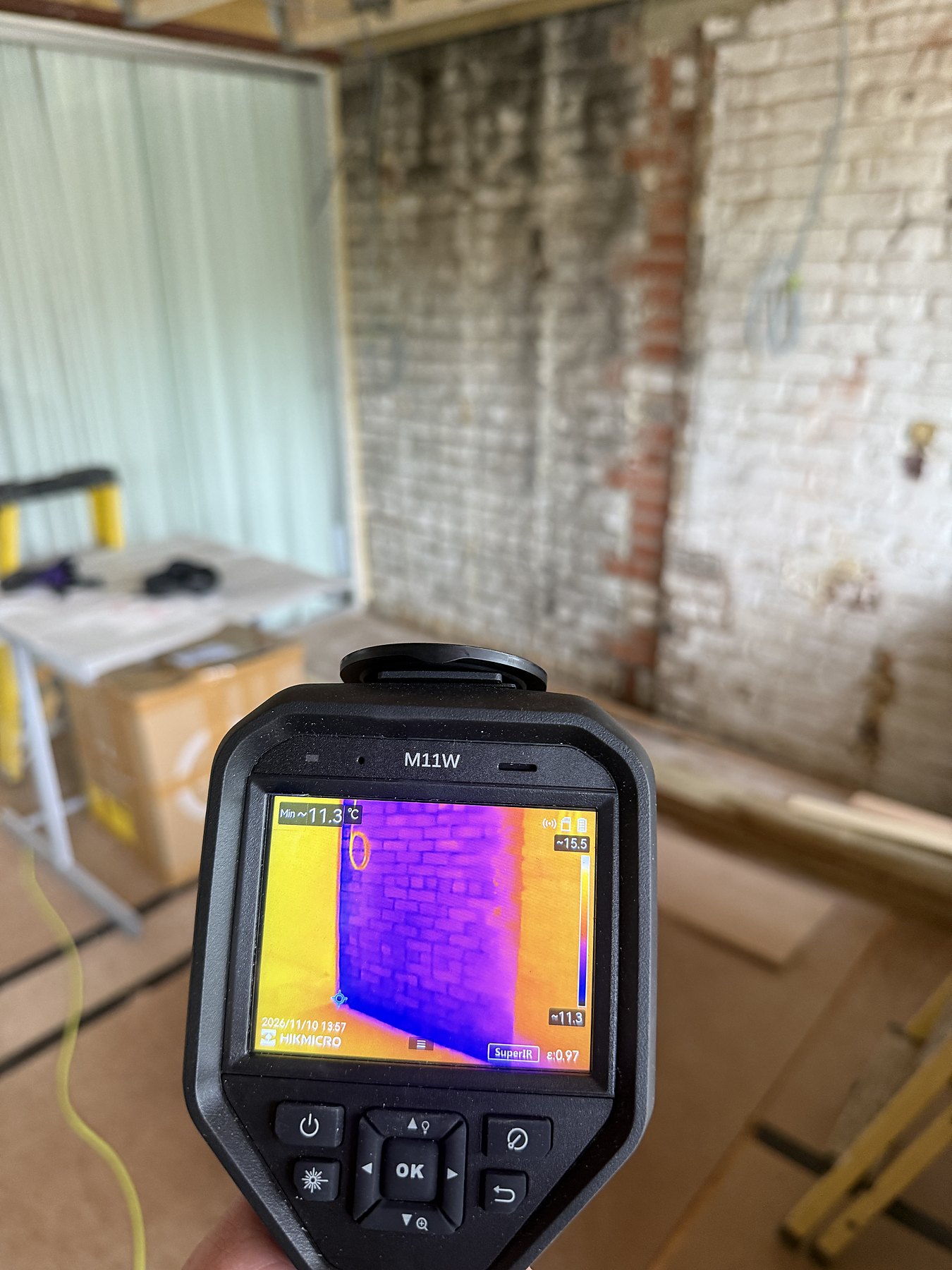
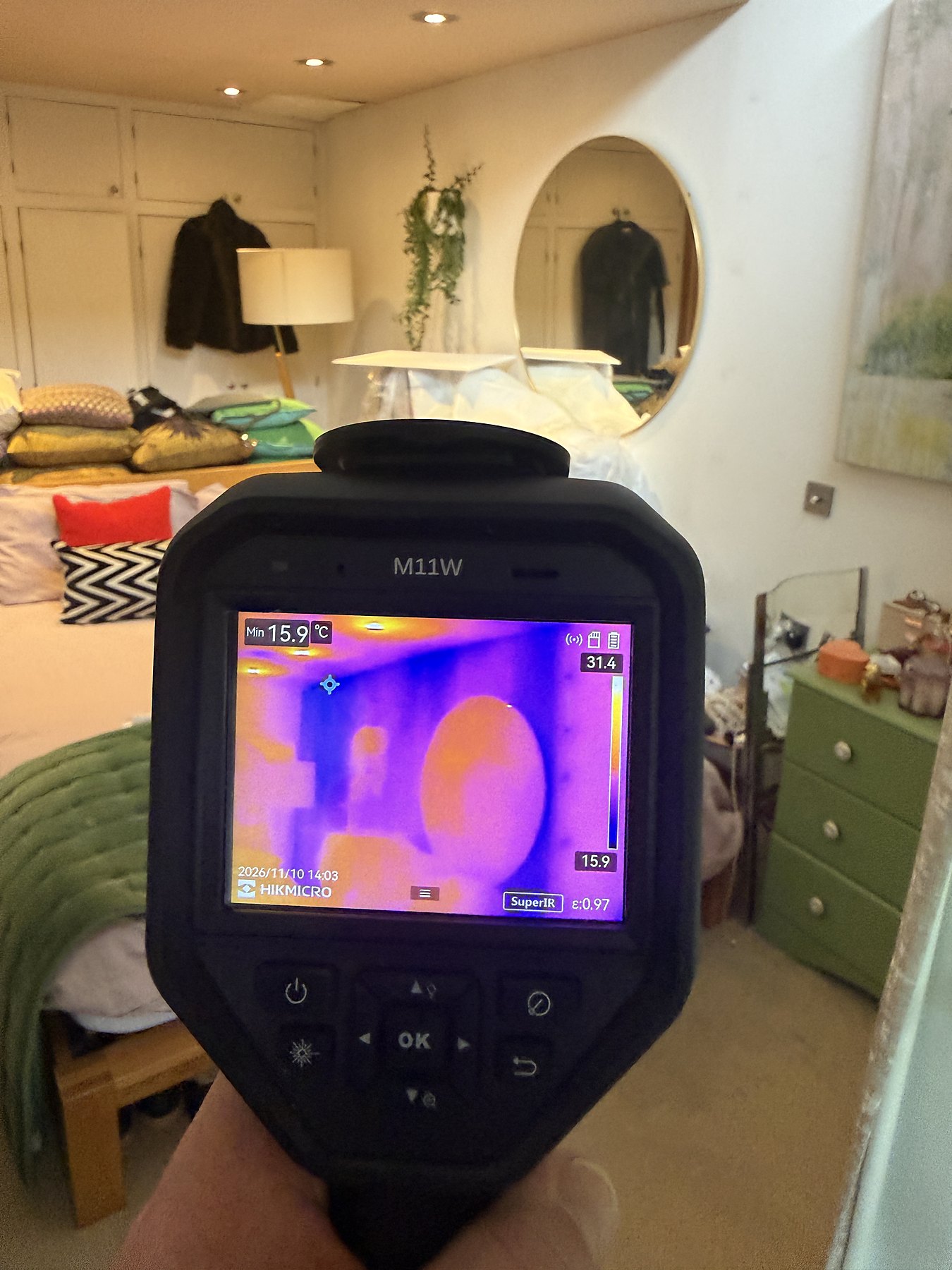
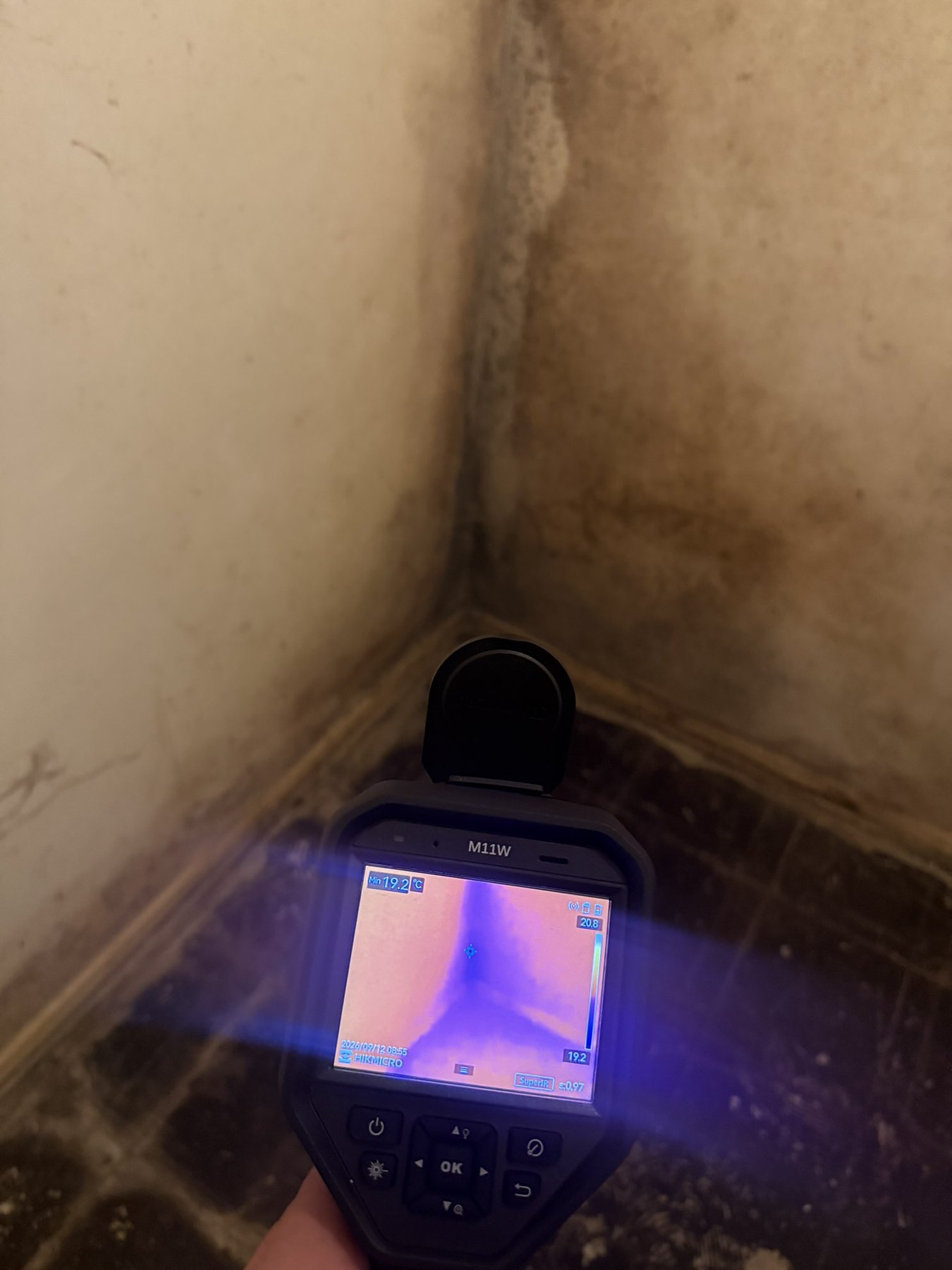
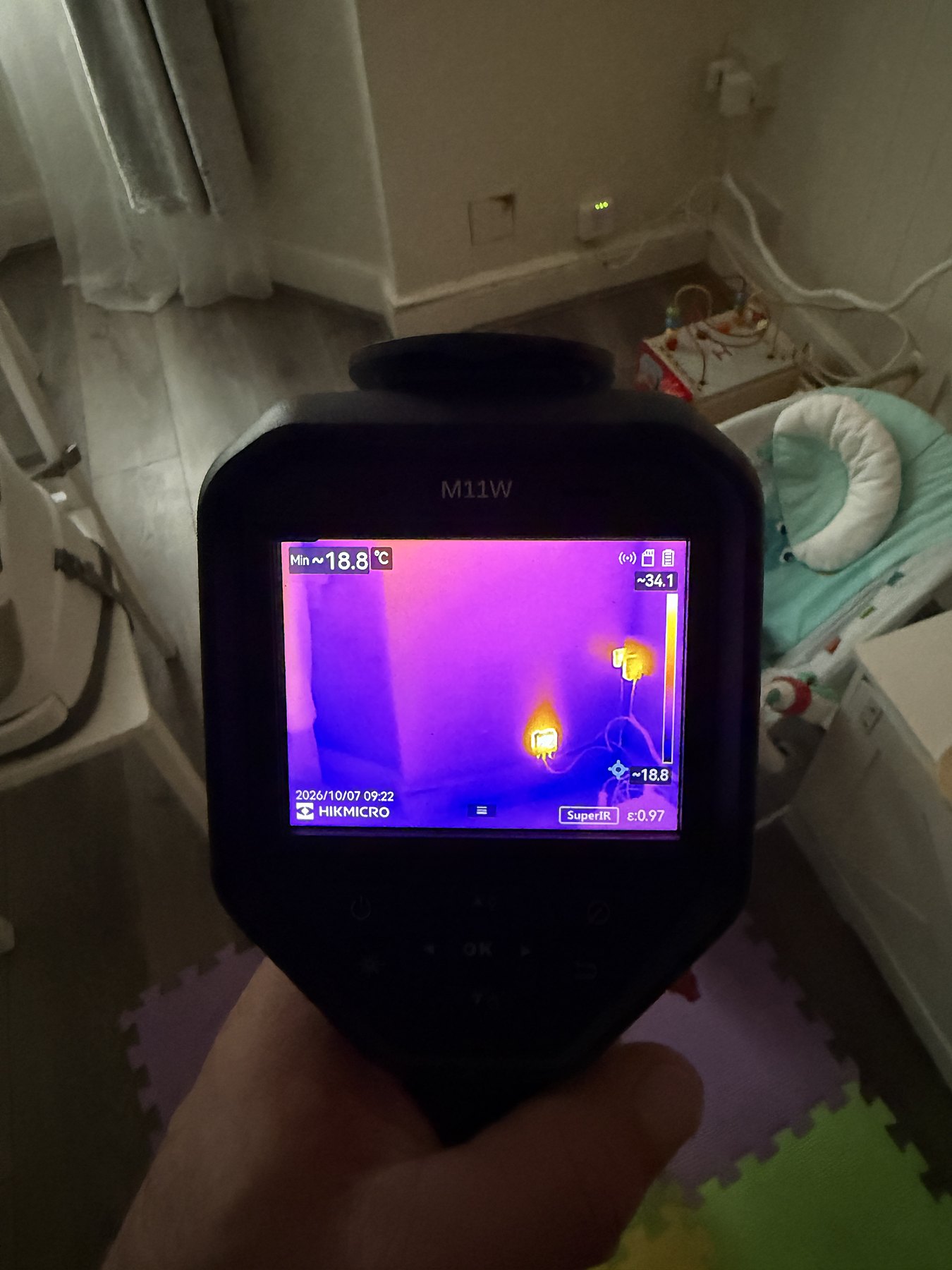
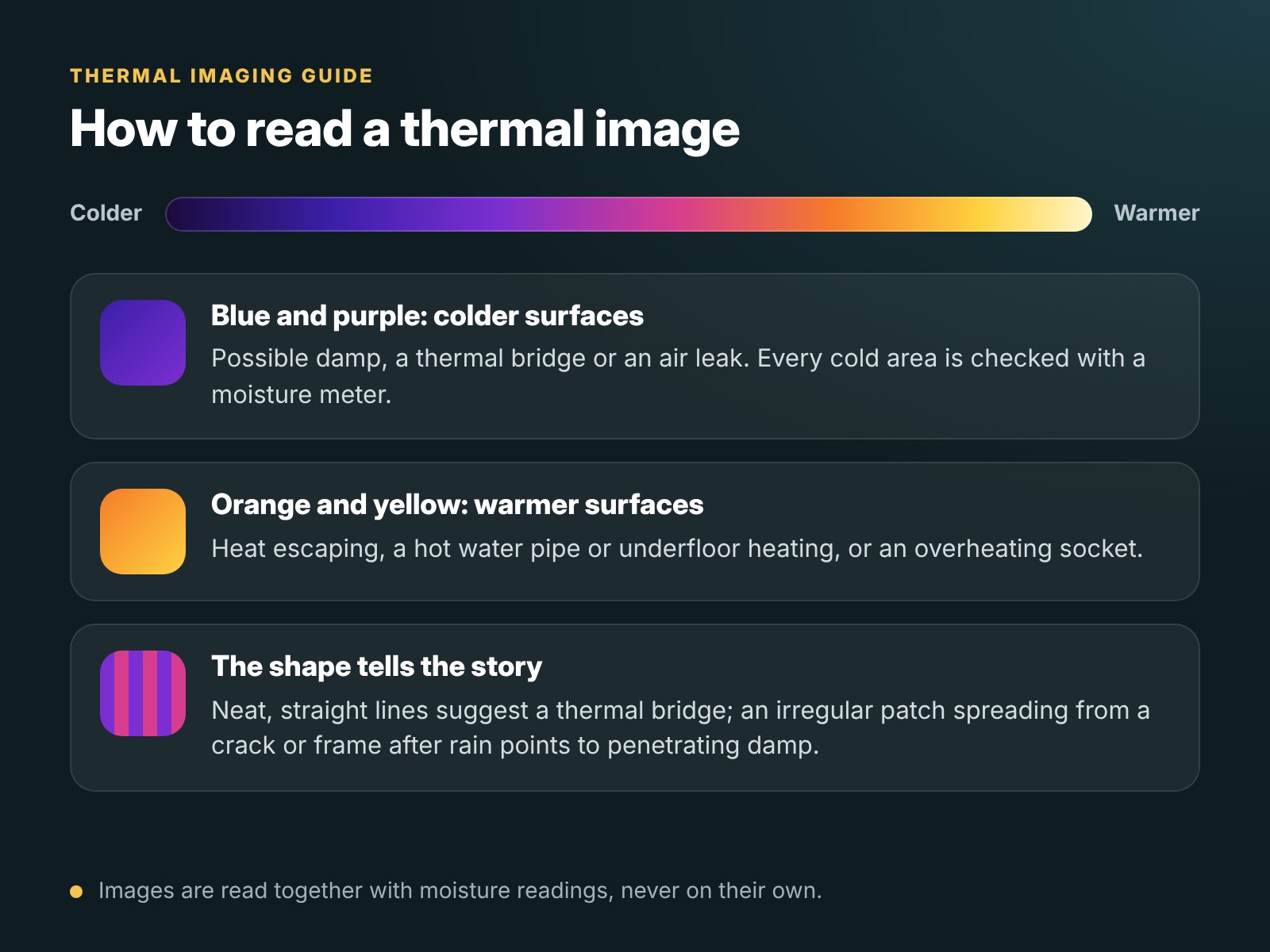
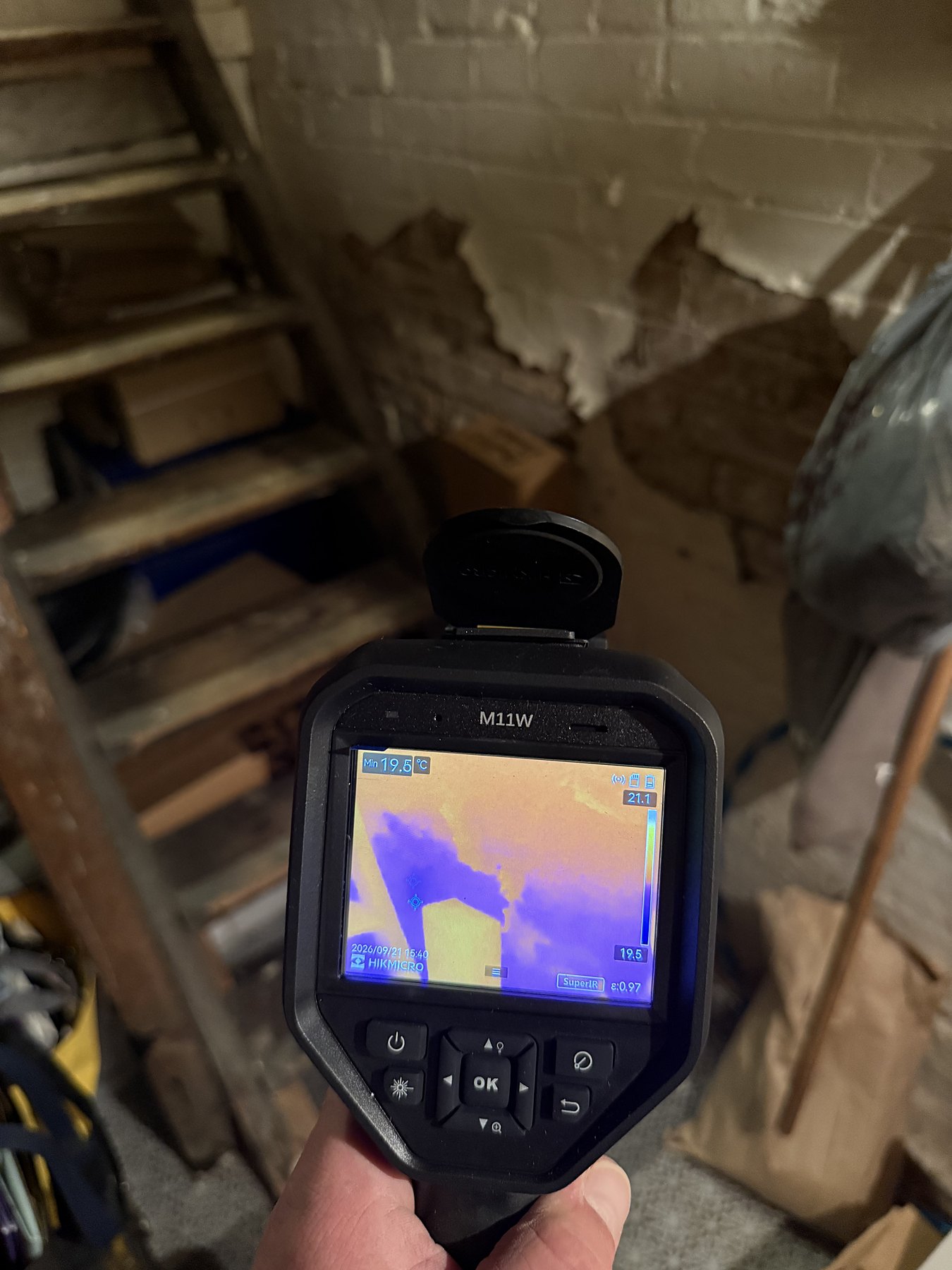
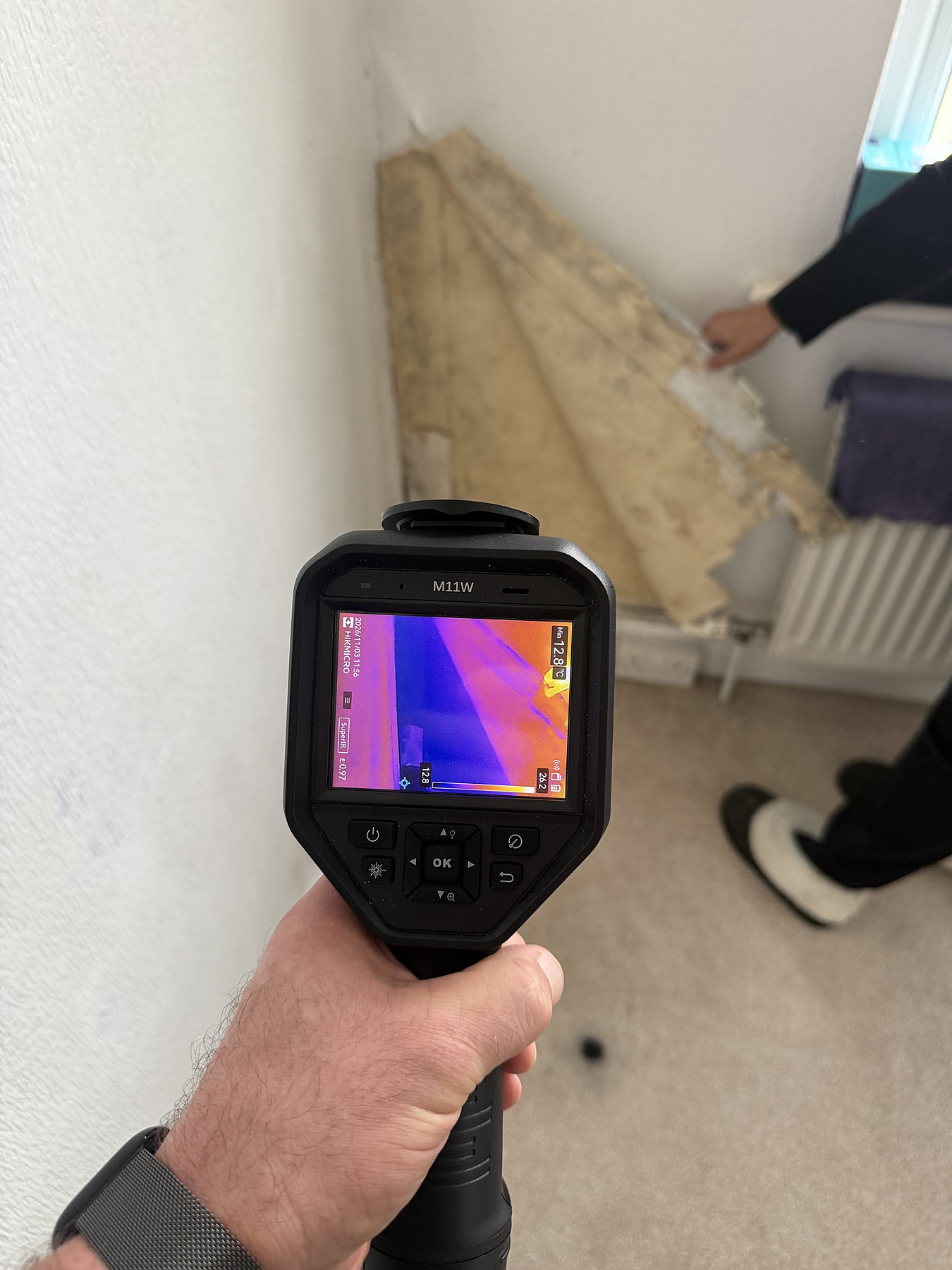
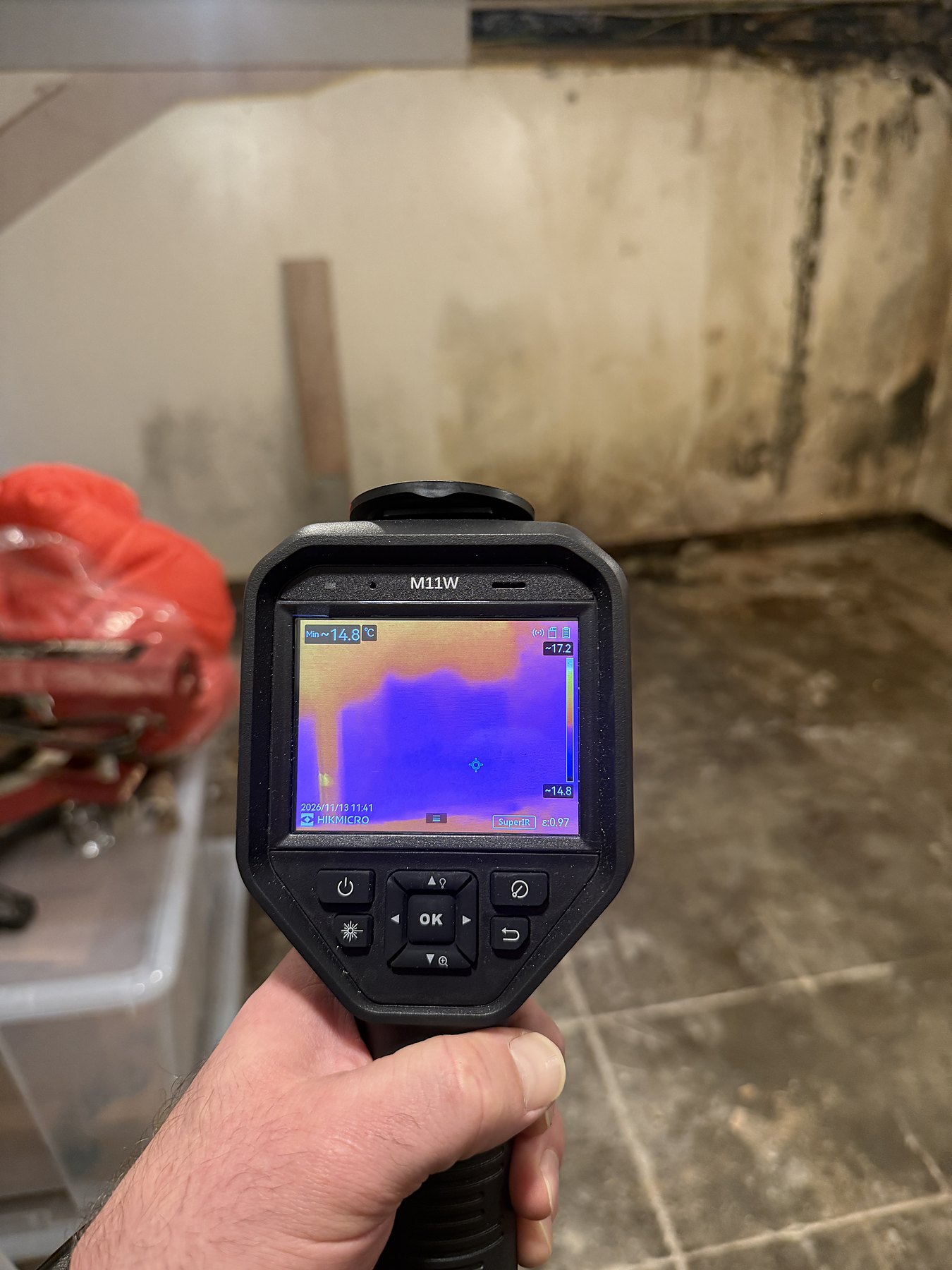
Thermal imaging helps diagnose damp both inside and outside a property. The infrared camera measures surface temperature rather than moisture. Because wet materials retain heat differently and cool as water evaporates, damp can appear as a dark blue or purple cold patch against drier areas.
At Crystal Damp Proofing & Basements Ltd, our CSSW-qualified surveyors carry out thermal inspections in Abridge RM4. We use the images to locate the likely source of damp, then check our findings with a moisture meter.
What does a thermal inspection involve?
This non-invasive building survey uses an infrared camera to record heat emitted by walls, ceilings, floors and roofs. It converts those readings into a colour-coded thermal image, or thermogram. There is no need to drill or open up surfaces, so you can continue your usual routine at home.
It can bring concealed problems into view:
- Concealed damp and leaks behind finished surfaces
- Thermal bridges and missing insulation
- Air leaks and escaping heat
The five stages
What happens during a thermal inspection
We follow a consistent sequence of checks, using measurements to support our interpretation of each finding.
Problems a thermal inspection can reveal
By making surface temperature differences visible, a thermal camera helps us investigate problems that might otherwise remain hidden in walls. Here are some common patterns.
Damp near the top of walls: roofs, gutters and façades
- Outside: we look for façade cracks, leaking gutters and defective flashings higher up, tracing where water travels beneath render or into a wall.
- Inside: the image can reveal how far moisture extends into ceiling-level corners, even before a stain appears on the plaster.
Is it penetrating damp, condensation or a pipe leak?
The location and outline of a temperature change offer useful clues:
- Penetrating damp: uneven cold patches spread from an entry point, such as a wall crack or window frame, particularly following rain.
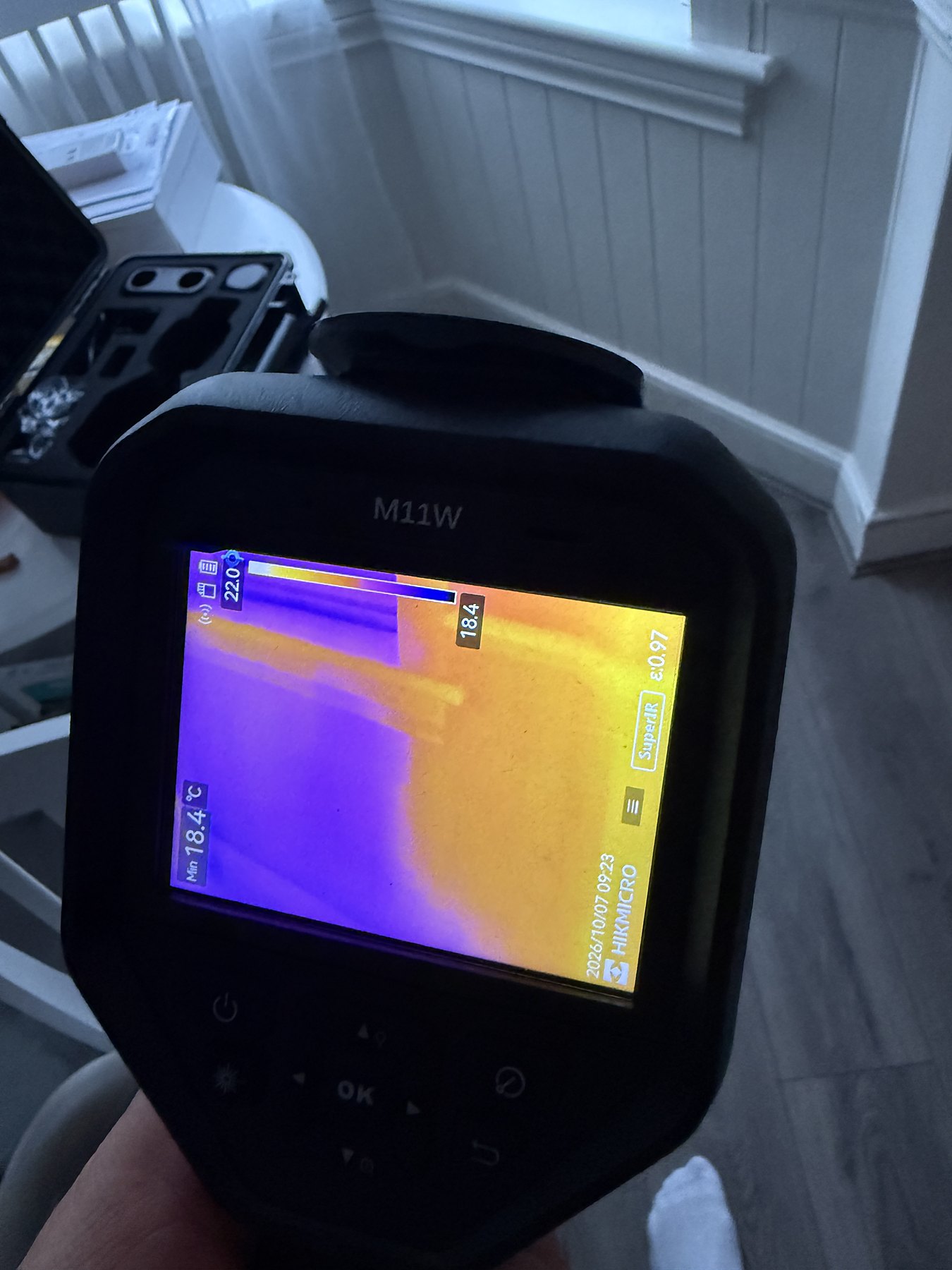
- Condensation and thermal bridges: straight or regular cold lines may follow lintels, ring beams, corners or a window surround where insulation is poor and heat escapes.
- Plumbing leaks: a hot water leak can appear immediately as a bright red or yellow line or patch, while a cold water leak may form a distinct local cold spot unrelated to the weather.
More than damp detection
Where heat escapes and moisture spreads
Thermal imaging can reveal heat loss as well as damp, showing which parts of a wall have been affected by moisture.
Finding heat loss and draughts
As well as damp, the camera shows where your home is losing heat:
- Thermal bridges: colder lines at lintels, ring beams and junctions where heat travels around insulation.
- Insulation gaps: absent or slumped insulation in roofs, lofts and walls.
- Air leaks: draughts at poorly fitted doors, windows and roof areas.
Addressing these issues can reduce heating bills and eliminate cold areas where mould and condensation develop.
How much plaster needs removing?
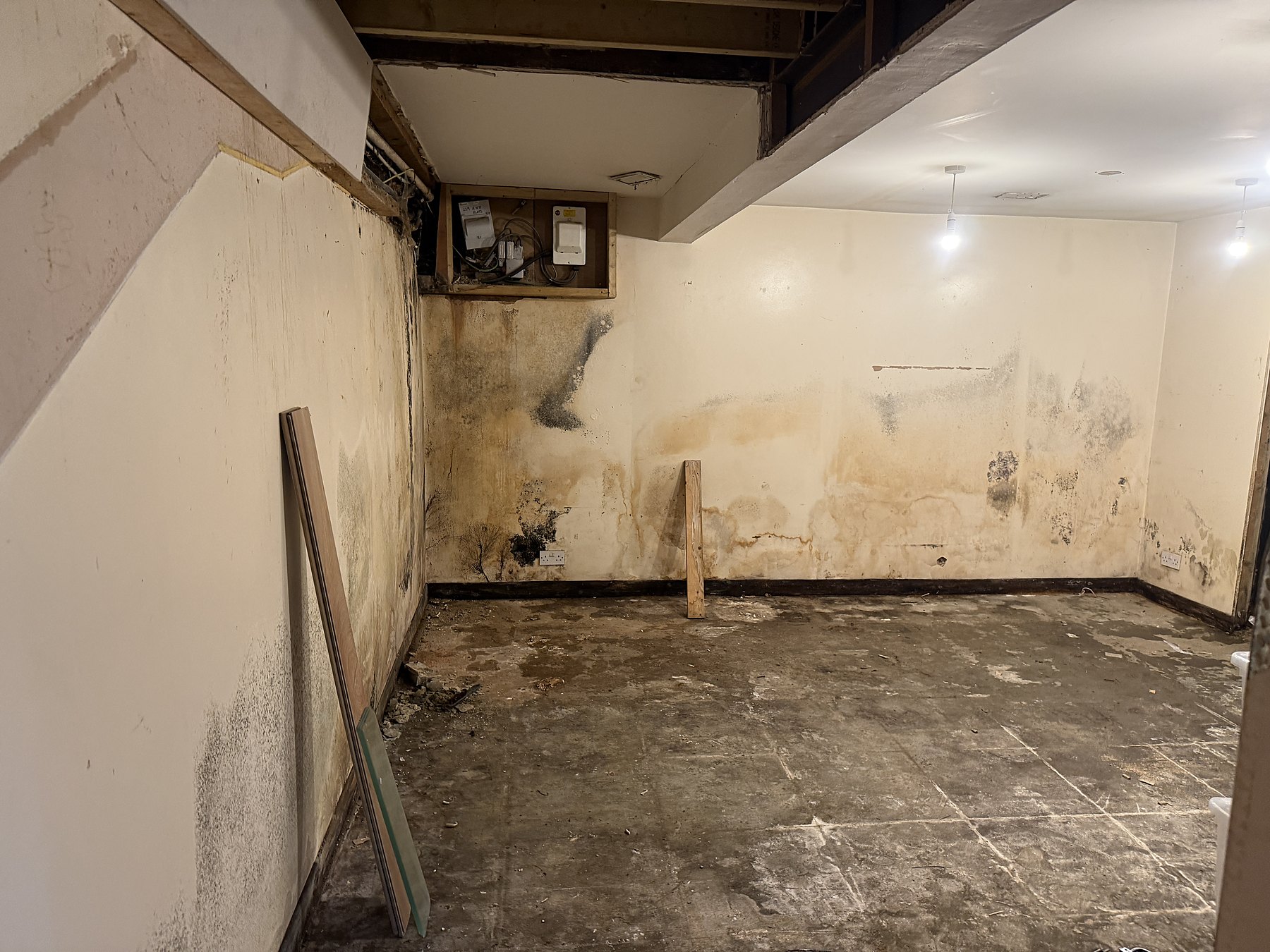
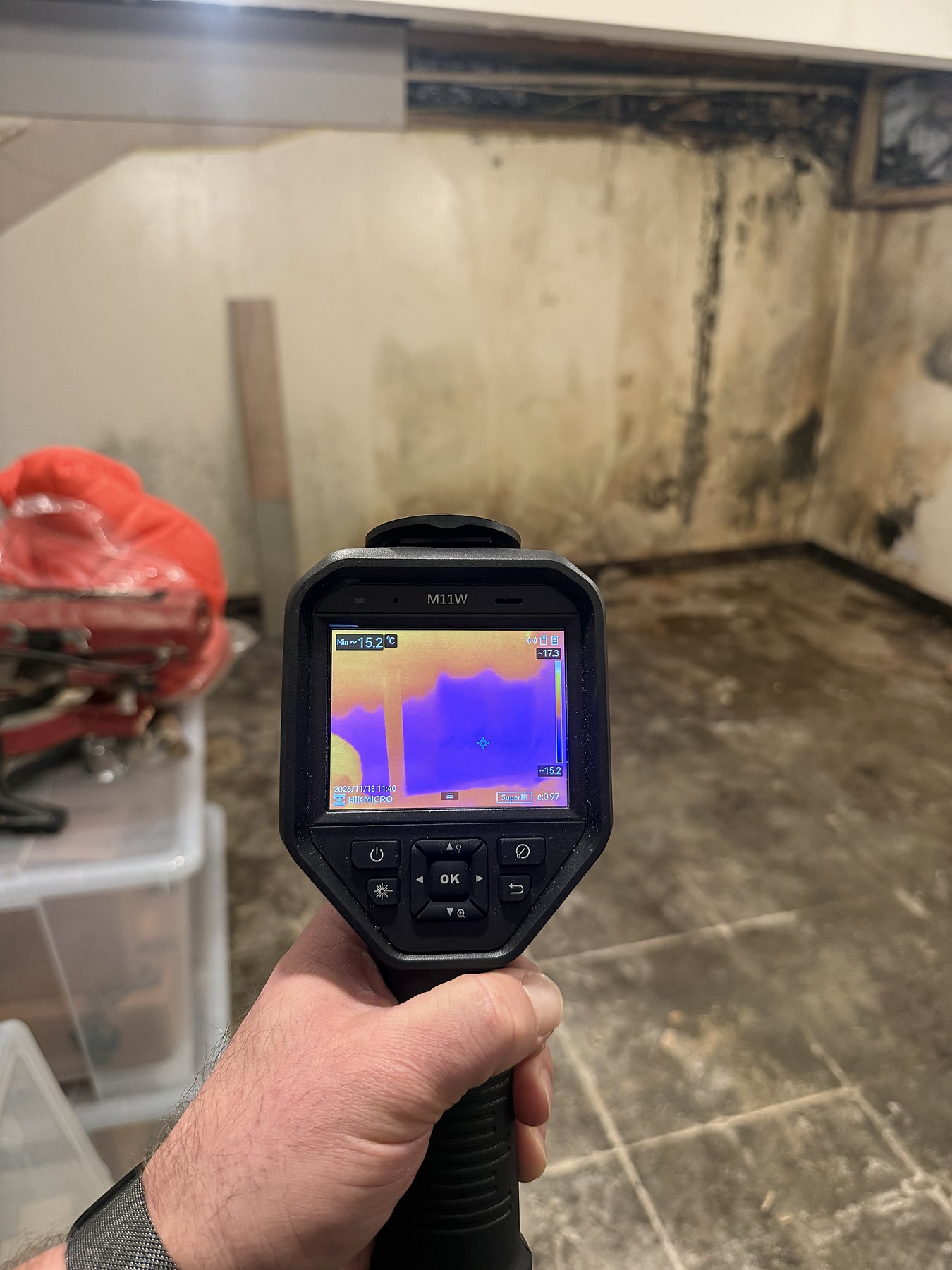
Thermal images help show the extent of moisture within a wall:
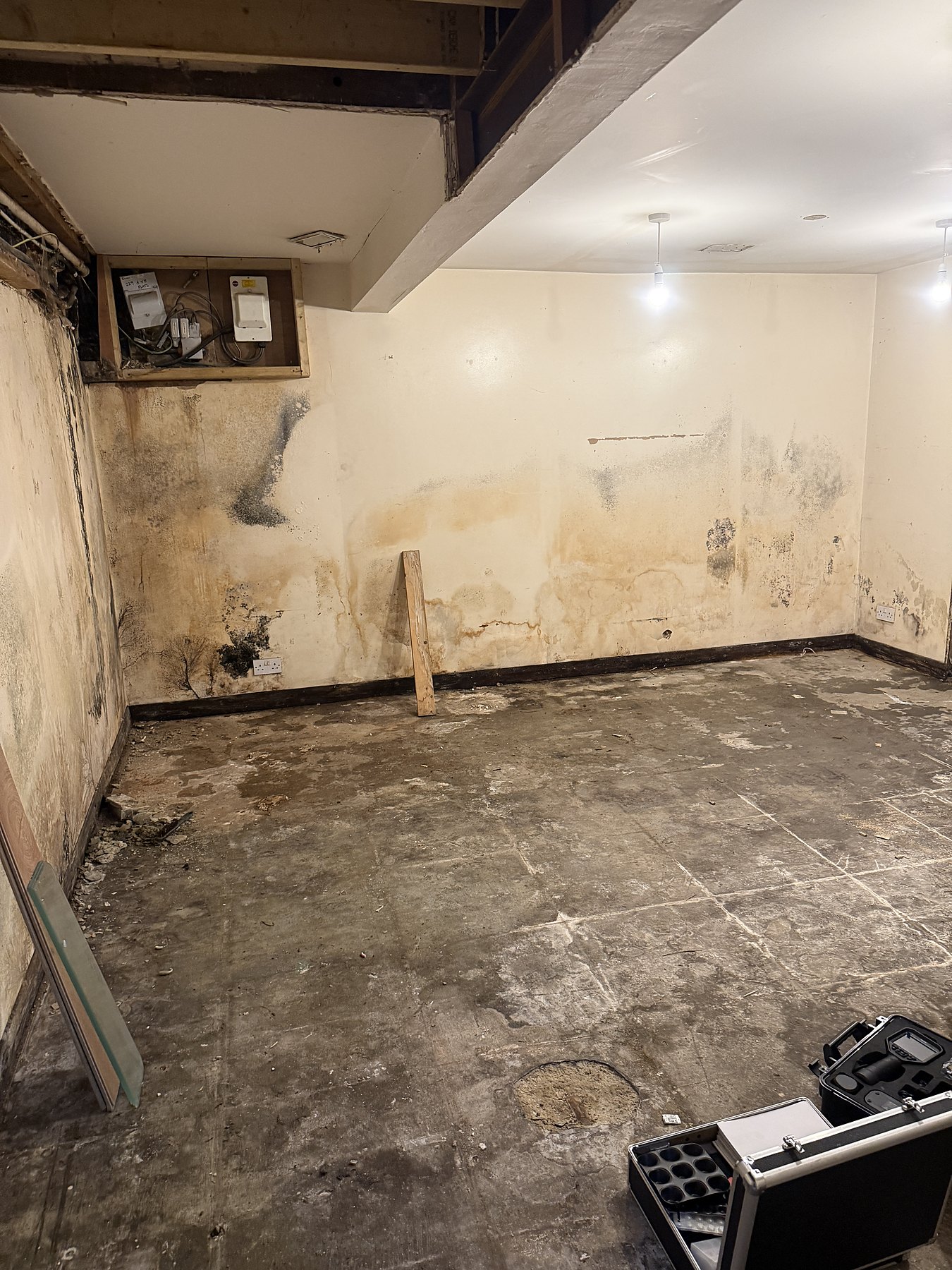
- What is visible: perhaps only a 20 cm surface patch.
- What the image reveals: damp masonry extending across a whole metre.
- What that means: we can identify sound plaster and the area that needs removal, allowing for a safety margin.
That helps avoid unnecessary plaster removal and decisions based on guesswork.
Why temperature difference matters
Will a thermal inspection find most damp problems?
It can reveal most damp problems when the temperature difference (delta T) between indoors and outdoors is sufficient, ideally at least 10–15°C. For this reason, building inspections with a thermal camera are generally most accurate during the heating season, from autumn through spring.
Problems the camera readily identifies
- leaks affecting roofs, terraces and balconies
- insulation gaps and thermal bridges associated with mould
- water entering around doors and windows
- leaks in underfloor heating and hot or cold water pipes
- the spread of rising damp in cellars and basements
Where the camera needs other checks
- Summer damp: when it is 20°C both indoors and outdoors, temperature patterns may be faint or absent unless evaporation is particularly strong; even then, they may be difficult to interpret.
- Mould on a dry wall: once the moisture source is removed and the wall dries, remaining mould may produce no unusual thermal pattern.
- Precise moisture levels: a cooler surface may suggest damp, but the image cannot measure moisture content. Meter readings help confirm its depth and severity.
- Reflective finishes: glass, metal and glazed tiles can reflect heat from elsewhere, so we do not rely on their readings alone.
Investigating leaks
Can a thermal camera locate a leak?
Often it can help. As water evaporates, it draws heat from the wall, making damp areas slightly cooler than dry ones. A sensitive thermal camera records small temperature differences and may reveal moisture in walls, ceilings or floors before it is visible. Evaporation, and therefore the contrast in the image, is stronger when the room is warmer and air moves around the affected area.
The camera records surface temperatures; it cannot see through a structure like an X-ray. Following a leak through a wall to its external entry point can be difficult, particularly where roofs, terraces or ceilings have several layers and air gaps, as with ventilated flat roofs or suspended ceilings.
We therefore inspect both sides of the affected wall or ceiling and take moisture meter readings alongside the thermal images. If those checks cannot establish the source, a small opening in the structure or renewal of the waterproofing may be the only reliable approach.
Choosing the right time
When is a thermal inspection useful?
Consider a thermal inspection when you need measured evidence to understand a building problem rather than relying on assumptions.
Planning to buy? Arrange the inspection before committing to the purchase. Where possible, book during the heating season, when temperature differences make the images easier to interpret.
Getting reliable findings
Suitable conditions and your inspection results
Because thermal imaging depends on temperature contrast, the weather and inspection time affect what the camera can show. BS EN 13187 sets out the British and European method for identifying thermal irregularities in building envelopes using infrared imaging.
Conditions that help produce clear images
- Indoor and outdoor temperatures: a difference of at least 10°C, preferably greater, makes the heating season particularly suitable.
- Avoiding direct sunlight: sun-warmed façades can mislead the camera. Outdoor checks work better under cloud cover, early or late in the day, or after dark.
- Avoiding rain, snow and strong winds while the inspection takes place.
- Steady indoor heat: keep the heating running consistently for several hours before we arrive.
During summer? Inspection remains possible, though reduced temperature contrast makes interpretation harder. We choose the coolest part of the day and, if air conditioning is available, use it to cool the rooms and create a clearer difference.
Your findings after the inspection
- Thermal images of affected areas, paired with standard photographs of those locations.
- An understandable explanation of the findings and the likely source of water or heat loss, supported by moisture readings.
- Repair recommendations in a sensible order, helping you avoid paying for work you do not need.
Should we notice an overheating electrical component while inspecting, we will tell you and recommend that an electrician checks it.
Preparing your home for a thermal inspection
A little preparation helps us obtain clearer results at your Abridge home:
- Maintain the heating: keep it at a normal, steady temperature for at least 24 hours beforehand to establish a clear contrast with outdoors.
- Keep doors and windows shut: leave them closed for several hours so draughts do not alter wall temperatures.
- Clear the walls: move beds, wardrobes and other furniture away from surfaces to be inspected, ideally the previous day. Remove pictures, mirrors and heavy curtains so temperatures can stabilise.
- Limit additional moisture: avoid drying laundry indoors, lengthy hot showers and cooking with uncovered pans immediately beforehand.
- Run relevant water or heating systems: where a pipe leak is suspected, use the hot water or underfloor heating before the visit to make a leak easier to identify.
- Provide access: make affected rooms, the loft, cellar, basement and external walls available for inspection.
- Share the background: let us know when damp appears, such as after heavy rain, and tell us about previous leaks or repairs.
For outdoor checks, an overcast day, early morning or evening usually gives the clearest image. If penetrating damp is suspected, we ideally inspect after rain once the wall’s outer surface has dried.
Getting ready for our visit
From finding the cause to making repairs
Repairs guided by the inspection findings
Thermal imaging helps us identify the cause before repair work begins. Our team then carries out the appropriate work, with every waterproofing installation backed by our 10-year guarantee and a QANW Insurance Backed Guarantee.
Crystalline DPC Injections
Treat rising damp at its source and restore affected walls.
Structural Cracks Repair
Repair façade cracks using crack stitching and helical bars.
Basement Waterproofing
Type A or Type C waterproofing for damp or flooded basements.
Iso-Therm Membrane & Black Mould
Treat mould and insulate cold wall surfaces.
Basement Floor & XPS Insulation
Create warm, dry basement floors using XPS insulation.
Waterproof Render Interior & Exterior
Apply waterproof and renovation renders to damaged walls.
The value of a professional thermal inspection
A professional thermal inspection helps you investigate a problem without searching by trial and error or unnecessarily opening up large parts of your home.
Rather than treating every dark area on the screen as damp, our surveyors consider its shape and behaviour, verify it with moisture readings and explain the likely source and suitable repair.
- CSSW-qualified surveyors with day-to-day experience diagnosing damp.
- Checks on both sides: we inspect indoors and outdoors, not only the visible mark.
- The same team for diagnosis and repair, connecting the findings to the work required.
Your questions
Thermal inspection FAQs
What is a thermal inspection?
It is a non-invasive infrared camera survey that records surface temperatures to help identify concealed damp, leaks and heat loss.
What does a thermal inspection detect?
It can show heat escaping through roofs, walls and thermal bridges, draughts near poorly fitted doors and windows, and signs of damp, leaks or mould risk.
When is the best time for a thermal inspection?
Autumn to spring, during the heating season, is preferable when indoor and outdoor temperatures differ by at least 10°C.
Can a thermal inspection be done in summer?
Yes. We can inspect early or late in the day, ideally cooling rooms with air conditioning where available to create enough temperature contrast.
Why have a thermal inspection before buying a house?
It can uncover damp, leaks or missing insulation before you commit to buying, and provide findings to support negotiations over the price.
Can a thermal camera see through walls?
No. It records surface temperature, which is why we also inspect both sides of the wall and take moisture meter readings.
Will the inspection damage my walls or disturb us?
No. The survey is non-invasive, with no drilling or opening up, and you can continue your usual activities at home.
How do I book a thermal imaging damp survey in Abridge?
Arrange a survey online or call our specialists on 020 8432 3350 or 07720 752231. The consultation is free; surveys beyond 10 miles from our base are charged in line with our price list.
Talk to us for free
Arrange a thermal imaging damp survey in Abridge
Get in touch for a free consultation or to arrange a survey. Surveys beyond 10 miles from our base are charged according to our price list. Based in Croydon, we visit domestic and commercial properties across London and the South East. Speak to our specialists on 020 8432 3350 or 07720 752231.
07720 752231
Describe what you have noticed
Please complete the fields marked *. We will get in touch when we receive your details to arrange the survey.
Looking at the property
What we check on thermal inspections near Abridge
Properties around Abridge may include solid-wall homes with cellars, insulated newer homes and conversions. Each building produces its own thermal patterns, so we assess the images in the context of the property we are inspecting rather than assuming a particular cause.
We examine interior walls, floors and ceilings, then check external walls, window openings, gutters and the roofline. Before reaching a conclusion, we test concerning warm or cold areas with a moisture meter.
Find what is hidden from view
See our reviews and 5-star Google rating, arrange a survey or speak to our specialists on 020 8432 3350.
Qualified Specialists & a 10-Year Guarantee
Our family-run team holds CSSW qualifications, with a minimum of 10 years’ experience each. We back our work in Abridge with a 10-year guarantee covering workmanship, plus a QANW Insurance Backed Guarantee that transfers to the new owner if you sell your property. Based in Croydon, we work on domestic and commercial properties across London and the South East.

See What Our Clients Say
We are proud of our 5-star Google rating. Book a survey in our Booking Survey section, or call our specialists on 020 8432 3350 or 07720 752231.
Our service areas
Thermal inspection in Abridge and surrounding areas
Crystal Damp Proofing & Basements Ltd provides thermal imaging damp surveys in Abridge and nearby areas, including Collier Row, Chigwell, Harold Hill and Loughton. Select an area below for its local page.