

Leave your details and our team will get in touch.
Request a call back
Black Mould Treatment with ISO-Therm in Banstead
Black mould treatment for cold walls: reduce condensation, improve warmth and keep almost all your room space.
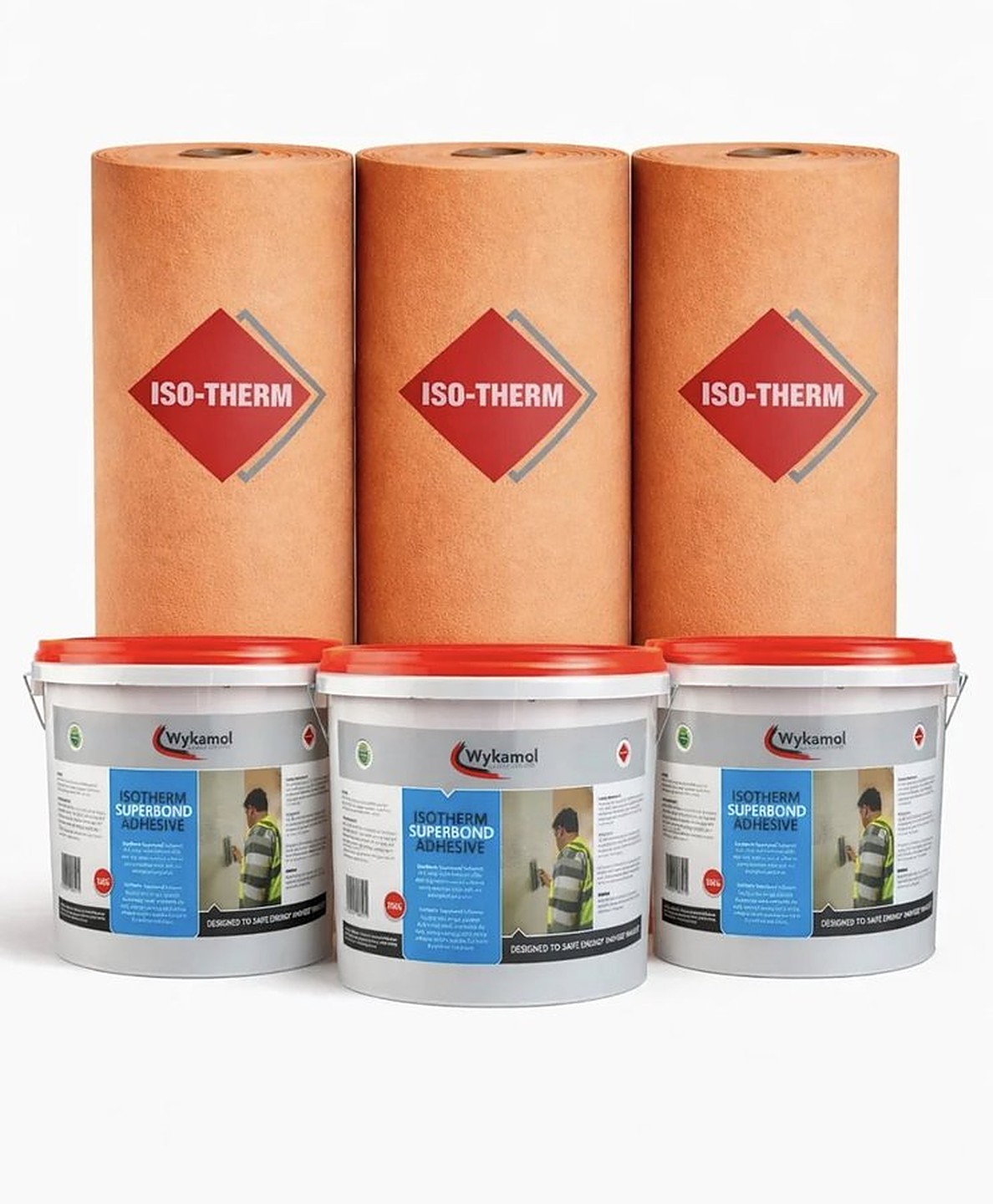
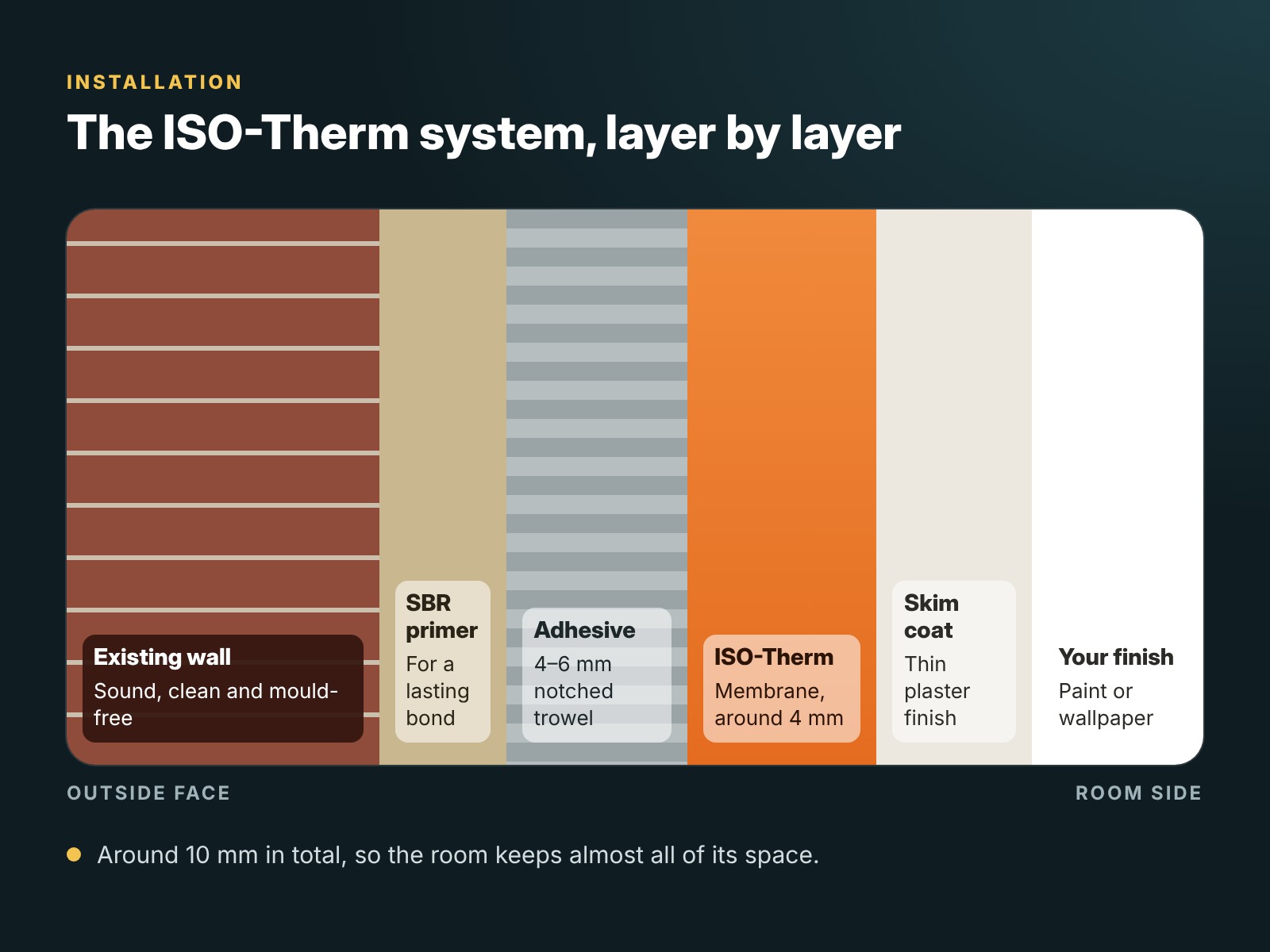
ISO-Therm is a patented, ultra-thin polyester thermal insulation membrane, around 4 mm thick. Fitted inside as internal wall insulation (IWI), it warms cold wall surfaces while tackling damp and mould. Adhesive and a thin plaster skim bring the complete system to around 10 mm thick, leaving room space virtually unchanged.
For older buildings where external wall insulation is not possible, it offers an internal option. Crystal Damp Proofing & Basements Ltd is an approved Wykamol installer and fits ISO-Therm in Banstead SM7 to the manufacturer’s requirements.
When is ISO-Therm suitable?
It is particularly useful when insulating a building externally is difficult or not possible:
- Listed and period buildings, where a conservation officer does not permit changes to the façade.
- Flats and terraced houses, where insulating the whole building is not an option but individual walls remain cold.
- Rooms with limited space: the membrane is only a few millimetres thick, unlike stud-framed mineral wool or polystyrene.
- Pronounced thermal bridges, including window reveals and corners of rooms.
Can ISO-Therm tackle black mould?
It can help when condensation on the wall surface causes the mould. It cannot, on its own, resolve water entering from outside.
How it works
Warm, moist indoor air condenses when it reaches an uninsulated wall cold enough to hit the dew point. Black mould grows in that moisture. By raising the wall’s surface temperature, ISO-Therm helps stop condensation settling and removes the moisture mould needs.
When it will not help on its own
A leaking roof, defective gutter or rising damp from the foundations can leave a wall wet for other reasons. Covering that moisture with a membrane could cause plaster to detach, so we identify and address the water source first.
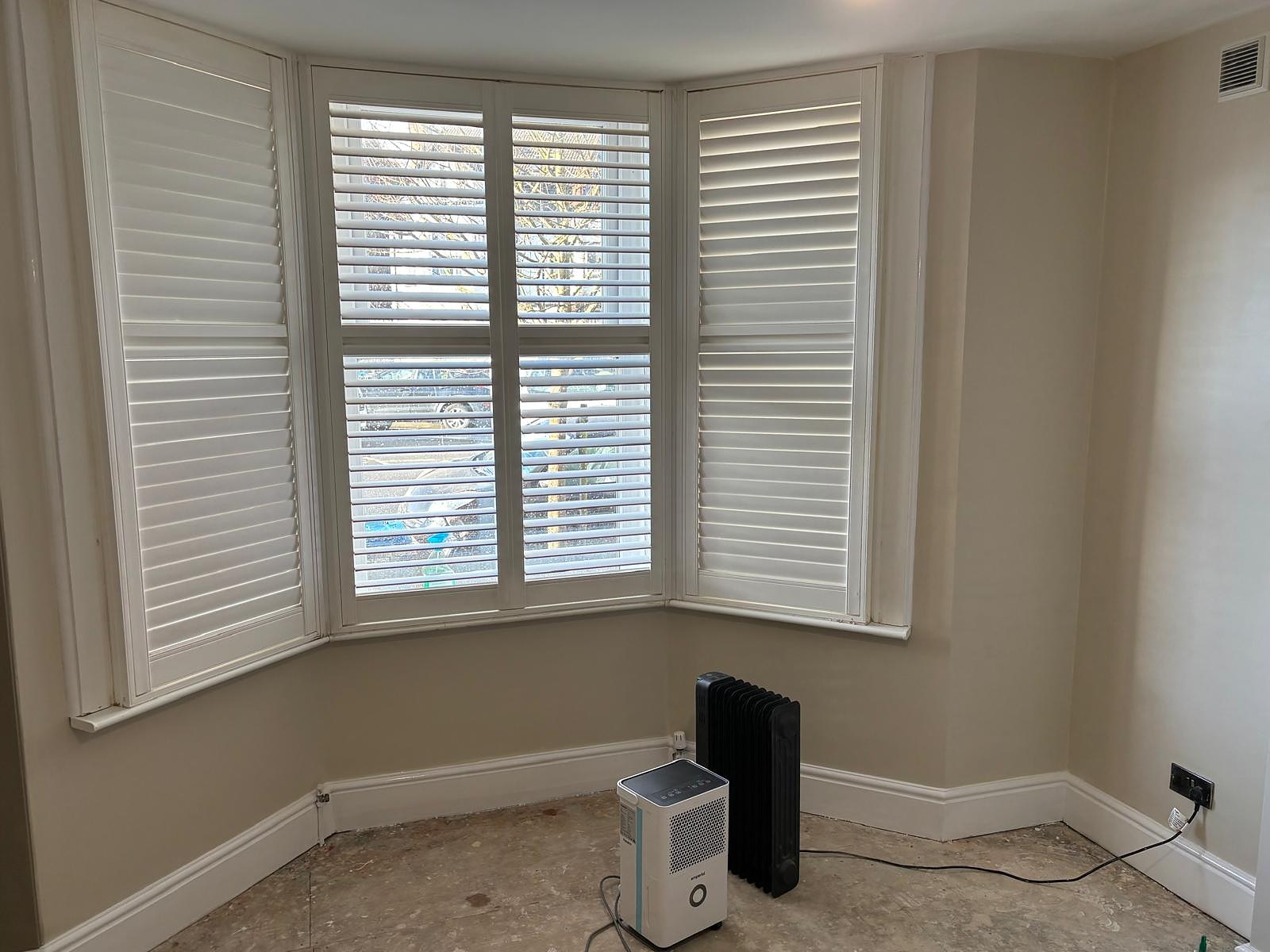
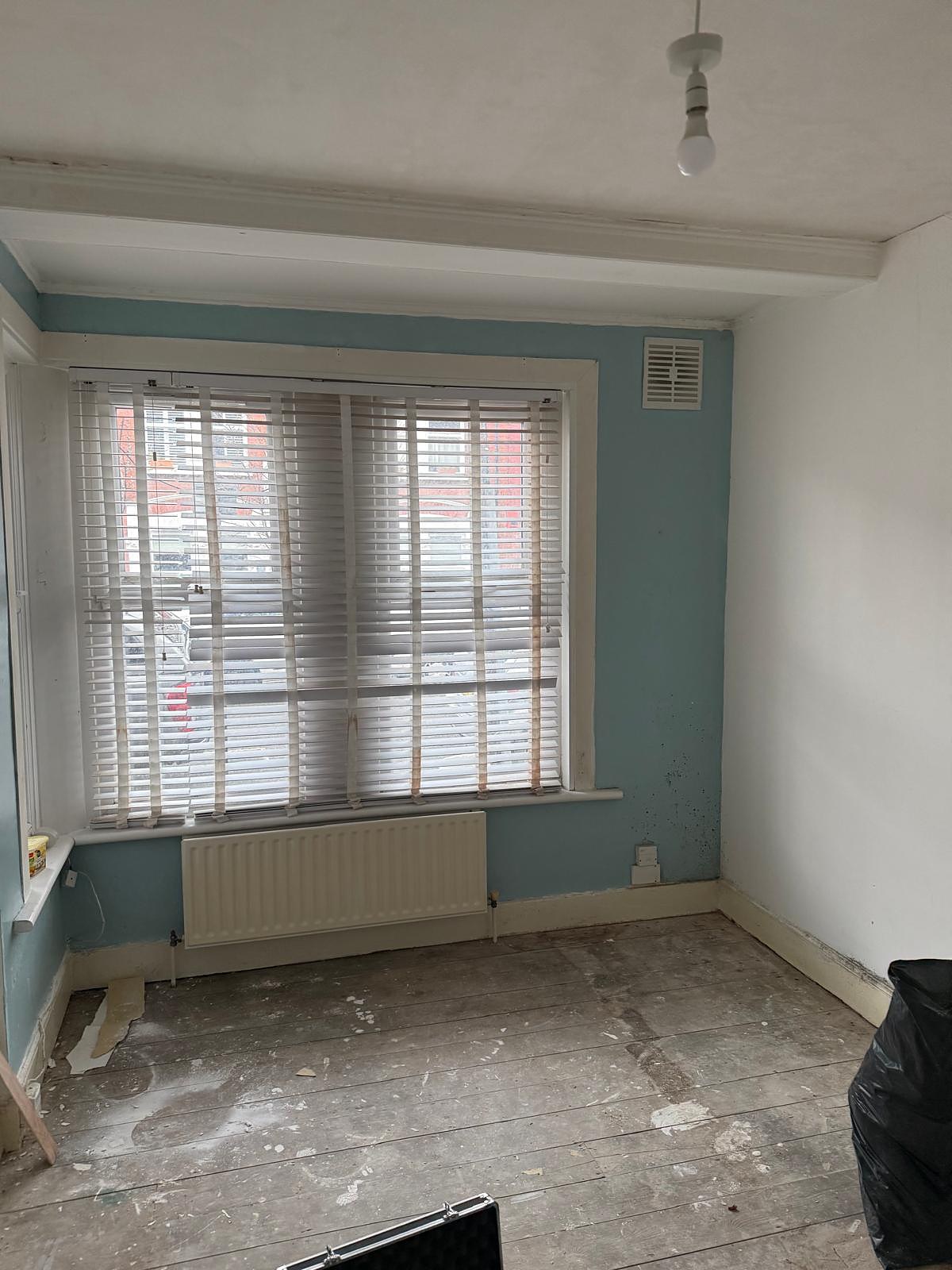
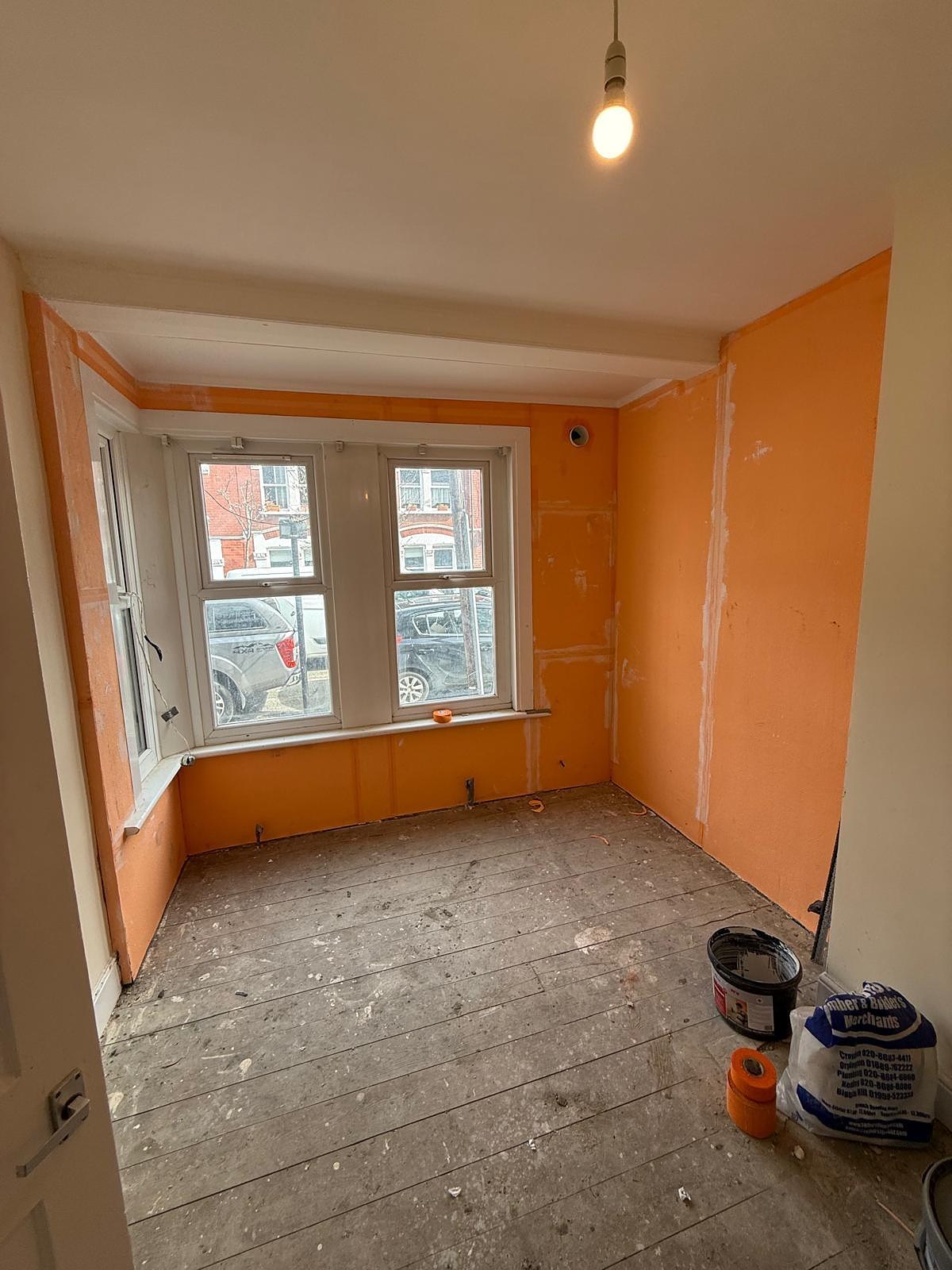
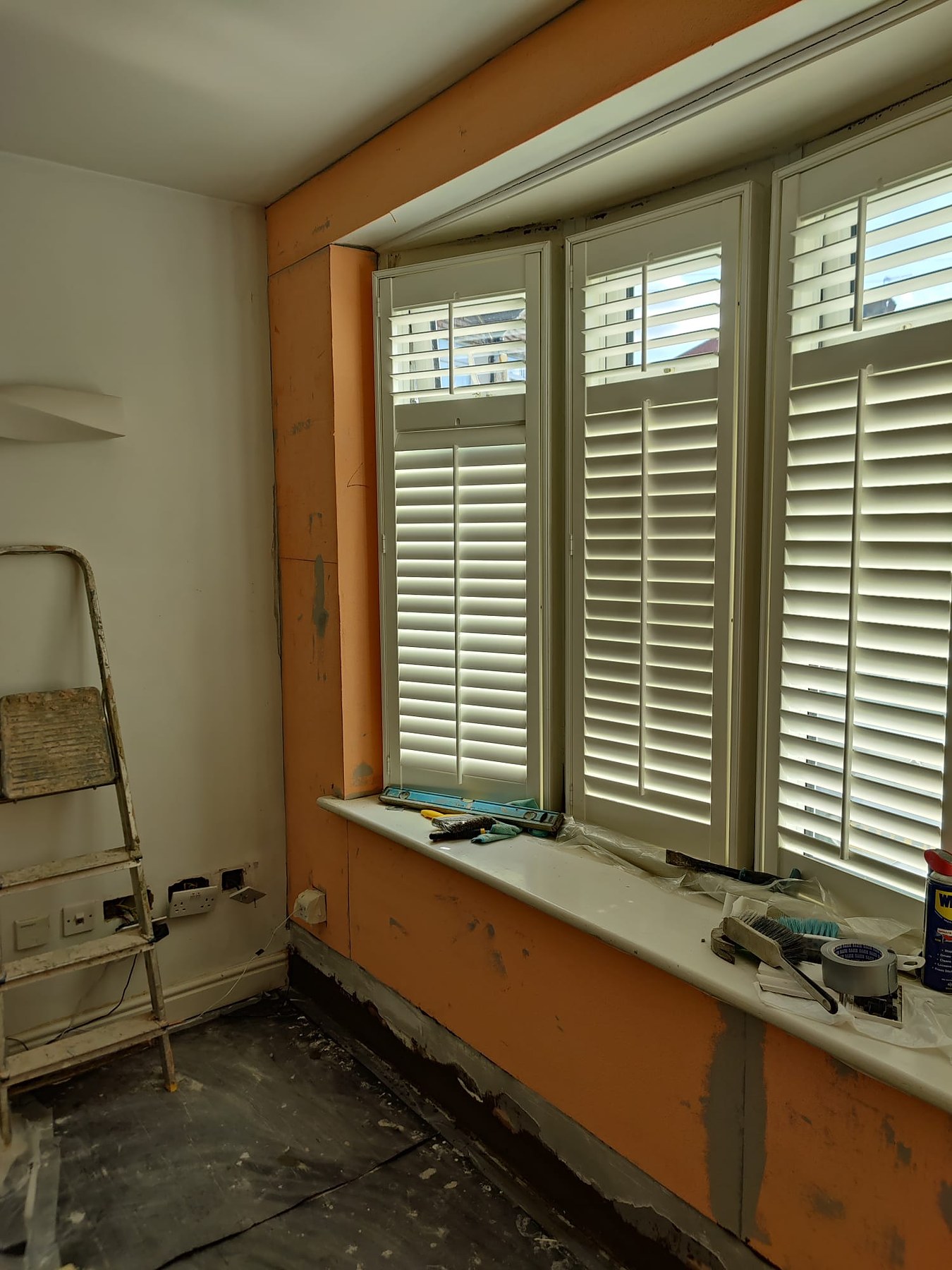
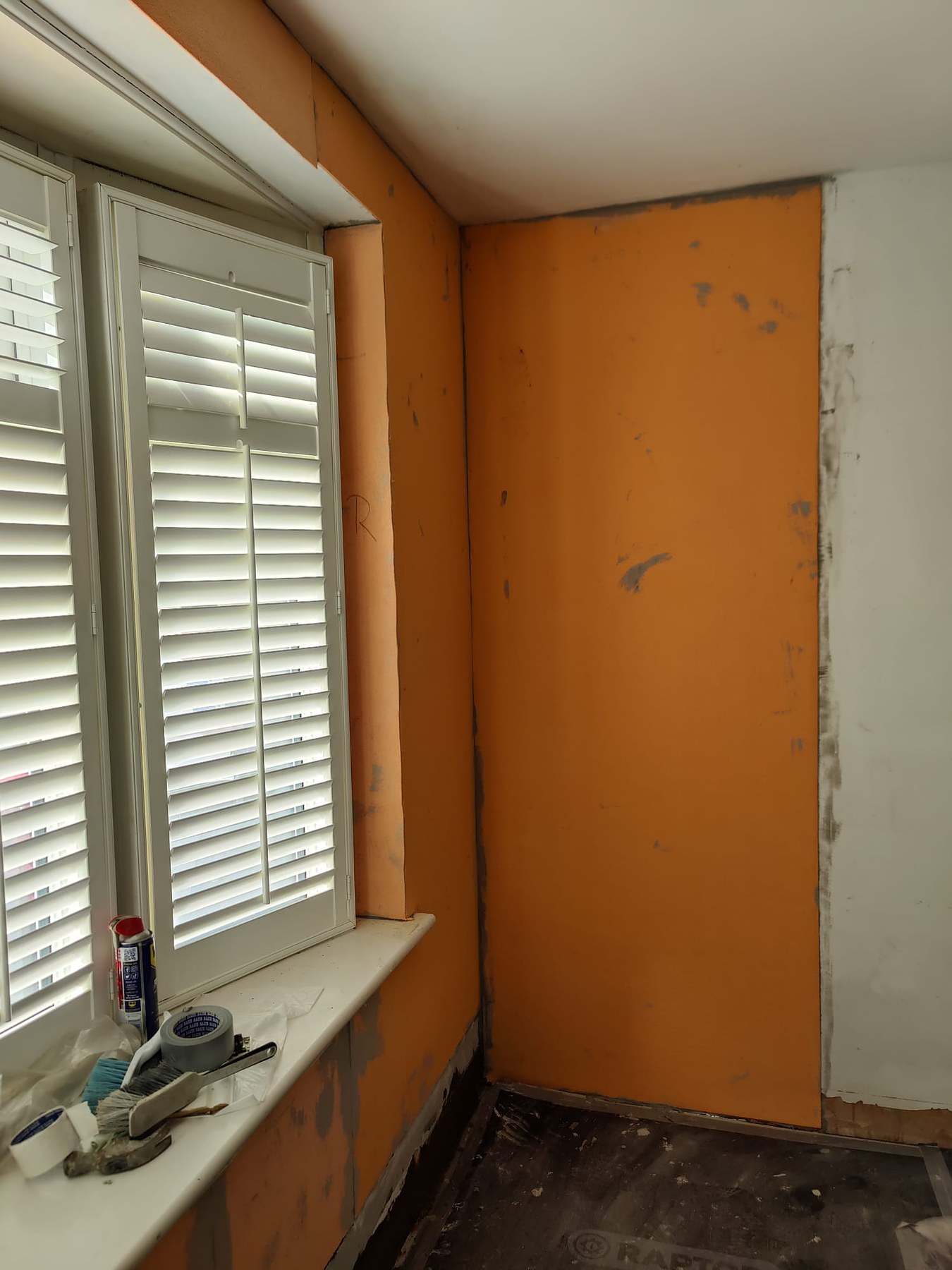
The photographs show one room before installation and after the membrane was fitted.
How it works on the wall
What does ISO‑Therm do on the wall?
ISO-Therm helps eliminate the cold-wall effect by warming the wall surface and creating a barrier to damp.
Warmth and reduced heat loss
Warmer rooms and thermal bridges
Where heat escapes through cold spots, condensation can encourage black mould; ISO-Therm helps address that cold surface.
Can it reduce thermal bridges?
A thermal bridge occurs where insulation is missing or interrupted:
- Typical locations: corners, wall junctions with floors and ceilings, and the edges of windows and doors.
- The effects: heat escapes and bills rise; cold patches can then attract condensation and mould.
- How ISO-Therm helps: at around 4 mm, it is not a substitute for full external insulation, but can interrupt the cold path at vulnerable corners, window reveals and sockets.
Will the room feel warmer?
Yes. Manufacturer testing shows ISO-Therm improves the U-value of a solid brick wall by more than 21%.
- In testing: a solid brick mid-terrace wall changed from 1.898 to 1.488 W/m²K, calculated to BS EN ISO 6946.
- When touched: the wall feels warmer straight away.
- In everyday use: rooms warm more quickly and heating bills may fall.
Checks before insulation
Why we inspect walls with a thermal camera first
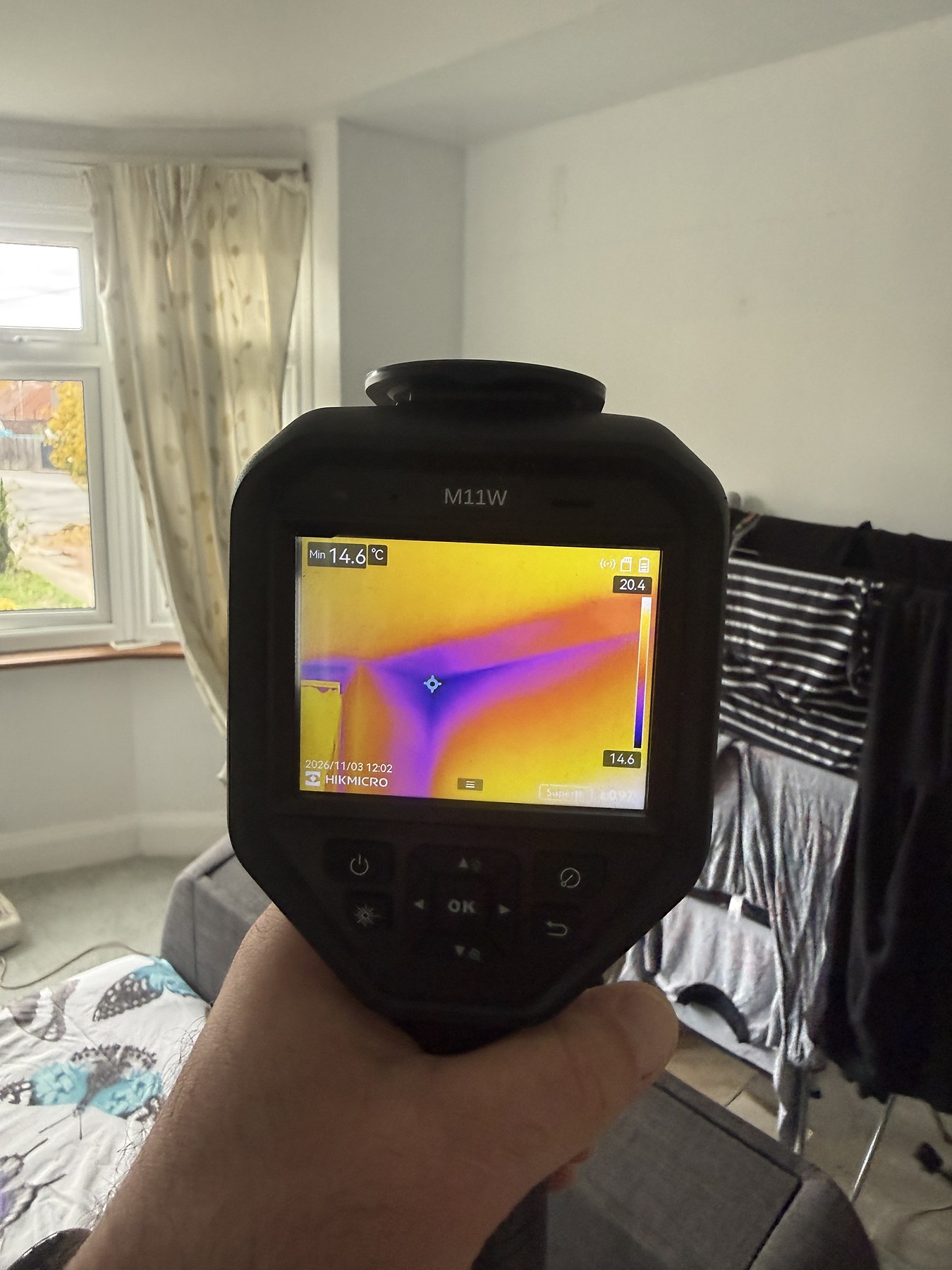
Before fitting internal wall insulation, we examine both sides of the walls with a thermal imaging camera. The resulting temperature map helps us:
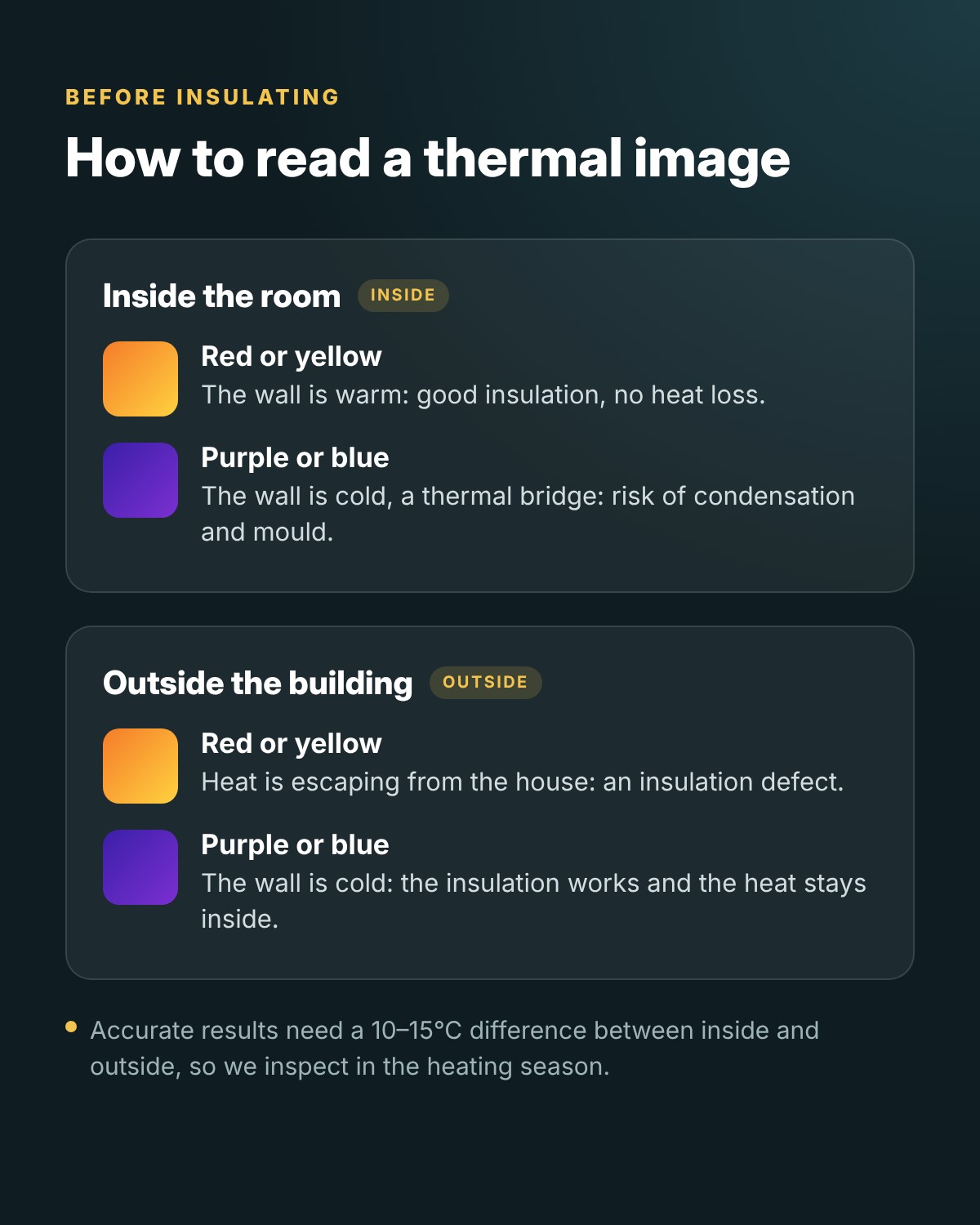
- Locate thermal bridges: the coldest indoor areas appear blue or purple. Ring beams, lintels, corners and floor-joist ends are common places for heat loss and early black mould growth.
- Establish why mould is growing: we check whether condensation is linked to a cold surface or a structural issue, such as a leak.
- Plan adjoining sections: we identify where insulation should return onto a neighbouring wall or ceiling to interrupt the cold path.
- Spot concealed problems: hollow plaster, cracks and poorly fitted window frames are dealt with before installation.
For an accurate result
We need an indoor-to-outdoor temperature difference of at least 10–15°C, so inspections take place during the heating season, from late autumn to early spring. Outdoors, we check after dark or early in the morning: sunlight can warm a wall and distort the reading. Heavy rain, snow and strong winds are avoided, and the home should be heated consistently for at least 24–48 hours beforehand.
Suitable areas for installation
Where we recommend ISO-Therm
- External walls: with the membrane extending around 1 metre onto adjoining internal partitions from each corner, where mould and cold patches commonly occur.
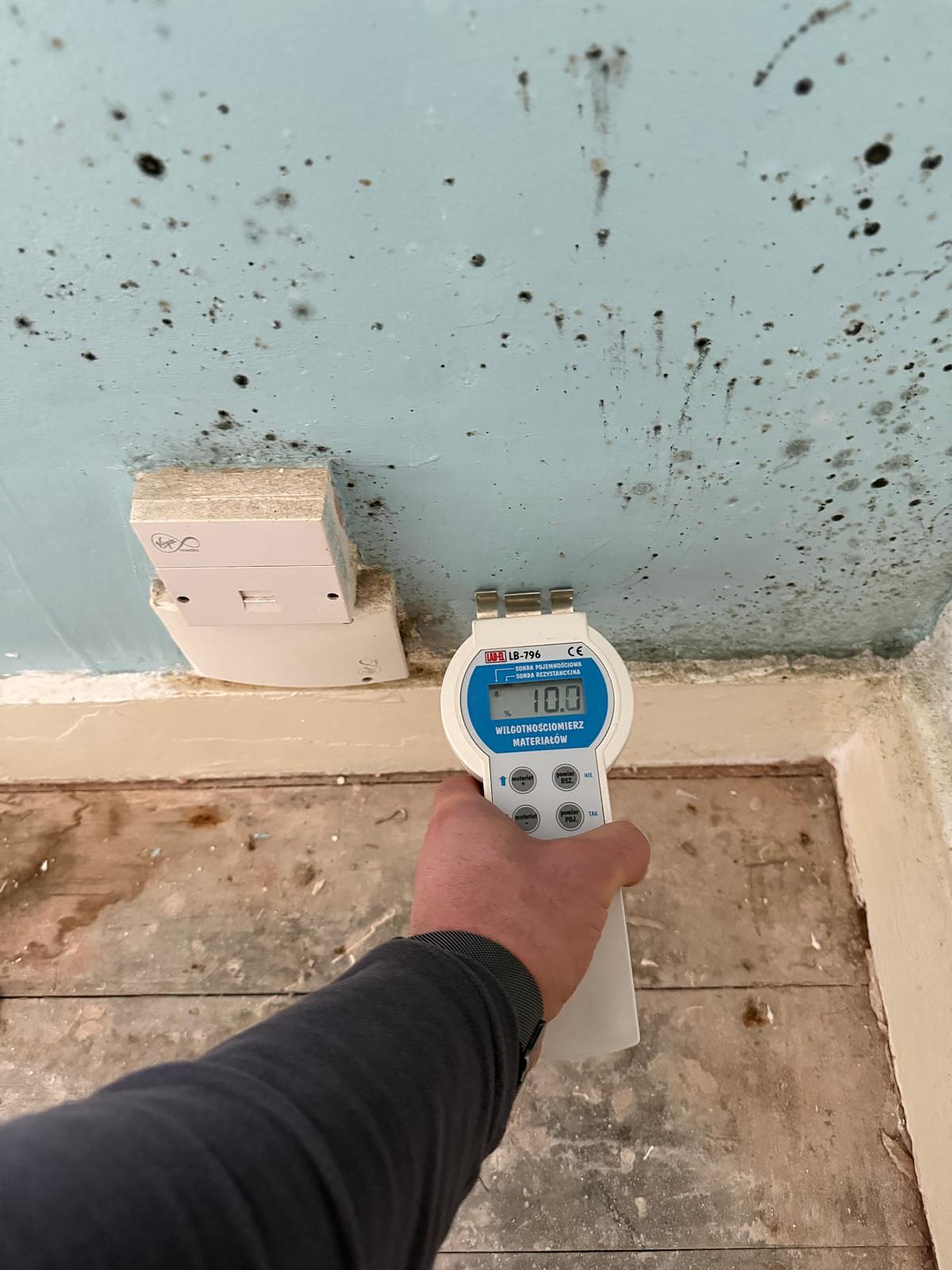
- Rooms affected by black mould: particularly where cold or frost-affected walls encourage mould and other fungi.
- Older properties: solid-wall homes for which external insulation is unsuitable or not permitted.
Installation checks
What to watch out for: preparation is everything
For ISO-Therm to perform as intended, the wall needs thorough preparation and the membrane must be fitted with care. We check each stage before moving on.
Unbroken insulation: we continue the membrane onto neighbouring walls and, where required, the ceiling or floor. These returns interrupt thermal bridges at corners.
Assessing existing walls
Existing plaster and penetrating damp
ISO-Therm can manage condensation and residual moisture, but it cannot remedy a serious building defect. Any source of penetrating damp must be addressed before the membrane is fitted.
Must existing plaster come off?
Not always. ISO-Therm can be bonded to existing plaster if:
- The plaster is firm and sound, without a hollow sound when tapped.
- The wall has no active penetrating damp.
- There is no serious defect, such as a pipe leak or failed waterproofing at the foundations.
How do we handle penetrating damp?
Bonding ISO-Therm to a wet wall would trap moisture. Instead, we work through these steps:
- Stop water entering: address the relevant gutter, downpipe, flashing, damaged façade or plinth, or leaking pipe.
- Take off hollow plaster: expose the masonry, allowing a margin of around 50 cm beyond the damp area.
- Treat the mould: apply a professional fungicide and allow it to dry as directed in the product data sheet.
- Replaster: use breathable cement-lime or renovation plaster.
- Check drying: allow at least 7 days, or longer for thicker plaster; a rough guide is 1 day per millimetre, with dryness verified by moisture meter.
- Fit ISO-Therm: apply SBR primer and breathable mineral adhesive with a 4–6 mm notched trowel, then use a rubber roller and finish with a thin skim.
Keeping rooms ventilated after installation
With ISO-Therm fitted, a room retains heat more effectively, affecting how moisture moves through the air. We therefore recommend:
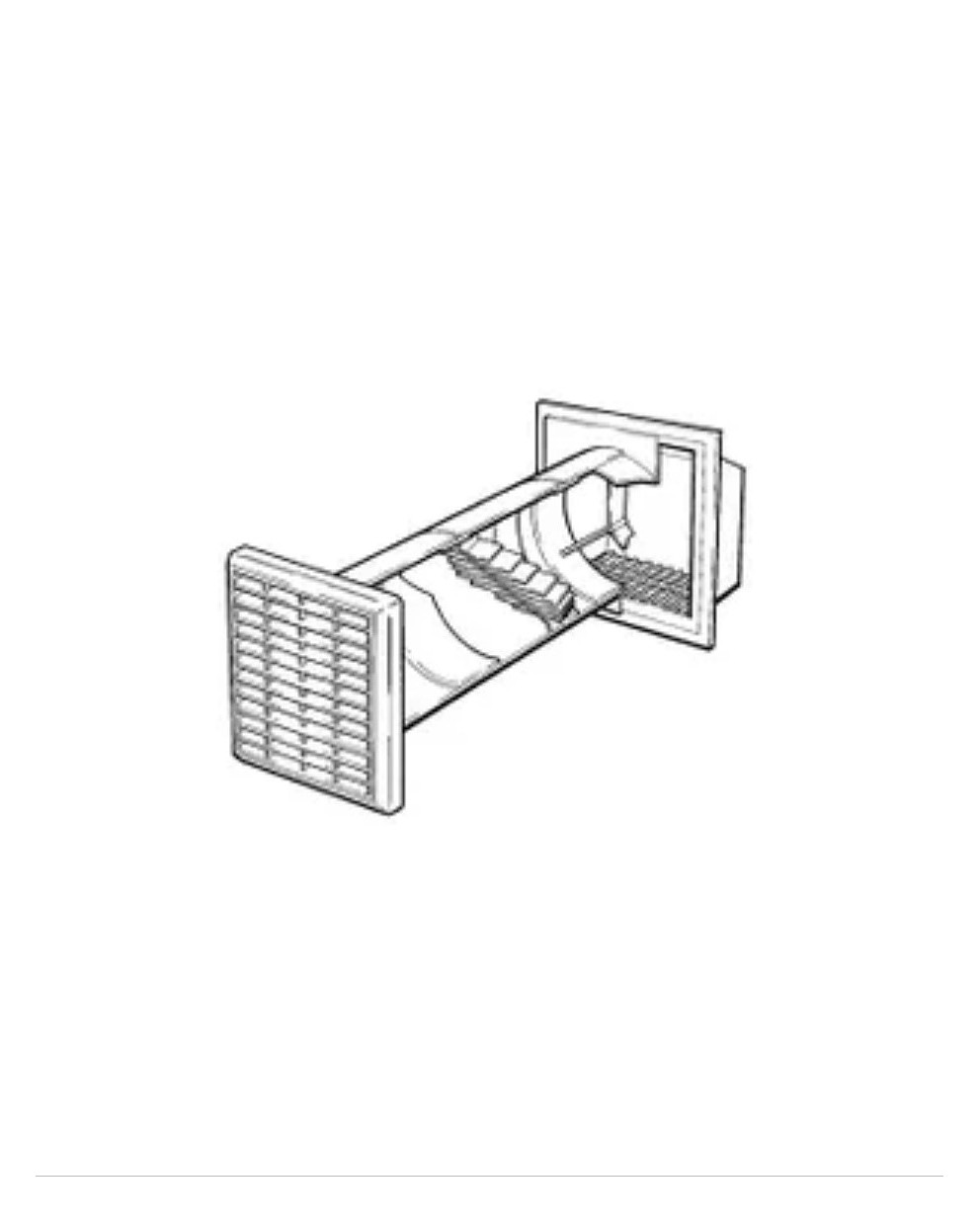
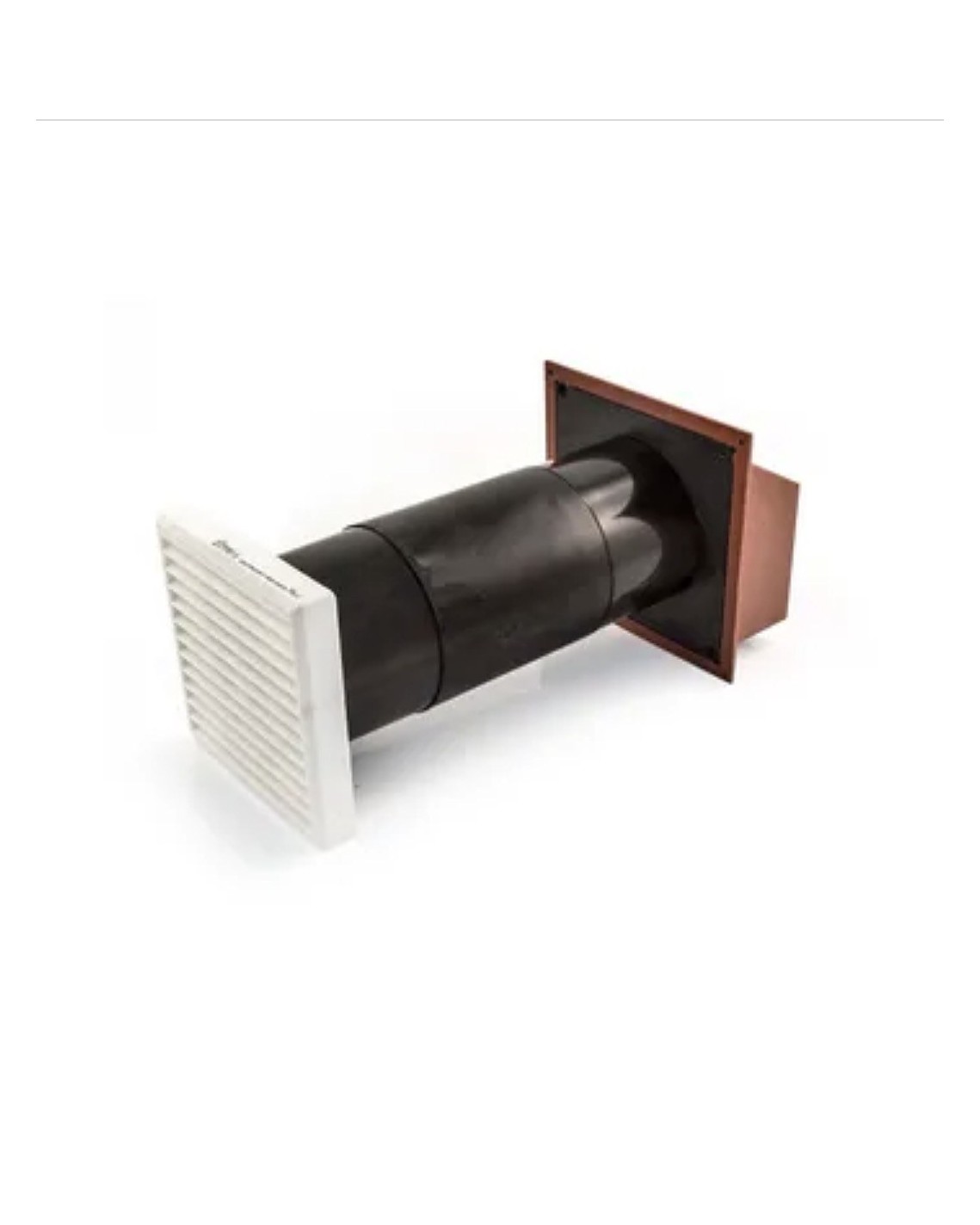
- Passive vents: at least one in the room to let water vapour escape and help prevent condensation on windows.
- Window trickle vents: these support airflow, bringing in fresh air while moist air leaves.
- A dehumidifier: useful even if there are no visible signs of damp on the walls.
The membrane warms the wall so it is no longer the room’s coldest surface; ventilation then helps carry moisture away.
Why we recommend DPC injection behind the skirting
Even before it becomes visible, rising damp can affect the wall and the ISO-Therm membrane. We therefore recommend a DPC injection at the wall base behind the skirting to reduce that risk and help protect the new system.
We carry out the injection while the skirting is removed. Once it is refitted, the work is out of sight, with the insulation protected from below as well as from moisture in the room.
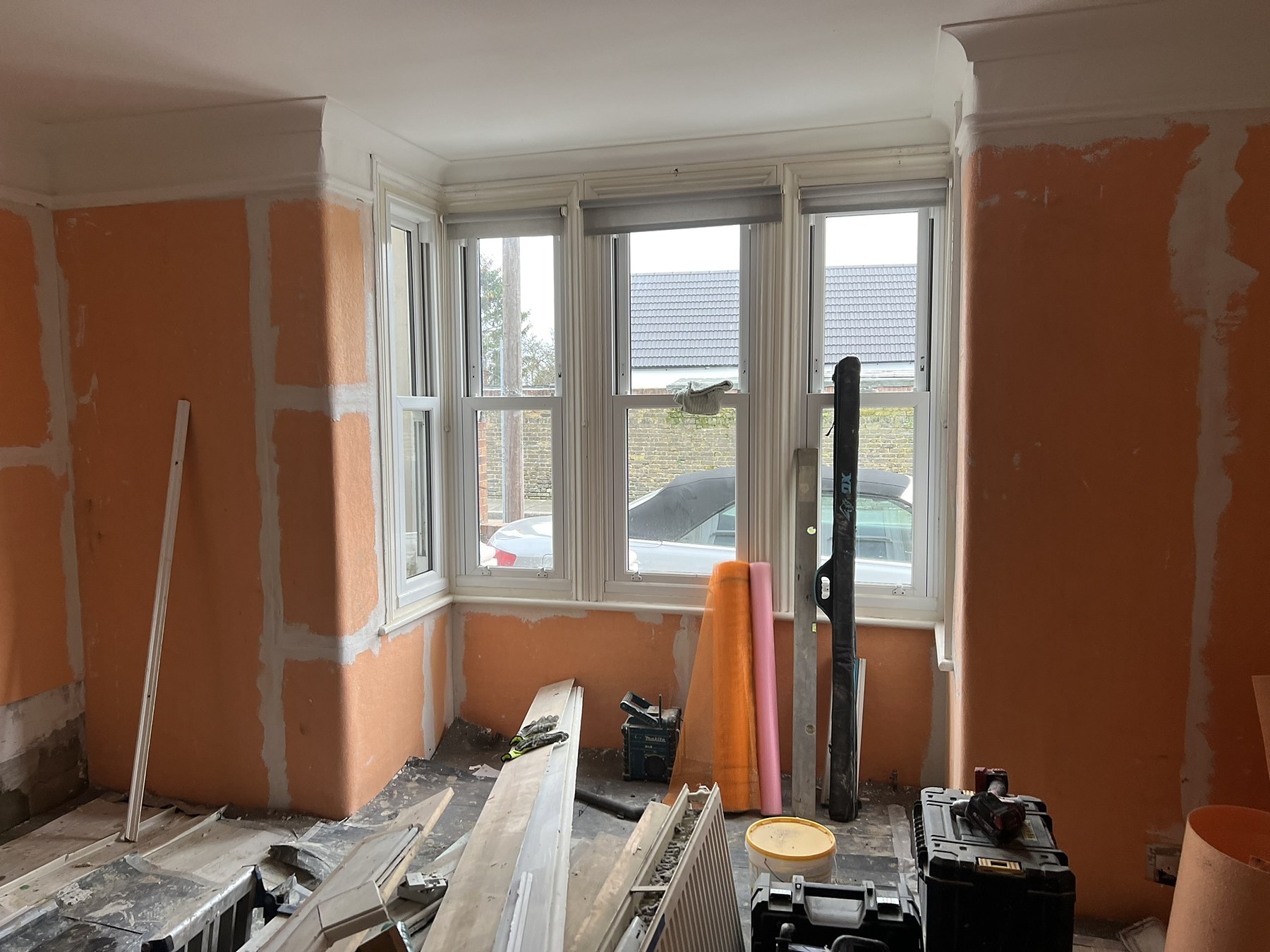
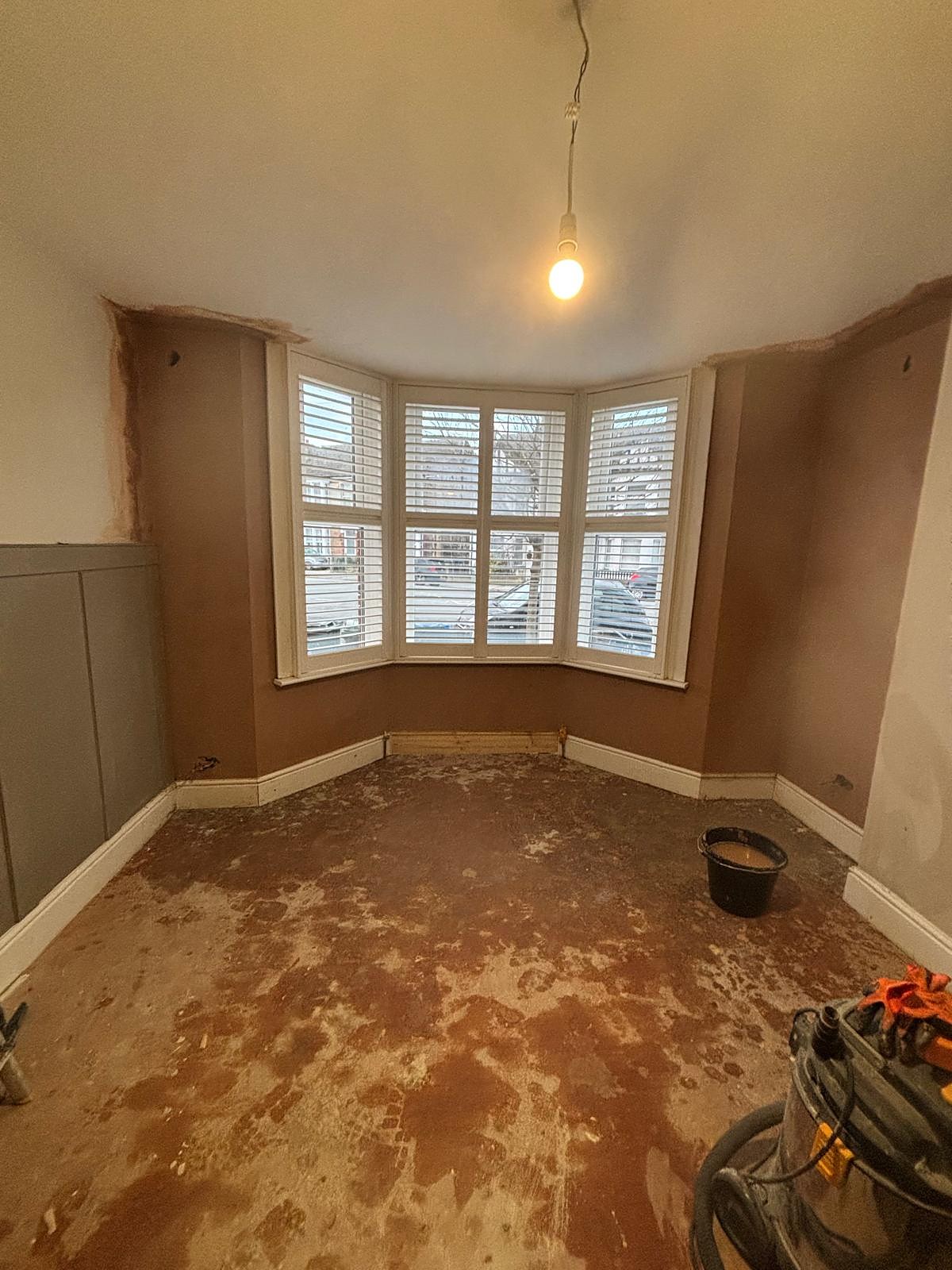
Protection behind the skirting
Why choose Crystal
Why choose us for ISO-Therm?
Rather than simply covering visible mould, we investigate its cause and follow a complete process from diagnosis to installation.
How we work
- Thermal imaging diagnosis: we use a thermal camera before installation to identify hidden thermal bridges and plan where insulation is needed.
- Thorough mould removal: professional biocides prepare a clean, sterile surface for the membrane.
- Careful wall preparation: we remove hollow plaster, wash the walls and apply deep-penetrating SBR primer.
- Precise installation: a 4–6 mm notched trowel provides 100% adhesive coverage, followed by tight butt joints and corner returns.
The benefits for your home
- Black mould addressed: a warmer wall discourages condensation, depriving mould of the moisture it needs.
- More warmth indoors: the difference is noticeable when you enter the room.
- Room space retained: the system takes only a few millimetres, unlike mineral wool or polystyrene.
- Healthier air: reducing mould spores in the air helps protect your family’s health.
We work with care, keeping the job clean and moving promptly. Afterwards, the wall is ready for your chosen skim, paint or wallpaper finish.
Related damp and insulation services
Other ways to help keep walls warm and dry
Black mould can be connected to wider damp issues. Our related services complement ISO-Therm; every waterproofing installation comes with our 10-year guarantee and a QANW Insurance Backed Guarantee.
Thermal Inspection
Identify hidden damp and thermal bridges before work begins.
Rising Damp
Address ground moisture rising through walls at its source.
Penetrating Damp
Deal with water entering the building from outside.
Crystalline DPC Injections
Install a new damp-proof course behind the skirting.
Waterproof Render Interior & Exterior
Waterproof render and renovation plaster for walls.
Insurance Backed Guarantee & Product Warranty
Protection that can transfer with your home.
Common questions
FAQs about ISO-Therm and black mould
What exactly is ISO-Therm?
It is a patented, ultra-thin polyester thermal insulation membrane made by Wykamol. Bonded to the inside of an external wall, the membrane is around 4 mm thick; including adhesive and a thin skim, the system is around 10 mm thick.
Can ISO-Therm stop black mould?
It helps when condensation on a cold wall is the cause: the warmer surface prevents moisture settling. Where a leak or rising damp is wetting the wall, we must address that source first.
Can you fit ISO-Therm over existing plaster?
Yes, provided the plaster is sound rather than hollow and there is no active penetrating damp. We remove and repair any loose or hollow sections beforehand.
Is ISO-Therm suitable for a listed building?
Because it goes inside without altering the façade, it can suit listed and period buildings. Listed building work may still require consent, so ask your council’s conservation officer before proceeding.
How much warmer could my walls feel?
Manufacturer testing shows that ISO-Therm improves the U-value of a solid brick wall by more than 21%. Walls feel warmer to the touch straight away, and rooms heat up more quickly.
Is ventilation still needed after fitting ISO-Therm?
Yes. As rooms retain heat better, we advise at least one passive vent, window trickle vents and, ideally, a dehumidifier to help water vapour escape.
What wall preparation do you carry out?
We apply professional fungicide to the mould, tap-test and repair hollow plaster, wash the wall and use SBR primer. We then bond the membrane using a 4–6 mm notched trowel.
How can I book a black mould survey in Banstead?
Book online or phone our specialists on 020 8432 3350 or 07720 752231. The consultation is free; surveys more than 10 miles from our base incur a charge under our price list.
Start with a free consultation
Arrange a black mould survey in Banstead
Worried about cold walls, condensation or black mould? Get in touch for a free consultation or survey. Surveys more than 10 miles from our base are charged under our price list. Speak to our specialists on 020 8432 3350 or 07720 752231.
07720 752231
Describe the mould in your home
Please complete the fields marked *. We will get in touch after receiving your details to arrange the survey.
Local wall checks
Investigating cold walls in Banstead
In Banstead, a home’s construction and layout matter more than assumptions about its neighbourhood. We assess the individual building before suggesting ISO-Therm for a cold or mouldy wall.
Our visit includes checking mould locations, wall temperature with a thermal camera, moisture readings, plaster, windows and ventilation. We also look for water entering from outside. The results tell us whether ISO-Therm, a water-ingress repair, improved ventilation or a combination is appropriate.
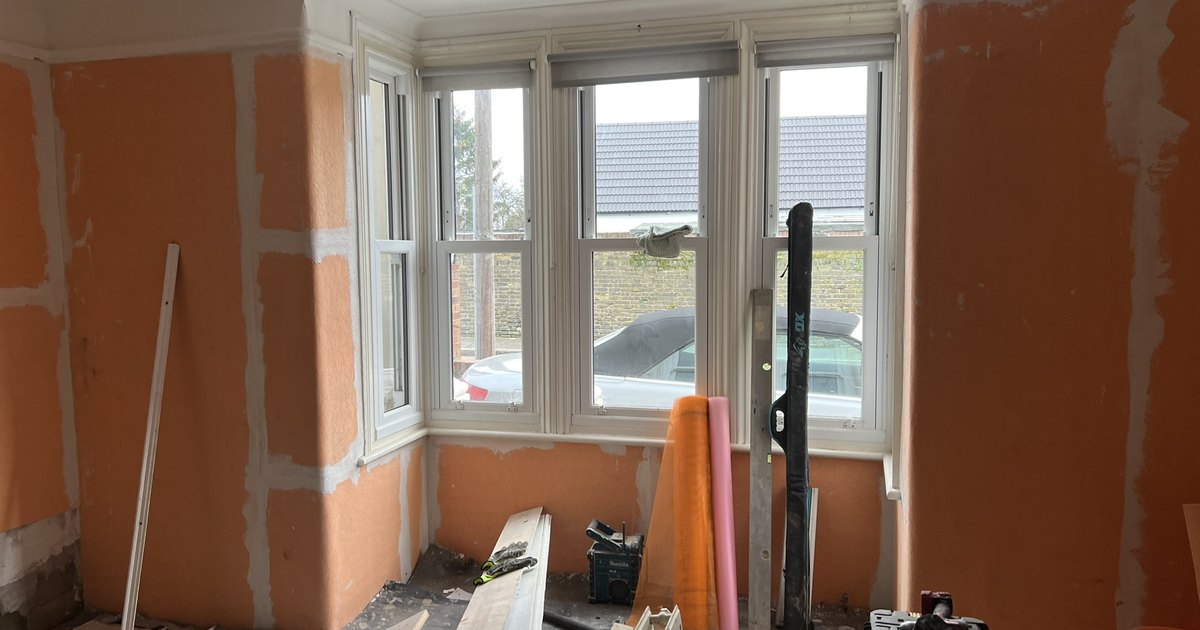
Warmer walls and less black mould
We are proud of our 5-star Google rating. For walls affected by cold, condensation or black mould, arrange a survey or thermal inspection through our Booking Survey section, or speak to our specialists on 020 8432 3350 or 07720 752231.
Qualified Specialists & a 10-Year Guarantee
Our family-run team holds CSSW qualifications, with a minimum of 10 years’ experience each. We back our work in Banstead with a 10-year guarantee covering workmanship, plus a QANW Insurance Backed Guarantee that transfers to the new owner if you sell your property. Based in Croydon, we work on domestic and commercial properties across London and the South East.

See What Our Clients Say
We are proud of our 5-star Google rating. Book a survey in our Booking Survey section, or call our specialists on 020 8432 3350 or 07720 752231.
Our service area
Black mould treatment around Banstead
Crystal Damp Proofing & Basements Ltd installs ISO-Therm internal wall insulation and provides black mould treatment in Banstead and nearby areas, including Belmont, Ewell, Coulsdon and Great Burgh. Select an area below for its local page.