

Leave your details and our team will get in touch.
Request a call back
Crystalline DPC Injection in Becontree
Crystalline DPC injection creates a lasting barrier against rising damp within the wall.
Crystalline DPC injection forms a new horizontal damp-proof course (DPC) within masonry, preventing moisture from rising out of the ground and allowing damp walls to dry. There is no need to excavate or cut through the walls, and the method works even in very wet brickwork.
For homes and commercial properties in Becontree RM8, and across London and the South East, Crystal Damp Proofing & Basements Ltd provides crystalline DPC injections carried out by CSSW-qualified specialists.
At a glance
- No digging or wall cutting: treatment takes place from inside, leaving gardens and paving undisturbed.
- Suitable for wet masonry: moisture within the wall helps drive the reaction.
- Horizontal and vertical protection: options for ground-floor walls, basements and cellars.
- Prompt installation: work on a typical house usually takes 1–3 days.
How does crystalline injection work?
Crystalline injection follows the “wet path” principle. A mineral product placed deep within the wall reacts with moisture and calcium compounds already present in the masonry.
- Silicate activator: a silicate activator solution, combined with a mineral cement base, is introduced into the wall.
- Reaction in the capillaries: moisture and free calcium in the masonry help the product reach the fine pores and capillaries that carry rising water.
- Crystallisation: the reaction produces insoluble crystals within those capillaries, permanently closing the paths water follows and forming a watertight barrier.
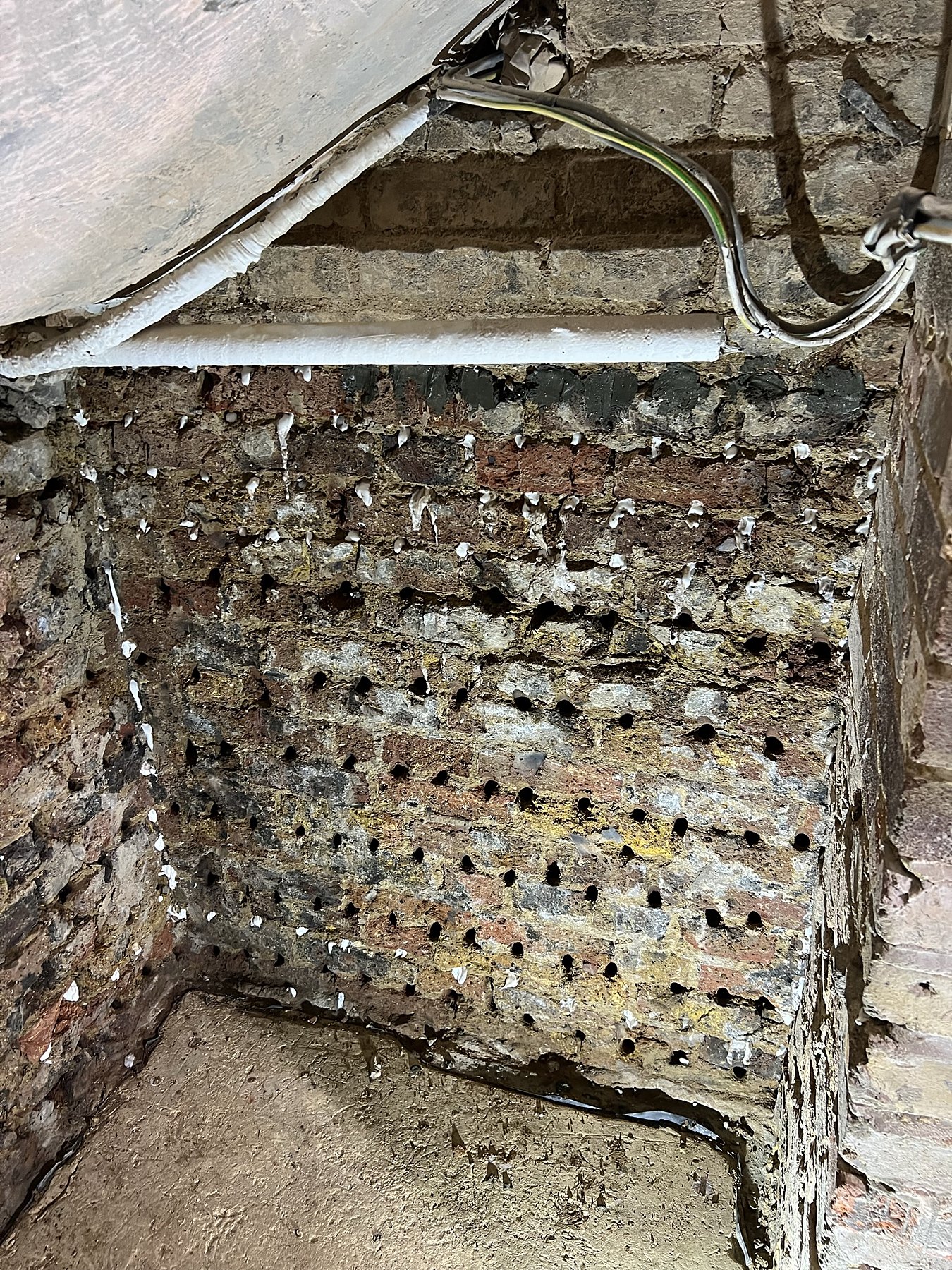
In porous brickwork, crystals develop in rings around each injection hole before spreading into neighbouring pores and capillaries. This is particularly effective in clay brick walls built with lime mortar.
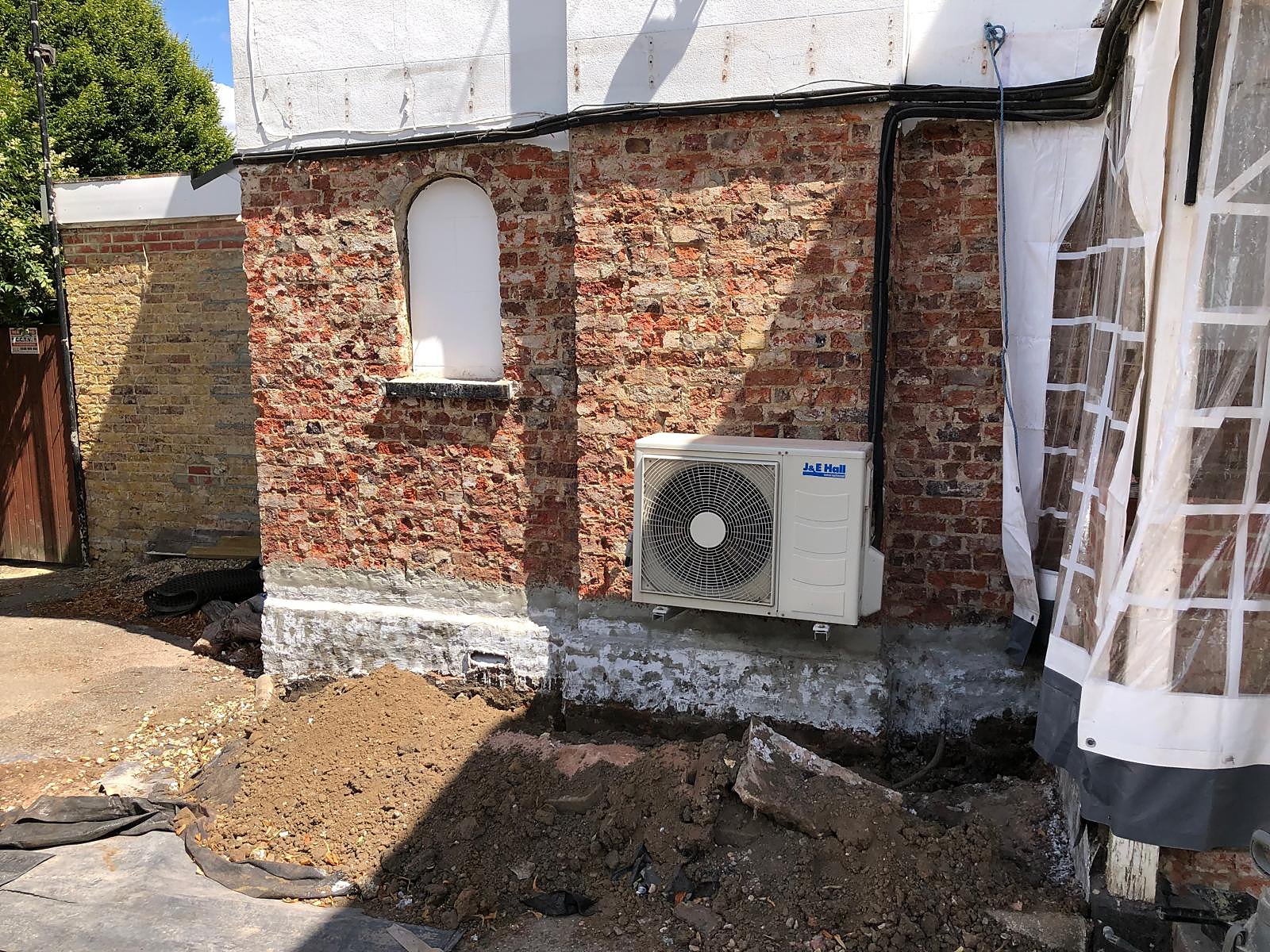
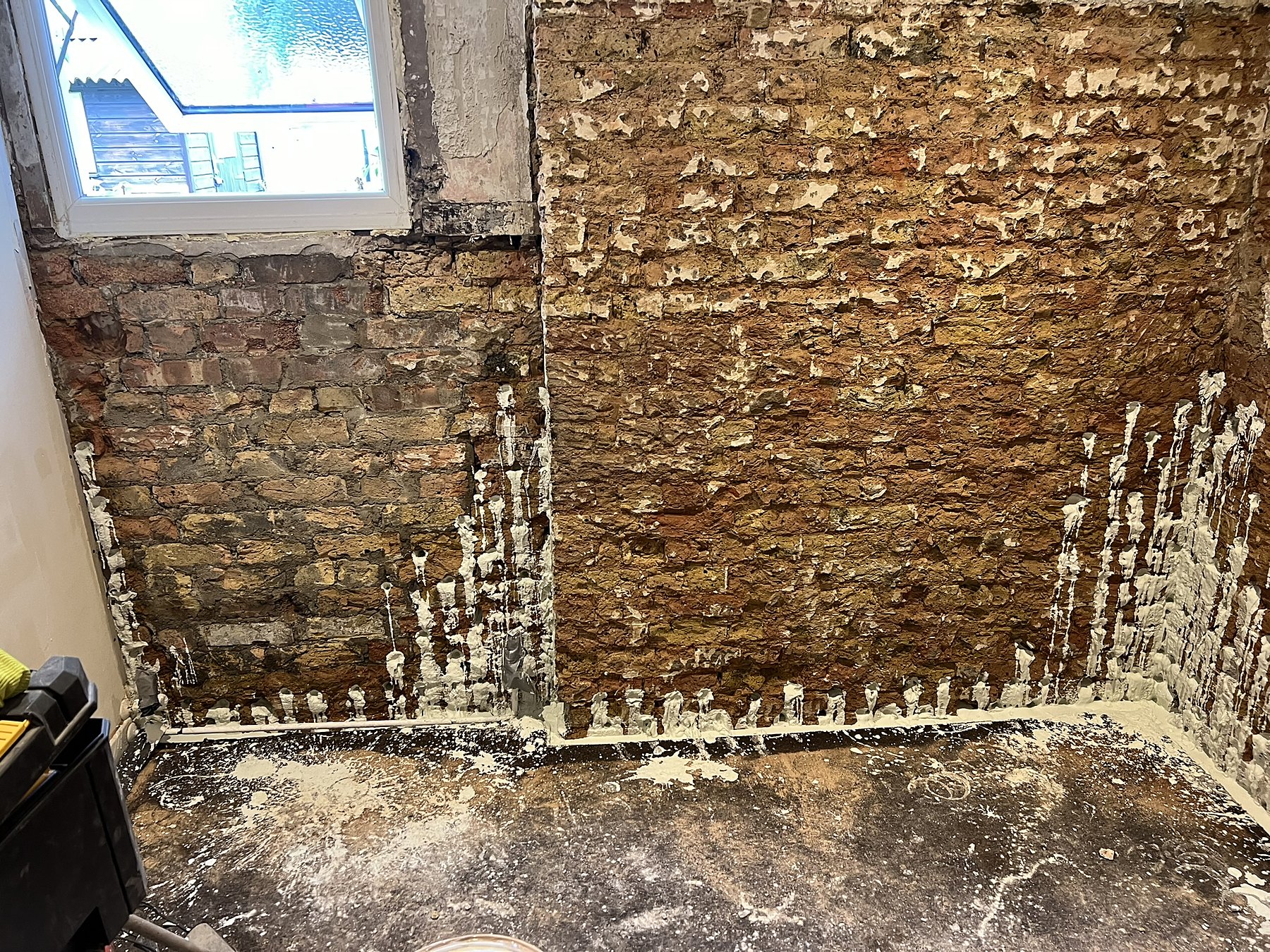
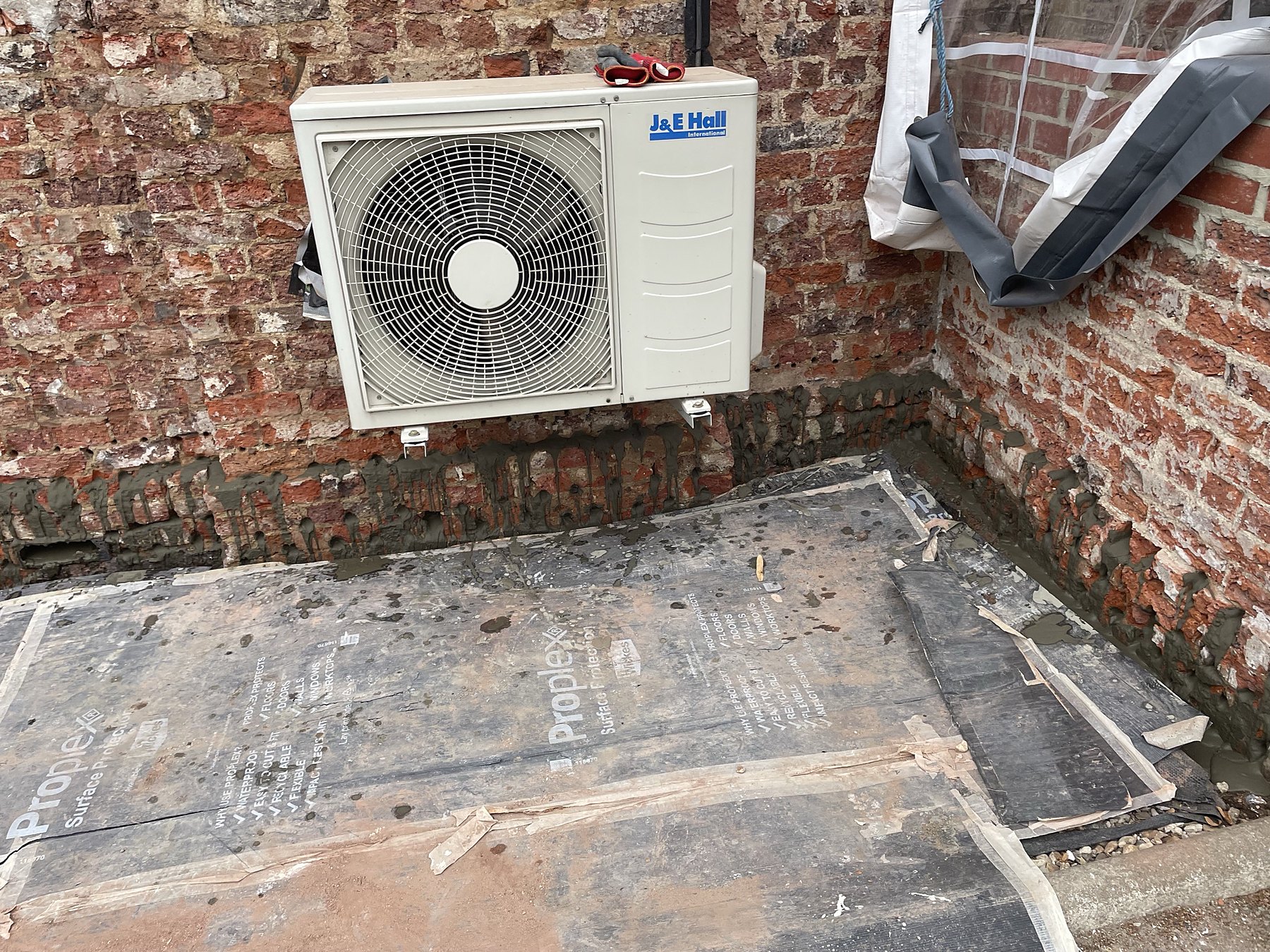
What happens inside the wall
Horizontal and vertical barriers for walls below and above ground
Working from inside the building avoids excavation around its foundations. Crystalline injection can be used in two principal ways:
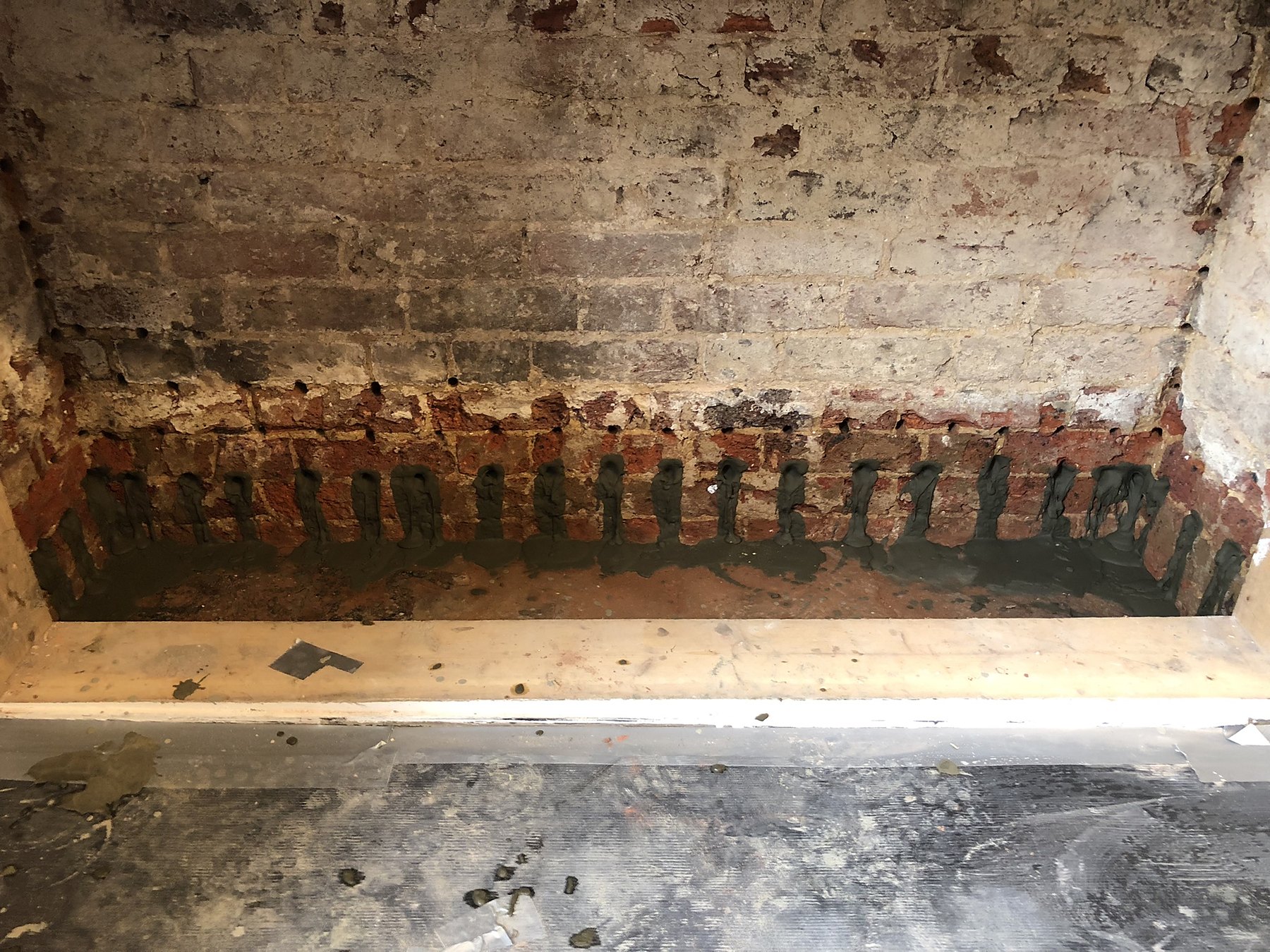
- Horizontal barrier (cutting off rising damp): for the most common application, we drill a line of holes low in the wall, generally around 10–30 cm above floor level. The product connects across the masonry to form a continuous barrier against rising damp.
- Vertical barrier (basement walls): in below-ground spaces such as basements and cellars, holes form a grid across the wall in contact with the ground. The injected product joins within the masonry to create a vertical barrier where external waterproofing is difficult.
If water pushes against the walls under pressure or a basement floods, we use injection alongside a Type C cavity drain membrane system and sump pump to manage the water.
When treatment may be needed
When is crystalline injection needed?
- Rising damp: moisture travelling up walls and foundations from the ground, often leaving ground-floor damp patches, damaged plaster or salt deposits.
- A missing or failed DPC: where an older building, period terrace or family home has no original damp-proof course, or its existing course no longer works.
- An alternative to cutting the wall: where a physical damp-proof course cannot be inserted, would cost too much or could put the structure at risk.
- Very damp walls: treatment remains effective even when the masonry is heavily saturated.
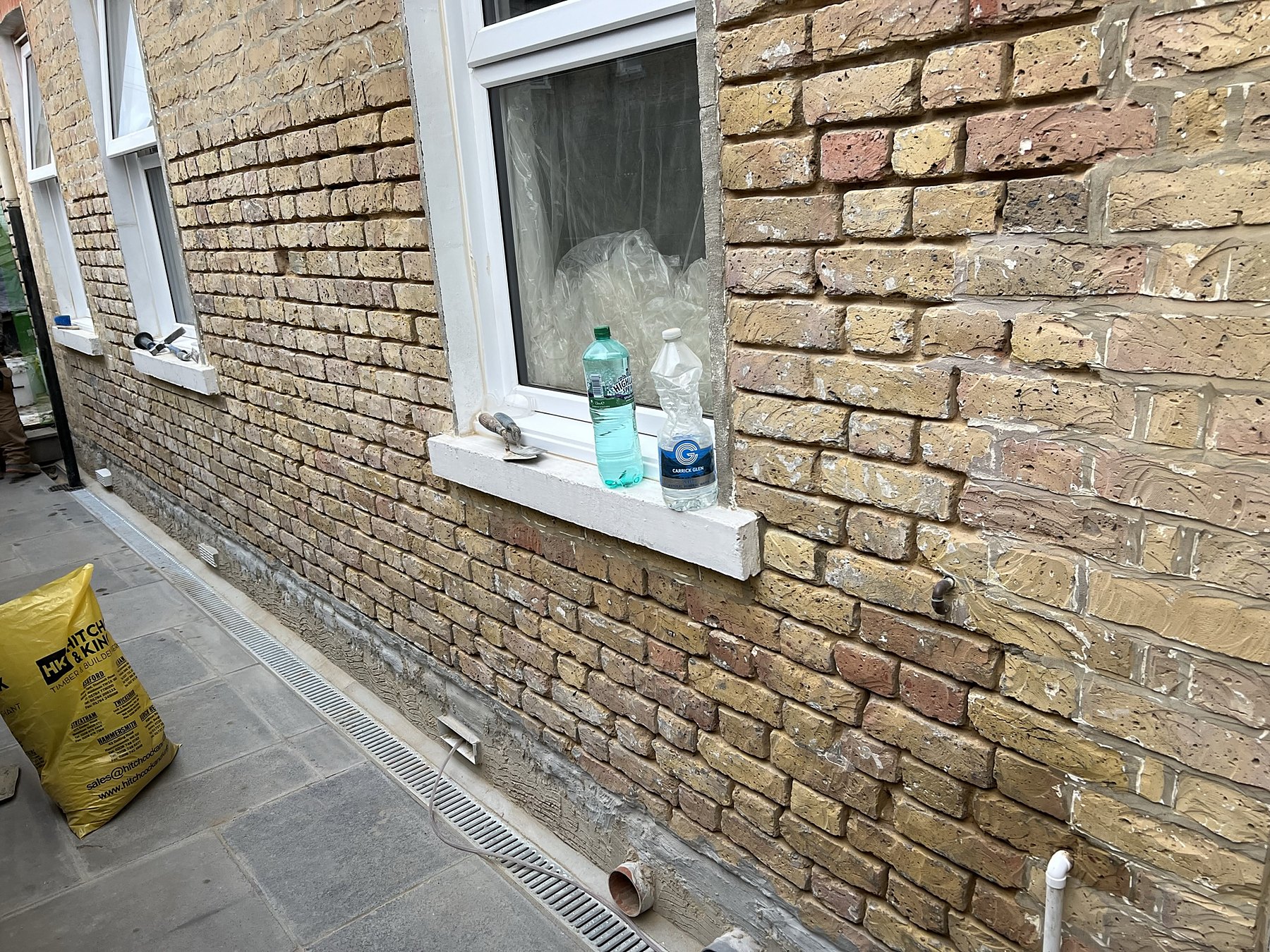
The crystalline approach
Benefits and uses of crystalline injection
Because the crystalline barrier forms within the masonry itself, it can suit a wide variety of buildings.
Why choose crystalline injection?
- No invasive excavation or cutting: treatment does not disturb the structure or require gardens and paving to be dug up.
- Safe and mineral-based: the treatment releases no harmful fumes and is suitable for homes and public buildings.
- Long-lasting: crystals become part of the masonry, leaving a barrier that remains stable for many years.
- Effective in wet walls: moisture supports the reaction, so wetter masonry can help the process work.
Where can crystalline injection be used?
- Older basements and cellars: as part of renovating basements and cellars.
- New buildings: to provide protection that supports a longer building life and reduces water problems.
- Retaining walls and vaults: including vaults beneath gardens or pavements.
- Period, listed and commercial buildings: from homes and storage buildings to commercial premises. For listed buildings, consult your council’s conservation officer before work begins.
How we install a crystalline DPC
A survey helps us select the right system, or combination of systems, for your property. A horizontal crystalline DPC is then installed as follows:
- Survey: we inspect the building, identify the cause of damp and decide on the appropriate treatment.
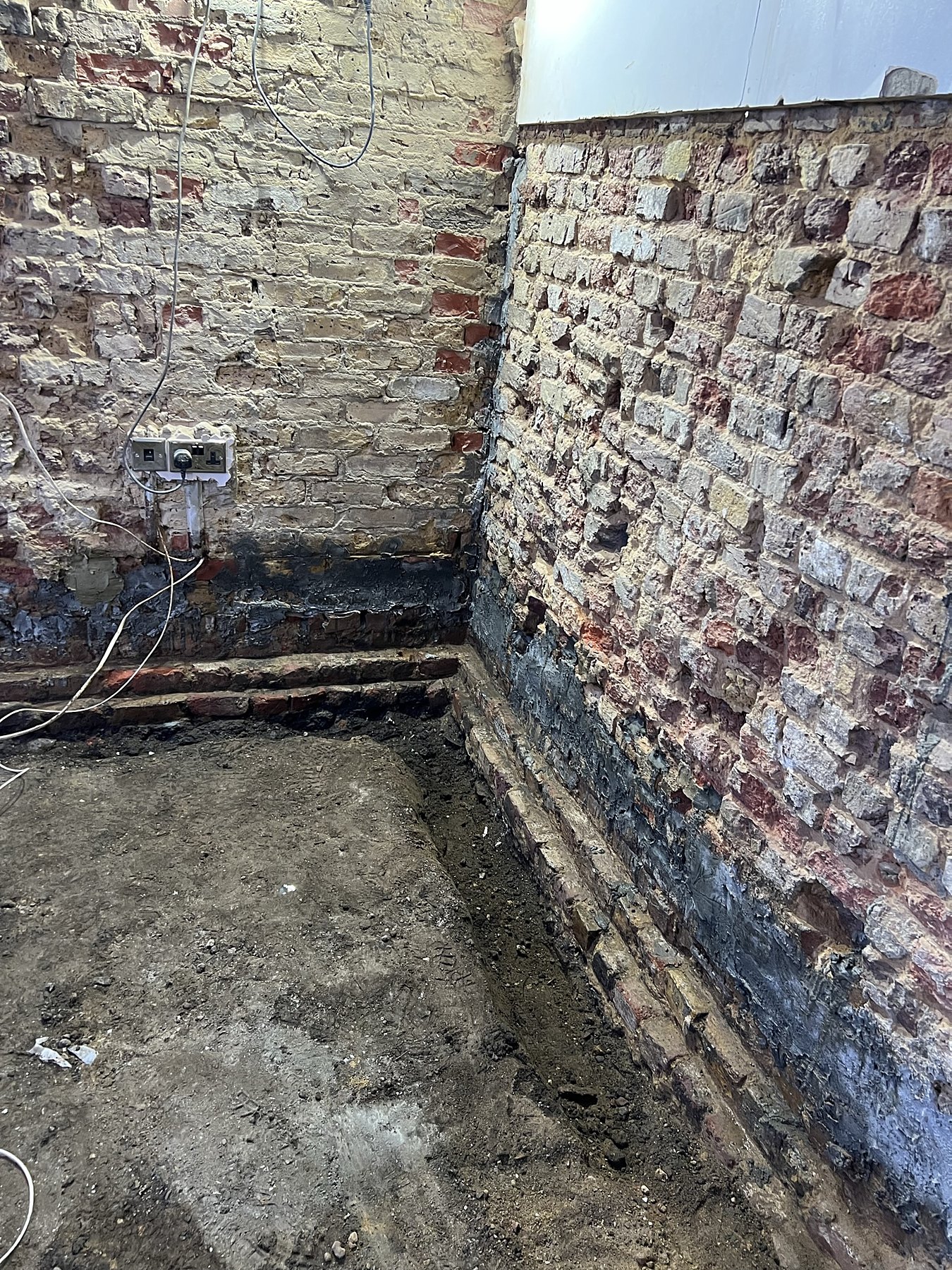
- Preparation: existing plaster, paint and waterproofing are cleared from the treatment area. Damp, salt-affected plaster is removed to around 50–100 cm above the visible damp line.
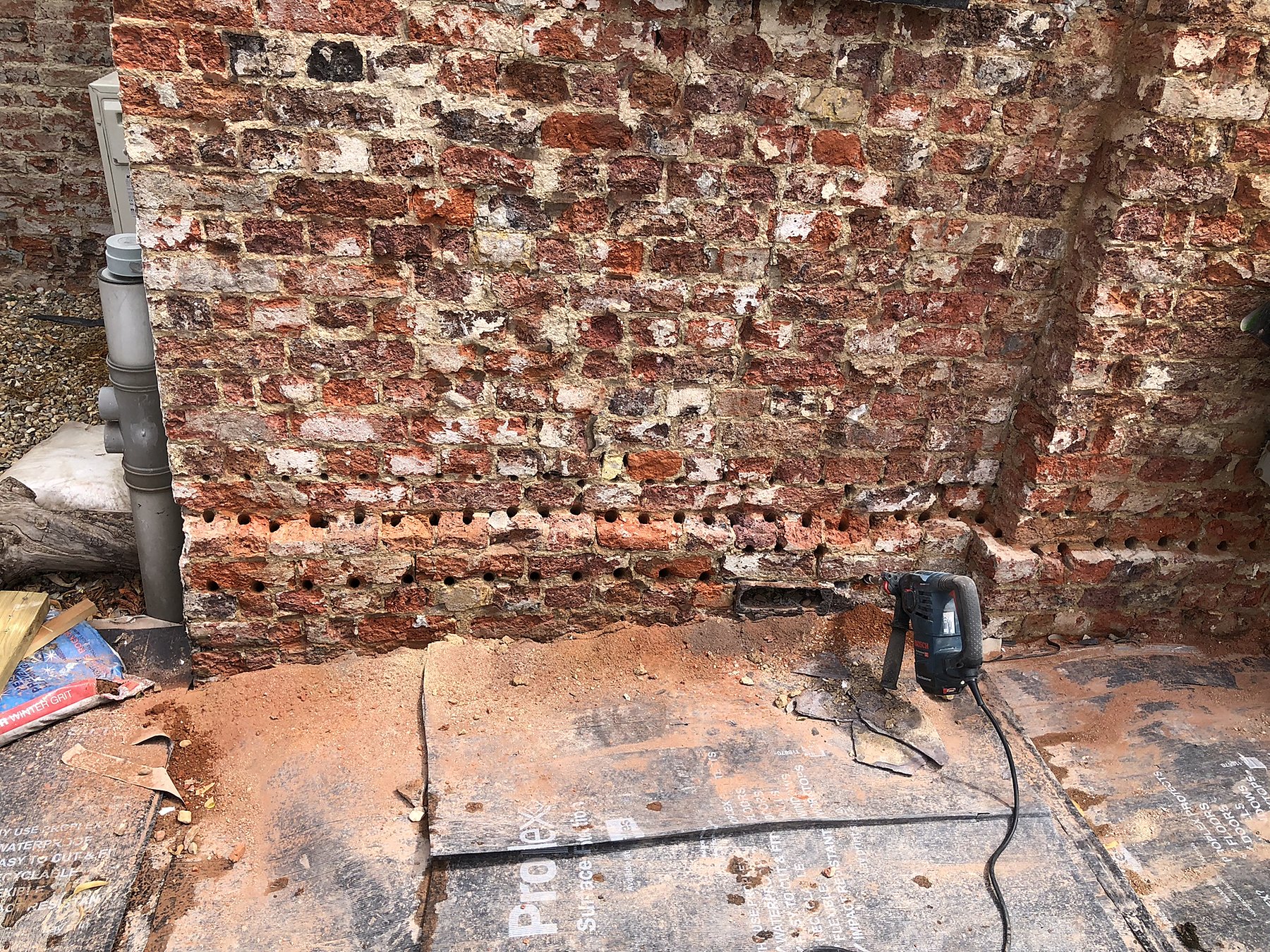
- Drilling: we drill 20 mm holes in a line parallel to the floor, spaced every 10–15 cm according to the wall’s salt content. They are angled at 15–30° and extend to the wall thickness less around 5–10 cm.
- Pre-wetting: dust is cleared from each hole before it receives around 0.5 litres of water to activate crystallisation.
- Injection: after about an hour, a mixture of special cement and silicate activator flows into the holes by gravity.
- Finishing the holes: we use a thicker mixture of the same material to fill each opening flush with the wall.
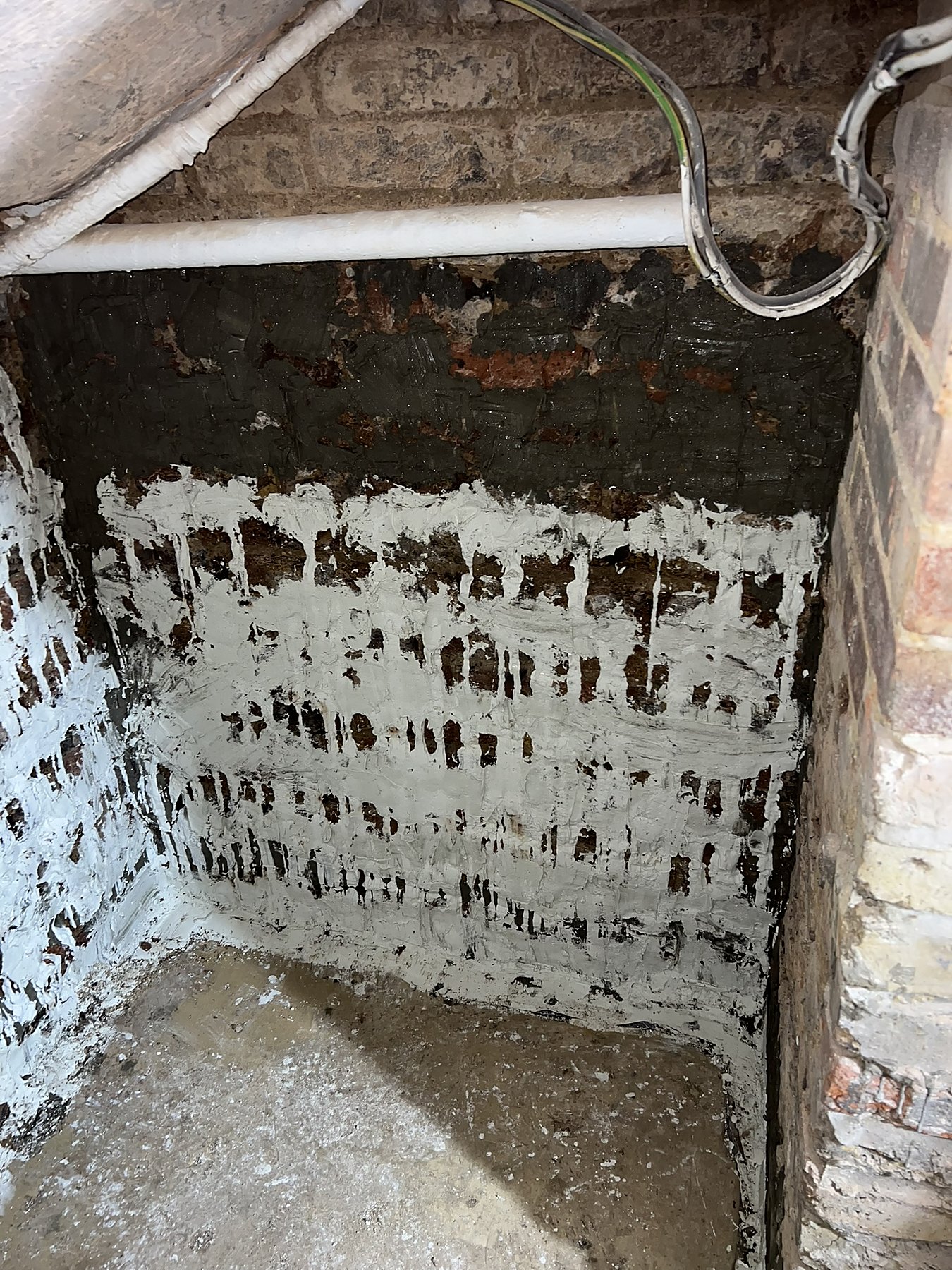
- Protecting the zone: tanking slurry across the injection area slows drying so the barrier can form fully, while excluding airborne salts.
- Assisted drying: mechanical drying begins no earlier than 3 days after injection. This keeps the holes saturated while the masonry above dries.
We can also form vertical crystalline barriers where required, including in basement walls.
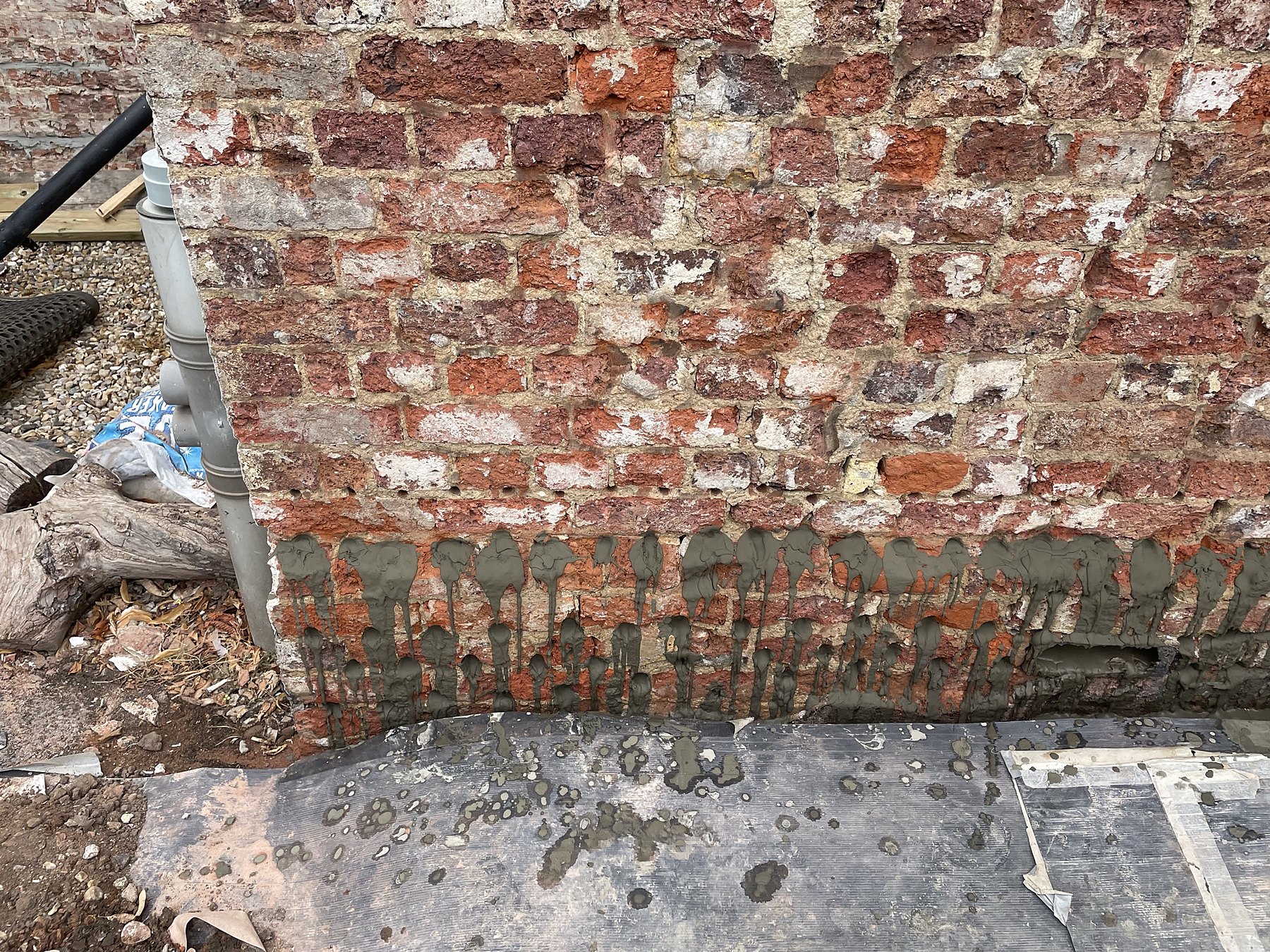
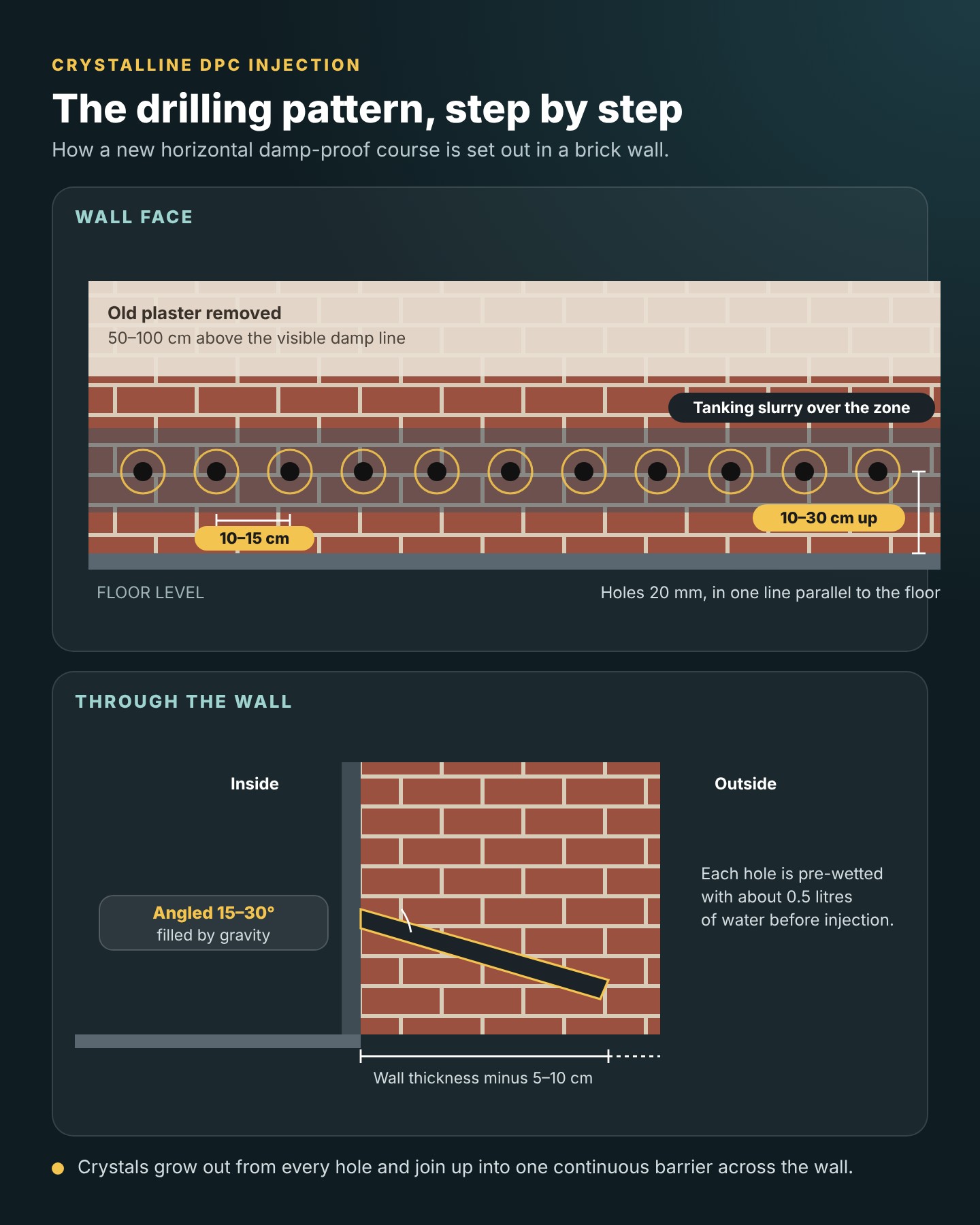
Where the holes are drilled
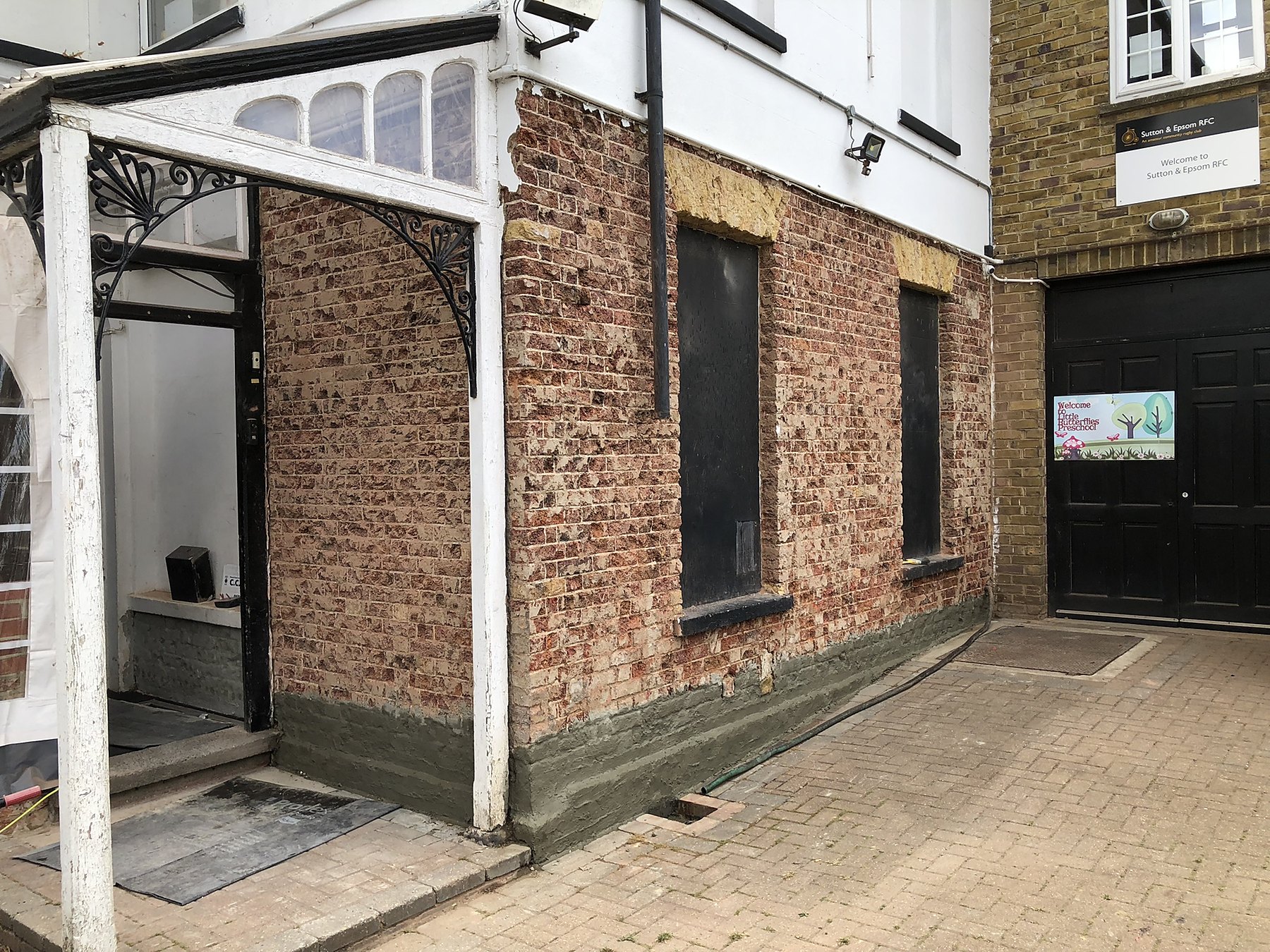
Restoring the wall after injection
After the damp-proof course is installed, we repair damaged mortar and allow the masonry to dry. Breathable, salt-resistant renovation render helps the wall continue drying while holding salts back from its surface.
Where moisture is also entering from outside rather than rising alone, we address penetrating damp so it does not compromise the new DPC.
Comparing approaches
Crystalline injection versus external waterproofing
External waterproofing places a barrier outside the foundations; crystalline injection forms one within the wall. Each approach has a role, and some projects call for both.
Other options include resin systems and cement-polymer slurries such as our spray-applied tanking. The choice depends on the building and its water conditions.
Crystalline injection
- Where it worksInside the wall, sealing the capillaries.
- ExcavationNot required; treatment is applied from inside.
- Wet wallsWorks best in wet walls, as the water carries the product.
- Main riskNeeds the right spacing and filling of the holes.
- Best forRising damp, existing or period buildings, and sites without outside access.
External coatings and membranes
- Where it worksOn the outside face of the foundations and walls.
- ExcavationUsually needed: the foundations must be exposed.
- Wet wallsThe surface must be clean and prepared.
- Main riskJoints, corners and damage during backfilling must be done perfectly.
- Best forNew builds and accessible walls that can be excavated; explore retaining wall and foundation waterproofing.
Selecting a contractor
Five questions to ask a crystalline injection contractor
The product and the way injection holes are drilled both matter: mistakes can leave damp untreated or allow it to return. Before agreeing to the work, ask a contractor these questions and consider our answers below.
Related services
Help with rising damp, basements and more
Installing a damp-proof course may be only part of the solution. Our related waterproofing services can complement it; every waterproofing installation includes our 10-year guarantee and a QANW Insurance Backed Guarantee.
Rising Damp
Diagnosis and treatment of damp rising from the ground.
Basement Waterproofing
Type A and Type C solutions for wet or flooded basements.
Cellar Waterproofing
Help make cellars beneath period homes dry and usable.
Retaining Wall and Foundation Waterproofing
Water protection for walls retaining the surrounding ground.
Interior and Exterior Waterproof Render
Salt-resistant renovation render for walls after DPC installation.
Penetrating Damp
Address water entering a building from outside at its source.
Flood response and drying
Has your property flooded or does it need drying?
If flooding affects your home, take these steps promptly:
- Switch off the electricity in affected rooms; put safety first.
- Turn off the main water valve, or locate and stop the leak.
- Remove standing water from floors to reduce further soaking.
- Photograph the damage before cleaning, so your insurer has a record.
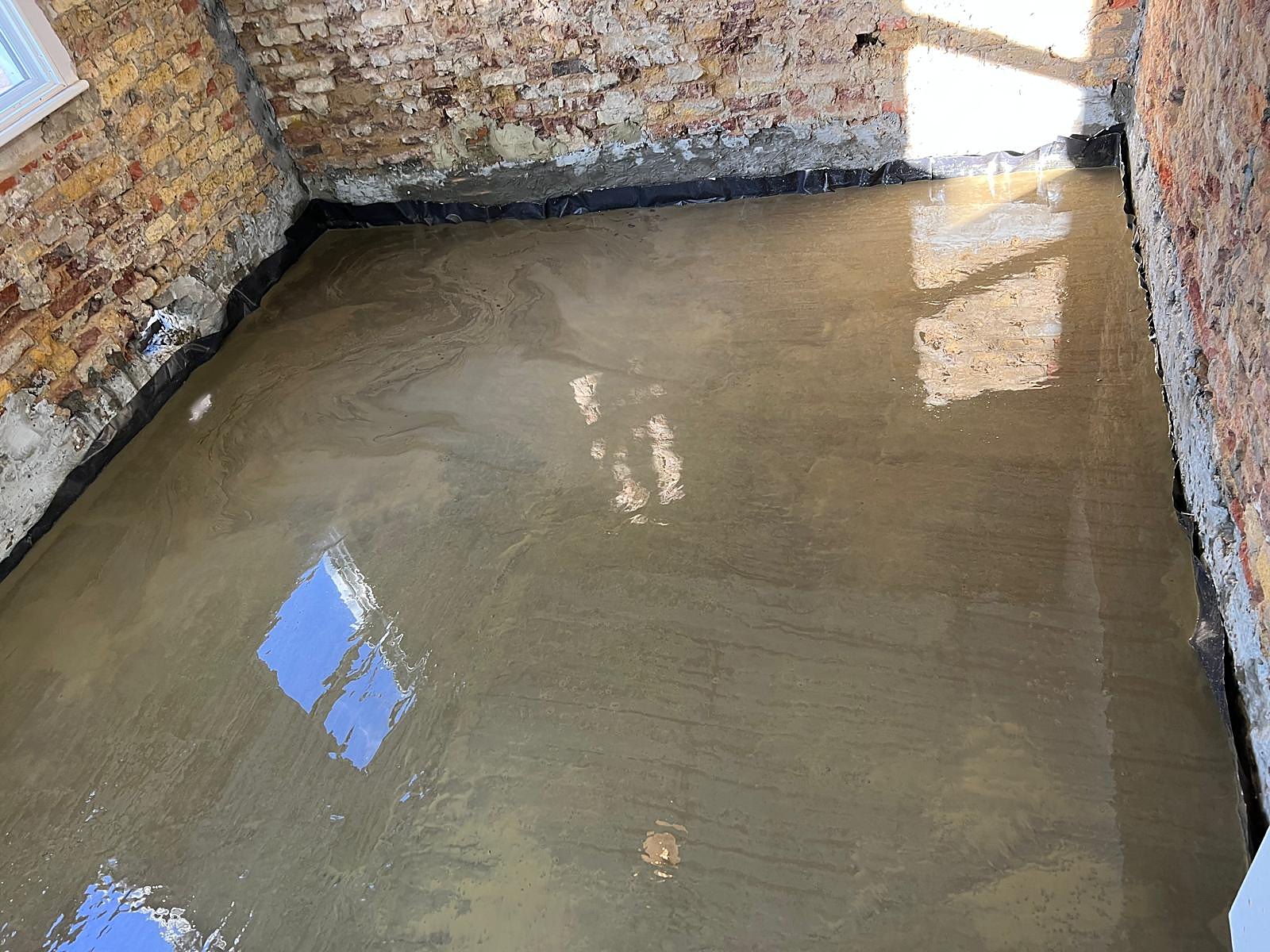
Need help with flooding or drying? Speak to our specialists on 020 8432 3350 or 07720 752231.
The products we use
Established manufacturers and proven materials
Our products come from manufacturers including Wykamol, Delta, Biokil, Newton and Mapei. We are an approved installer for Wykamol, Delta and Biokil, and follow each product’s technical data sheet and manufacturer certification strictly.
NEWTON
Newton
Pump systems and cavity drain membranes.

Wykamol
Tanking slurries, membranes and sump pumps.

Delta
Drainage channels, studded membranes and pumps.

Biokil
Products for damp proofing and mould treatment.

Mapei
Waterproof coatings alongside repair mortars.
Common questions
Crystalline DPC injection FAQs
Must the walls be dried before injection?
No. Moisture already within the masonry helps the product crystallise; higher moisture levels make the reaction more efficient.
How quickly does crystallisation happen?
The initial barrier develops in about 7–10 days, depending on wall temperature. Complete curing generally takes several weeks and varies with temperature and salt levels.
Is crystalline injection safe for health?
Yes. The mineral-based compounds emit no harmful fumes and are suitable for use in homes and public buildings.
How long will the treatment last?
Crystals form a permanent part of the masonry, resisting water for many years and lowering the risk of expensive damp repairs. Our work has a 10-year guarantee.
How does it compare with bitumen coatings and membranes?
External coatings and membranes usually require excavation around the foundations and precise installation. Crystalline injection instead forms a barrier inside the wall without digging around the foundations.
Why use it in basements and period buildings?
Wet masonry supports the treatment, which avoids disturbing the original structure. That makes it suitable for damp basements and older buildings; ask your council before treating a listed building.
How long does installation take?
A typical house usually takes 1–3 days, subject to wall length and thickness. We confirm the likely timescale after surveying your property.
How can I arrange a DPC injection survey in Becontree?
Arrange your survey online, or speak to our specialists on 020 8432 3350 or 07720 752231. Surveys more than 10 miles from our base are charged in line with our price list.
Free consultation
Arrange a DPC injection survey in Becontree
Noticed signs of rising damp, or need your home dried after flooding? Contact us for a free consultation or survey. Surveys more than 10 miles from our base are charged according to our price list. Speak to our specialists on 020 8432 3350 or 07720 752231.
07720 752231
Describe the damp problem
Please complete all fields marked *. We will contact you to arrange a survey after receiving your details.
Your local survey
Checking damp walls in Becontree before injection
In Becontree, we assess the individual property rather than assume that every damp wall needs the same treatment. Becontree’s residential streets include a variety of homes, so identifying how moisture reaches a particular wall is essential before recommending a crystalline DPC injection.
Our survey considers the damp line, salt deposits and moisture readings at different heights. We also examine outside ground and floor levels, existing DPCs and plaster, and look for condensation or water entering from outdoors. The findings guide whether a horizontal crystalline DPC, a vertical barrier, another repair or combined treatment is appropriate.
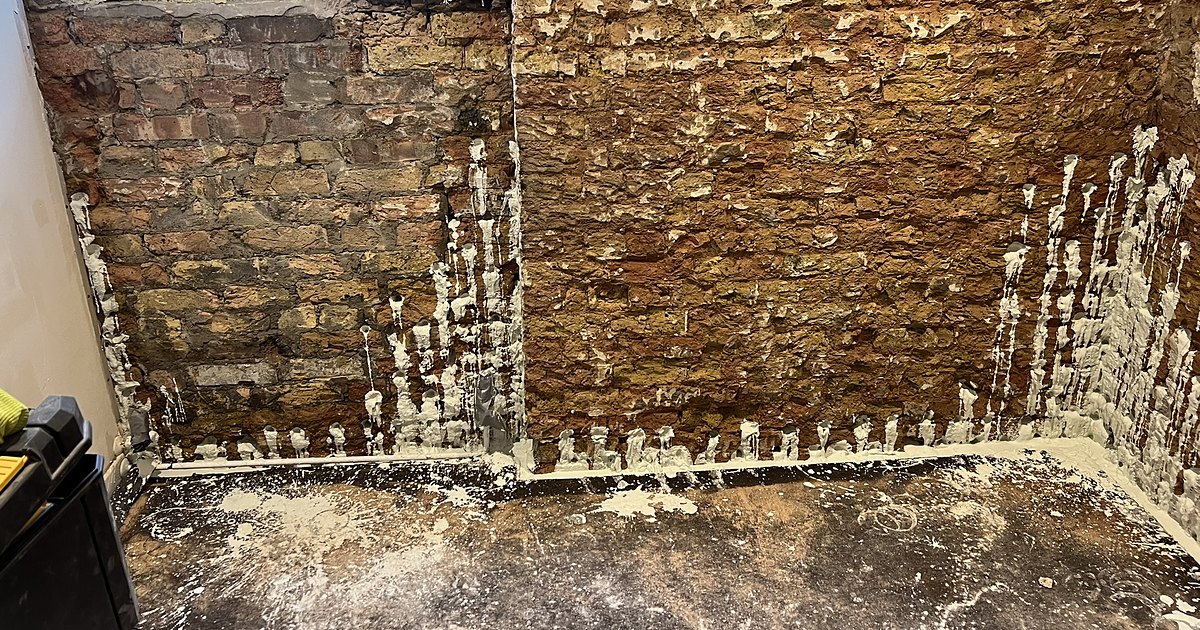
Get rising damp checked at its source
Our 5-star Google rating reflects feedback we are proud of. If you have signs of rising damp or need drying after a flood, arrange a survey through our Booking Survey section or call our specialists on 020 8432 3350 or 07720 752231.
Qualified Specialists & a 10-Year Guarantee
Our family-run team holds CSSW qualifications, with a minimum of 10 years’ experience each. We back our work in Becontree with a 10-year guarantee covering workmanship, plus a QANW Insurance Backed Guarantee that transfers to the new owner if you sell your property. Based in Croydon, we work on domestic and commercial properties across London and the South East.

See What Our Clients Say
We are proud of our 5-star Google rating. Book a survey in our Booking Survey section, or call our specialists on 020 8432 3350 or 07720 752231.
Our service area
Crystalline DPC injection near Becontree
For crystalline DPC injections in Becontree and neighbouring areas including Goodmayes, Barking Riverside, Chadwell Heath and Dagenham, contact Crystal Damp Proofing & Basements Ltd. Select an area below for its local page.